Progression of courses for beginners
Hi, I’m new to the piano (about six months in). I’ve taken group lessons for a while and learned a few simple pieces, along with some major scales and chords. What brought me here is the Taubman approach - I feel our tutor didn’t go into it in much detail, so here I am. I’m happy to start from the beginning to build good habits early on.
My question is: is there a recommended course progression here for an absolute beginner?
Thanks in advance.
11 replies
-
Hi Jeff,
Welcome to ToneBase. I really like the repertoire books by the Royal Conservatory of Music in Toronto. They include a nice mix of classical pieces, along with some more contemporary (but not pop) music. Their books begin at level 1 and progress to level 10. I think there are some pre-level 1 books, too--maybe called levels A and B. Check them out!
Best,
Jenny
-
Hi Jeff,
Are you asking about the recorded materials here (on Tonebase Piano)?
Surely you've seen the course called "Principles of the Taubman Approach"? I find it to be very good and it is supposed to be applicable at all levels. I myself am a strong believer in the Taubman principles. I cannot believe the teachers who are against it. Those are the ones who don't know zilch about the essential principles of arm rotation and hand positions, and I'd stay away from them! In any case, have a look at the course I mentioned above. It consists of 8 lessons. I don't think there are other Taubman courses here that would fit the bill for you though.
-
Hi Jeff,
Congratulations on the start of your piano journey! If you are asking if there is a developed progression system for a beginner here on Tonebase I would have to say no. There are useful resources about technique like scales and trills, and there are some lesson videos on some beginner pieces but even these are pieces that the average student would not play in their first year or two of study. Even at the advanced levels, I consider Tonebase more of an excellent resource than a system of progressive learning on one's own. It has a great community though! and more material is always being added.
I agree with that the RCM books are quite nice if one is looking for repertoire collections where the pieces are all the same-ish difficulty throughout. There are indeed Preparatory A and B books that precede levels 1-10 (and then there are Associate and Licentiate levels at the back end as well). The entire RCM curriculum is an excellent resource but it is not a method so there is nothing about it that will specifically instruct you about playing. The expectation is that a teacher will guide you through the curriculum and teach you principles of technique and style through the music and exercises that you study. The primary goal of the curriculum is to ensure that students have comprehensive training in all major periods, general musicianship skills and theory fluency. Most of my students participate in this particular curriculum's certificate program, though some also use CCM (Canada Conservatory of Music). The syllabus for each of these curricula are free for use though and can be obtained as .pdfs for anyone that just wants to have broad lists of repertoire sorted into difficulty ranges.
I can understand why you may not have learned much about technique approaches in your 6 months of group classes as the main goal of this early level of study is often about just getting basics established (particularly in group learning). Older learners do have the advantageous ability to understand and process concepts of physiology and sound production at the piano but this can also make them impatient about the time and repetition required for those concepts to translate into fluent movements. My advice would be to try to find a teacher that fits you in terms of personality and goals. Be upfront about your desire to go into more detail about technical concepts but also understand a teacher is also always assessing how well you are assimilating ideas to avoid overload (too much knowledge for some adult learners can become paralyzing as they are constantly holding themself to the ideal rather than just enjoying the process of learning).
I agree in principle with that you want a teacher that is willing to tell you the 'why' of things. However, the concepts of the Taubman Approach are pretty commonplace in modern pedagogy. I've never met any piano instructor that disagrees with them-just perhaps some that don't know what Taubman specifically champions. For instance, the "Taubman" concepts of arm and wrist alignment, rotation, economy of motion, groupings and choreography, the natural difference of each finger, lateral movement, and coordination of movements are all things regularly taught by many knowledgable teachers but few of them will specifically refer to it as Taubman because these concepts are ubiquitous in many modern sources / discussions. There are certainly some people out there teaching that should perhaps not be without more knowledge themselves, but there are numerous excellent teachers as well. Like many such teachers, I value all thoughtful, practical approaches that enhance playing but I tend to avoid allegiance to any one ideology.
-
I came across tonebase advertised on facebook. I was intrigued by the Taubman approach as I would like to learn to play with a good technique, I have watched those videos and I found that they were very helpful, but I'm not really finding any lessons for beginner level pieces of music. Any suggestions would be appreciated. Thank you.
-
Any suggestions here from some experts on what to do.
Other than 1. Get a Teacher 2. Get a Teacher. Repeat the phrase a few more times and stop.. :-) .
For beginners who can get a Teacher - Get one immediately! and stop reading further. :-)
For those who can't get a Teacher due to whatever reason.. (location, non-availability, non acceptance) and still want to start playing a bit.
Read on..
There may be some helper materials to work through before the lessons at level 1 of Tonebase become accessible.
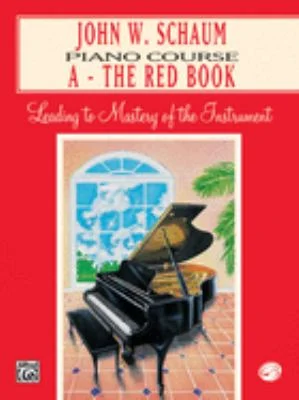
A Method book series - read through. ( I used John Schaum's series)
The red book (Book A ) will get you thorough a surprising amount. Don't skip any lessons ( songs). If you can get a friend who knows the piano to play it - that's best.
Then B,C,D,E,F,G,H - they are getting progressively difficult.
At the end of Book A it may be possible to start using TB lessons. Little by Little 1 by 1.
Then
1. Music Theory Basics - by Ben Laude - level 1
2. Circle of Fifths - by Ben Laude. - level 2
3. Rhythm: from Beginner to Advanced by Ben Laude
4. Major and Minor Scales - by Juliana Han
Then ping Dustin or Dominic or the 20 expert pianists who play the community concerts. They can easily advise - They may have 20 years of playing/concert experience.
I started at level 1 with the path above.. JS I have the entire series at home. But best to start with just the red book. ($10 on amazon)
Hope this helps. Good luck !