Study Group #1: Chopin's Prelude in E minor
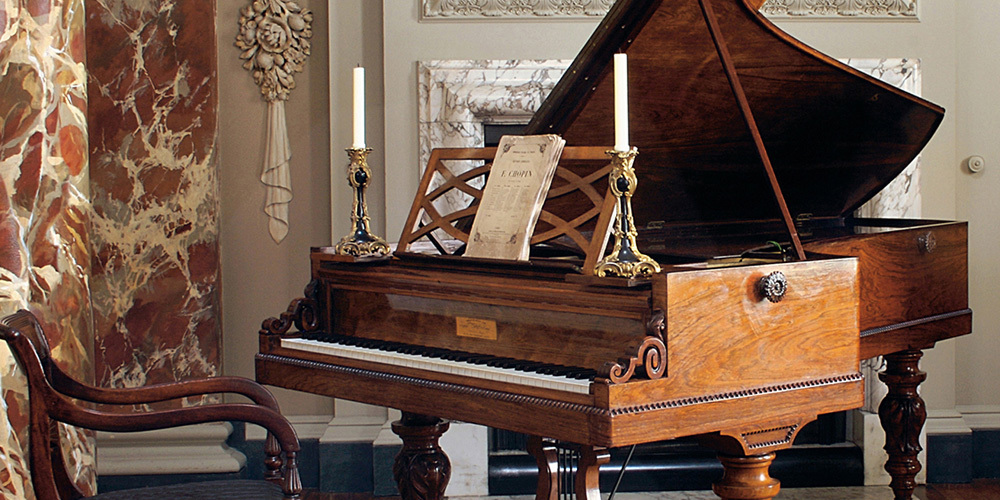
Welcome to our very first Study Group — a space for collaborative, peer-led learning!
We’re starting with one of the most moving works in the piano repertoire: Chopin’s Prelude in E minor, Op. 28 No. 4.
Why this piece? Because we’re leading up to the International Chopin Competition, and what better way to prepare than by immersing ourselves in Chopin’s language together. This isn’t a formal class — it’s a chance to learn side by side, share ideas, and discover new layers of the music. I’ll be working on the piece right along with you, and I can’t wait to see what insights we uncover as a group.
🗓️ What to expect:
Starting September 8th, we’ll explore:
Melody and balance — bringing out the singing line above the chords
Left-hand harmony — keeping the pulse steady and clear
Rubato and expression — shaping time without losing flow
Tone and pedaling — finding colors that bring the Prelude to life
Your own questions, discoveries, and perspectives!
We’ll also meet for two live Zoom sessions to share progress, exchange ideas, and celebrate our work on this piece. (Times and clickable links below!)
Livestream Presentation: September 11th at 11am PT
Zoom session #1: September 11th at 11:20am PT
Note: This zoom session will start with approximately a 15-20 minute short lecture and deep dive on the piece with Dominic, before we dive into all of your questions and conversations!
Zoom session #2: September 19th at 11am PT
✅ How to participate:
Sign up Here!
Download or open the score for the Prelude in E minor
Introduce yourself below!
Join the prompts and discussions
Share your thoughts, questions, or even a short recording if you’d like
Zoom Study Group #2 Video!
Dominic's Annotated Score Here!
138 replies
-
I would like that too. I got my schedule confused and turned on the lecture part late, watched that (realizing I might be lost if I hadn't) THEN the zoom portion was over. Sad.
-
Loved our intense Zoom call and looking forward to the next one. As far as progress, I can say progress is being made, but nothing is ready to share yet. My teacher and I agreed that I shouldn't drive myself too crazy with trying to bring out the changing "voices" in the LH, but rather to aim for expressing the piece as a whole. This is guidance for someone at my skill level. I'm sure those with better technique can achieve the intricate voicing.
My other guidance is the description I believe Roger shared (correct me if I have the wrong guy) - that the LH chords represent Chopin's heartbeat and the "sighs" in the RH represent his struggled breathing. A normal heartbeat goes about 72 BPM and this tempo feels good to me.
-
Ok I’ll bravely share this far-from-perfect try to play this piece. Main challenge for me is voicing in the LH while balancing RH. The advice on how to play LH chords helped me tremendously, thanks Dominique.
I’m still not fully secure in the text, so I cannot fully express my feeling of the atmosphere as I’m tense to hit the right notes and emphasize the underlying LH “melody” changes (more-less-than-more successfully 😂). Anyway, this is the point to continue on progressing. Looking forward to the feedback 🙂.
-
Can someone share what was talked about regarding the left hand voicing at the zoom? I couldn't make it. Thank you!
-
I've been diligently practicing this prelude, but this morning my husband asked that I please put on my headphones (I have a hybrid piano). He didn't like the piece and thought it was "icky." I must admit, I tend to play the more melancholic pieces, but I think this lugubrious prelude finally pushed him over the edge. I still think it's a gorgeous piece and I'm enjoying playing it and discussing it with all of you. Just wanted to let you all know, some folks might find it "icky." 🤗
-
Hi everyone! Got only the first part so far, because I want to try to memorize. https://youtube.com/shorts/fjkY7I-dTu8?si=1yLgUbR-rjSCl-bf
-
The major difficulty for me is the section from measures 16 to 19. And the problem is finding those LH chords without interrupting the "flow" of the melody in the RH. The big jump at the beginning of m 17 doesn't help! And the turn in m 16. So I have resorted to practicing each chord change - backwards and forwards - with the goal of playing just the left hand changes quickly and smoothly with no fumbling. Then I will go back and slow it down and add the RH. Anyway, that's my plan...
-
This is a question for the Zoom call, which is in about an hour. A greater explanation of how to use the second escapement would be appreciated: to create quieter repetitions in the LH chords. I realise that the regulation of the piano has to be very good but there is a significant risk of some of the notes not sounding if the keys are not brought up sufficiently to activate the hammers.
-
Can anyone post links to the zoom recordings. I was not able to access.