Mastering Tricky Passages and answering your questions (Jarred Dunn feat. Bach!)
Welcome, everyone.
If you’ve been wrestling with fingering choices, tricky passages, or spots in your music that just won’t settle, this is a good moment to bring those questions forward.
Whether it’s a small detail that’s been quietly bothering you or a larger technical or musical hurdle you’re ready to unpack, nothing is too minor to ask about. These are exactly the kinds of things that shape real progress.
Join us live today for hands-on guidance and problem-solving in real time.
Feel free to leave any and all questions below—Jarred is looking forward to digging into them with you.
After a wonderful TWI with Jarred, we will focus on questions and more pertaining to the music of Bach! Please know this stream will focus on is music and style!
28 replies
-
I'm working on BWV 999 (little prelude in c minor), and find that the muscles in my right forearm (extensor side) become tired when I play more than about a third of the piece. This happens more noticeably in the sections where the right hand is to the left of midline. Could you please offer some suggestions which may help alleviate this fatigue? Thanks so much!
-
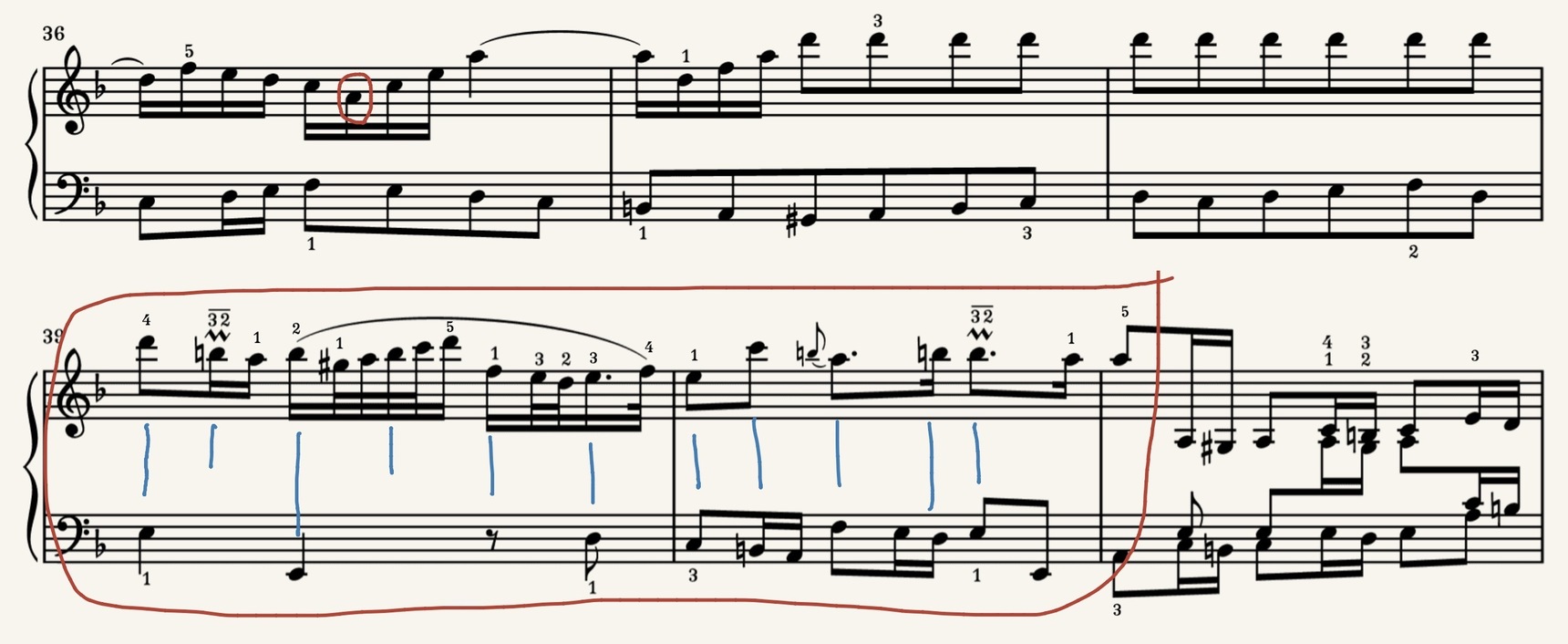
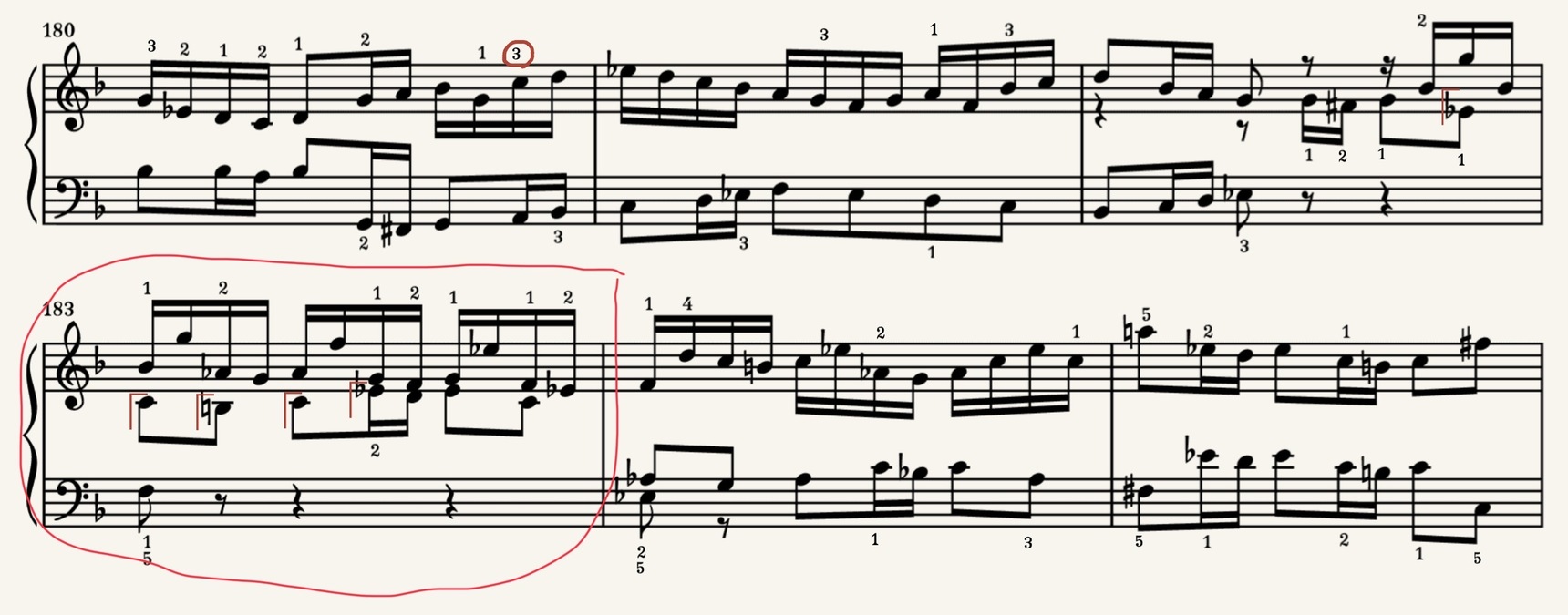
I feel all I ask on these mastering tricky passage livestreams is BWV 1052… 😂
Anyways, I have some general questions on Bach and questions specific to the 3rd movement:
1. I’ve heard from various sources that when playing Bach and other baroque composer keyboard works, you should find:
A) the fastest type of note - play it legato and
B) the second fastest note - play it detached/staccato.
Wondering your opinion on this Jarred.
2. Why does Bach write weird random measures in? Don’t get me wrong I love Bach but in this movement the measures seem to be completely out of character and doesn’t sound the best (to my ears). Examples (from BWV 1052 3rd movement) below:
Thanks again Jarred and Dominic! 🙏
-
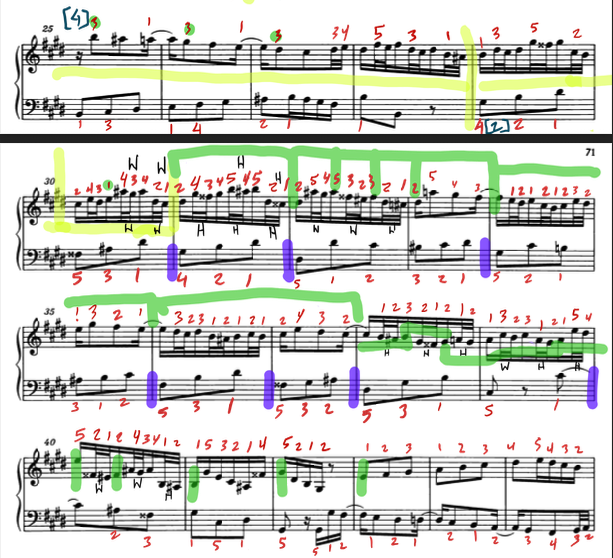
I am struggling to memorize mm. 29-42 of the Bach E major 2 part invention. I am using the practice techniques David Chang outlined over a couple of videos here on Tonebase, breaking the music down into small cells, mastering them additively, but my progress is excruciatingly slow. any advice? it's not so much a technical problem as a conceptual problem: it feels like some of the chromaticism is sort of arbitrary (as the many conflicting editions of this piece make manifest ;-) ) I'm playing from the urtext version: https://www.dropbox.com/scl/fi/pi1s2jxx16fgmkdrkd3cx/Screenshot-2026-02-05-at-10.42.17-AM.png?rlkey=ies6qlynpv0pakisr2i45s0t9&dl=0
-
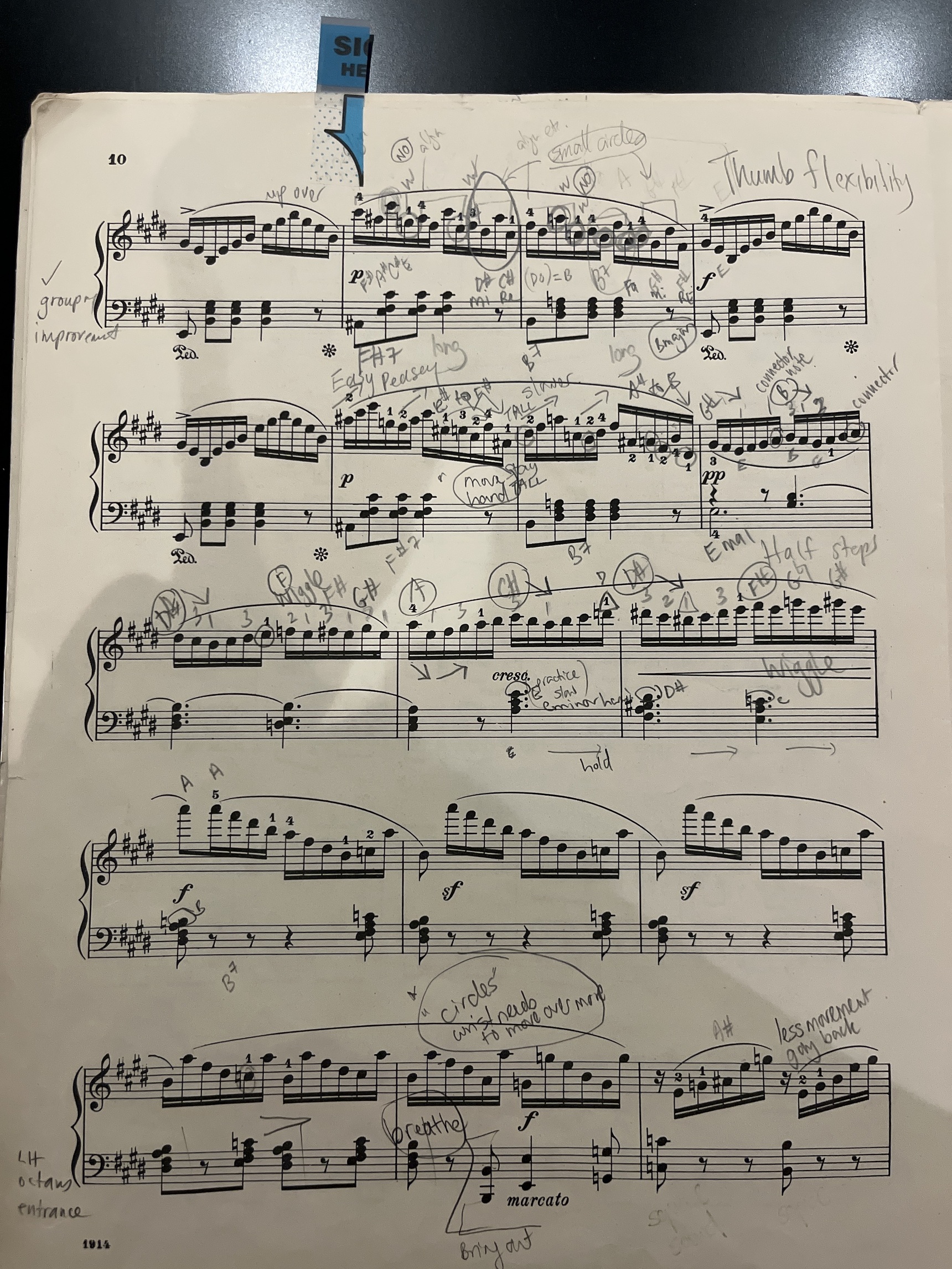
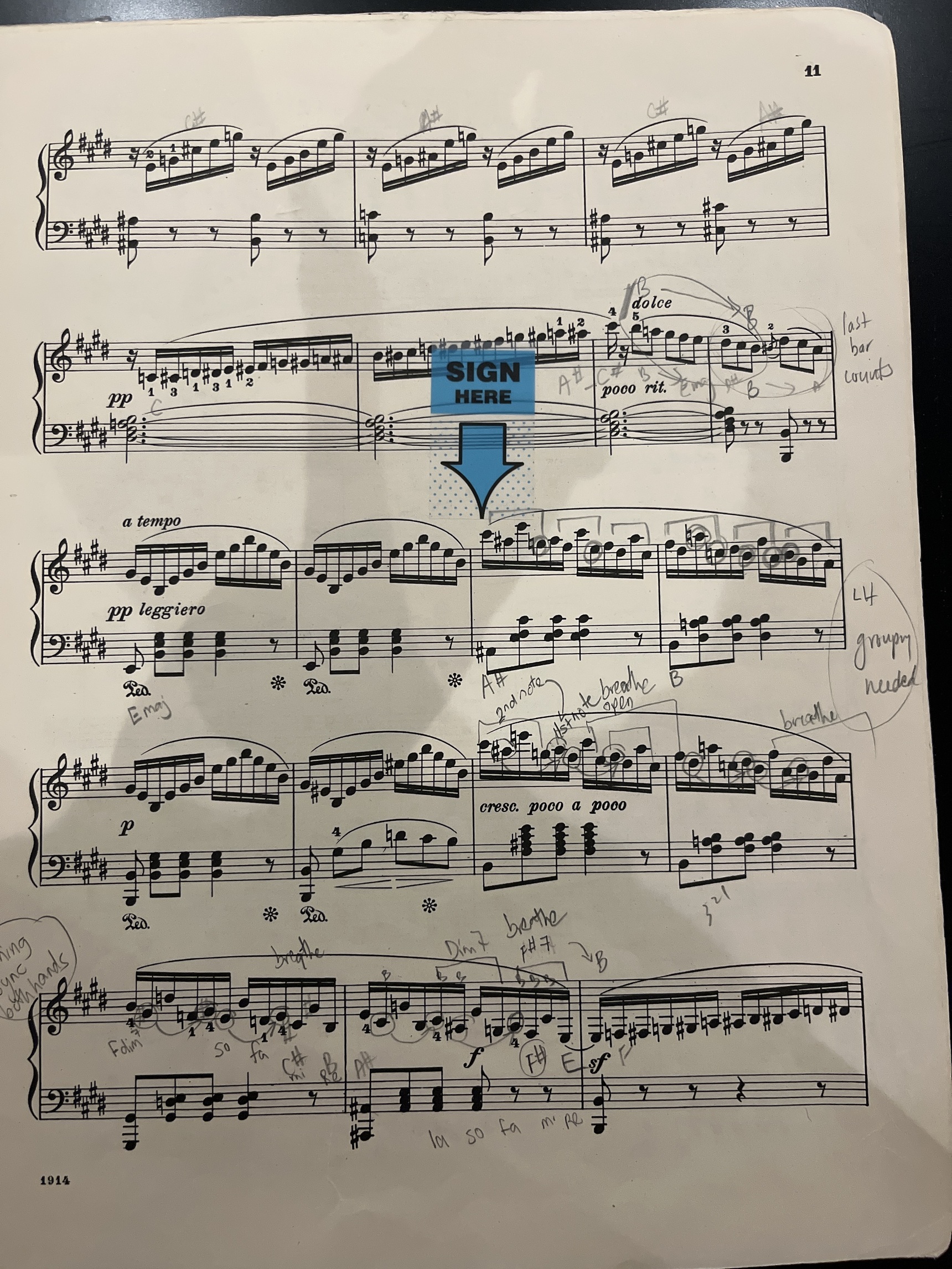
In the Mendelssohn Rondo Capriccioso, I struggle with these passages makes with the blue sticky. The ends of the runs tend to get cramped up together. And the second run with A# C# E G, is awkward shifts of the hand.
-
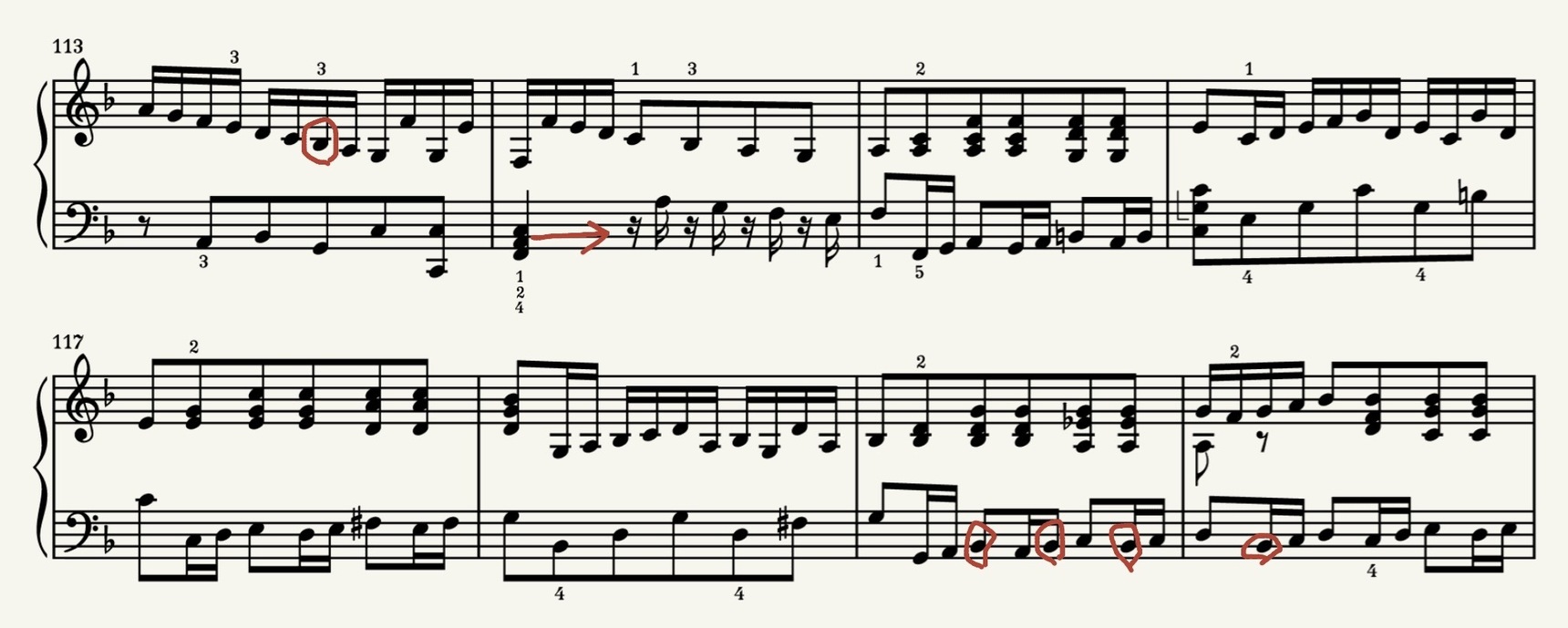
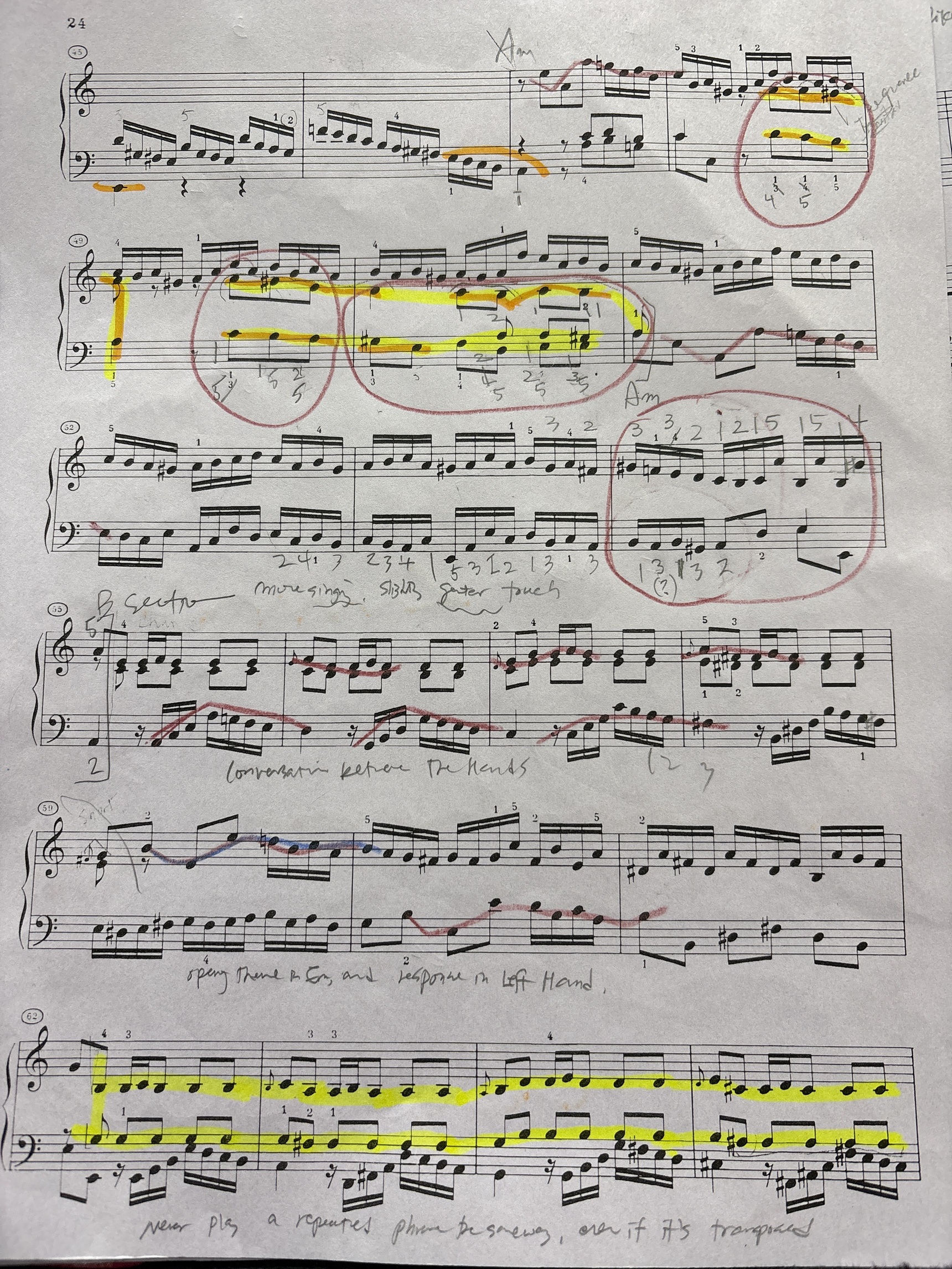
Now I am starting to learn prelude from English suit no 2 BWV 807.
my question is the red circles where the LH playing 2 or 3 voices from m. 48-55. There are some finger suggestions but I crossed out and put the different fingers. What would you suggest since this piece should play in fast tempo. Also would you advise some suggestions for choosing better fingering.
thank you.😊 -
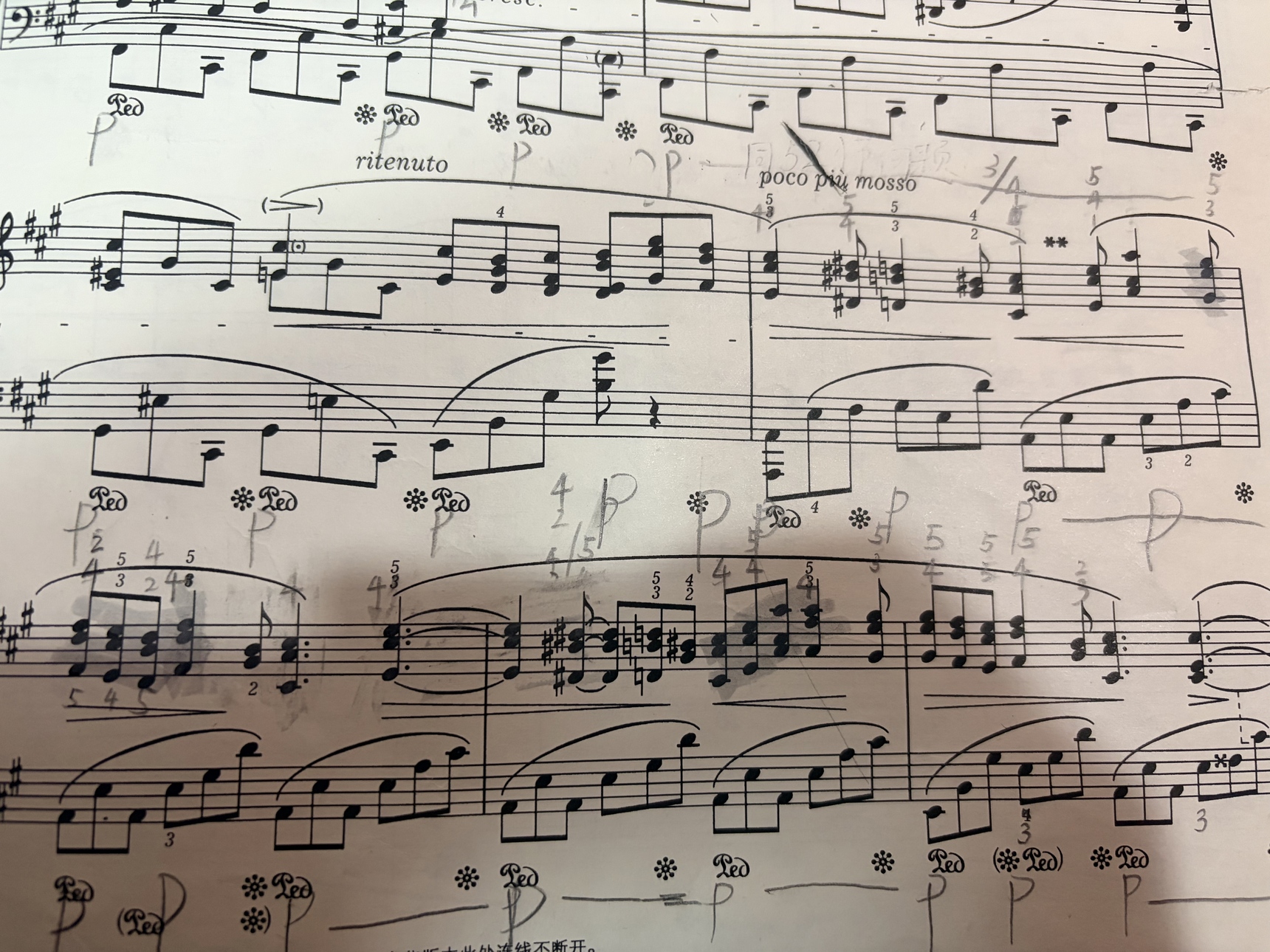
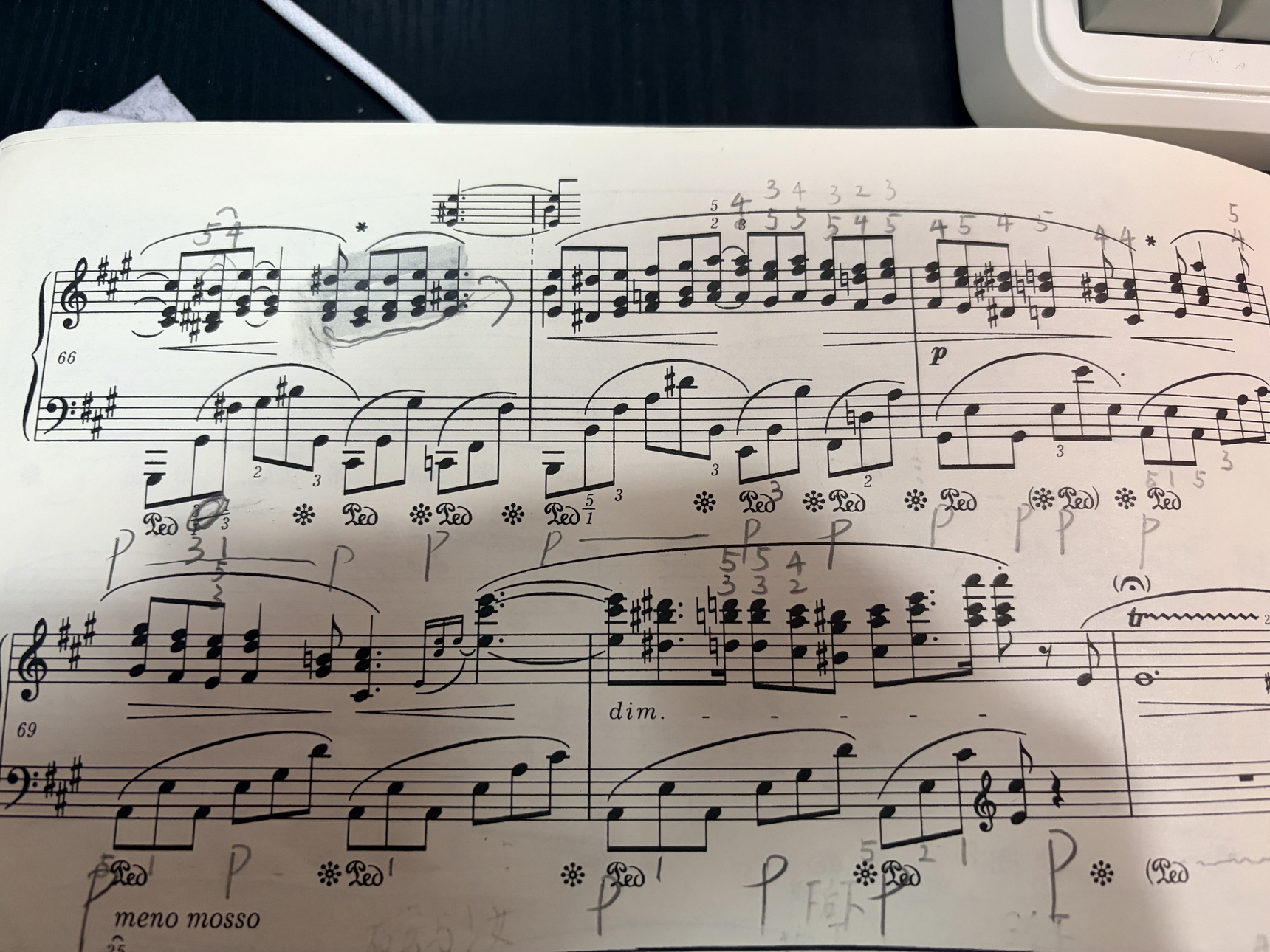
In bars 62–70 of Chopin's Barcarolle, my right hand chords don’t move smoothly. I’m not sure if it’s the fingerings or my technique. I’ve tried to relax my thumb during the shifts, but it doesn’t help much. And because the movement isn’t smooth, I can’t control the dynamics well.
-
More of a generic question about practicing leaps in the LH. The excerpt is from William Schuman's "Chester" - the commissioned piece for the 8th Cliburn competition, but any similar piece would do as an example. What is the best way to practice and prepare for those leaps in the LH?
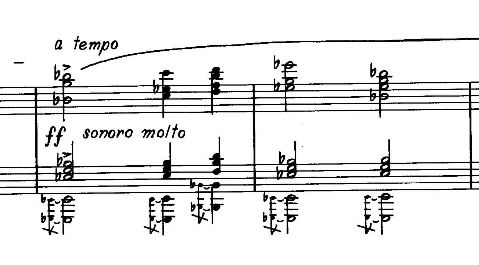
Thanks!
Sam
-
Just a general question about memorizing Bach fugues.
When I'm starting to learn a new fugue (like the 2 you helped me with last year) I always like to color code each of the voices in my score and learn them separately.
But, is it important to try to memorize each voice on its own, or can we just try to memorize a fugue when we're playing with both hands at the same time?
Whenever I've tried in the past to memorize each voice, I end up feeling overwhelmed when I actually sit down to play.
Thanks in advance!
-
I also have a more general question. When in the learning process do you start working on voicing? Right from the start? Or do you get the piece in your fingers first? Voicing before speed? Before or after memorization? Thanks!
-
I'm wondering what might be a good approach to learning Partitas.
Every dance has its own character. So, would you recommend for someone to learn two or more Gavottes, Minuets, etc from different Partitas to compare and contrast, and to get a better feel for the dance itself, instead of learning a whole Partita?
-
I have found that focusing on the voicing helped me memorize my Sarabande. Would you recommend memorizing from the very start, so as to See and Hear the voices more clearly?
-
Related to Monika’s question- When learning Bach’s various Suites, is there value in learning the movements in order?
-
This Art Tatum-like stride passage in the 3rd mvmt of Ravel's Concerto in G is difficult to nail. Any suggestions?
-
I am working on the 5th Partitia BWV 829 . I the Gigue it seems that two motives( bars 1/2 and bars 33/34) begin to overlap near bar 46. Is one of them a “winner” in the dialogue when voicing?
-
Hi,
I am struggling with the chordal passage starting in measure 17 of Rachmaninov's Prelude in G Minor, Op. 23 no 5. I can reach 9 notes and struggle especially with the fast chords in measure 23. I also would appreciate advice on the Wanderer Fantasie, especially the third movement.
-
I'm in a different timezone and these sessions always seem to be 6am local time which I can't do. But I'd welcome any advice at all on any of the following:
1. Broken arpeggios e.g. from Mozart Sonata 13 B Flat Major KV333 first movement.
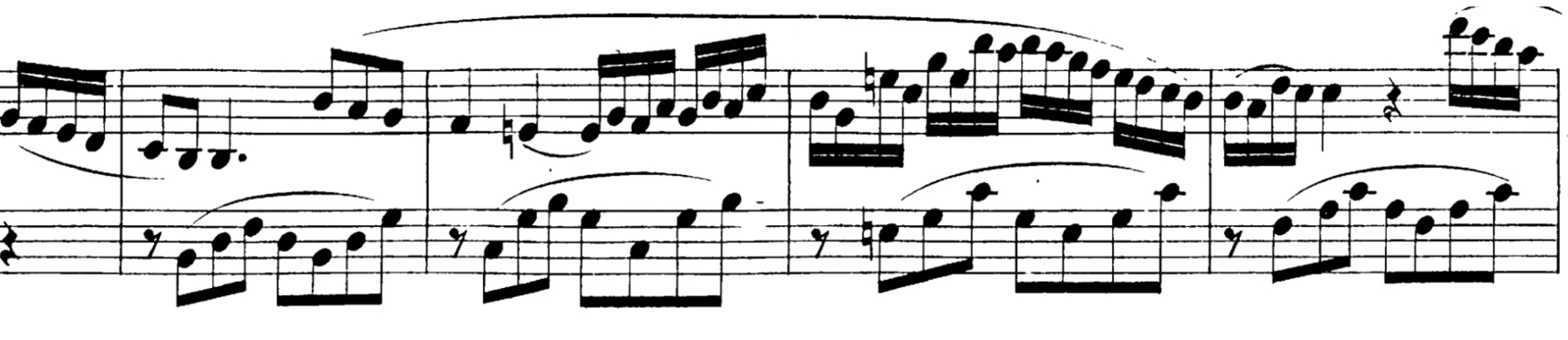
I continue to struggle with this finger work. What has worked for others to master this passage and similar ones?
2. Also from the same movement, is there an unwritten agreement that it's ok to slow down in order to execute these trills?
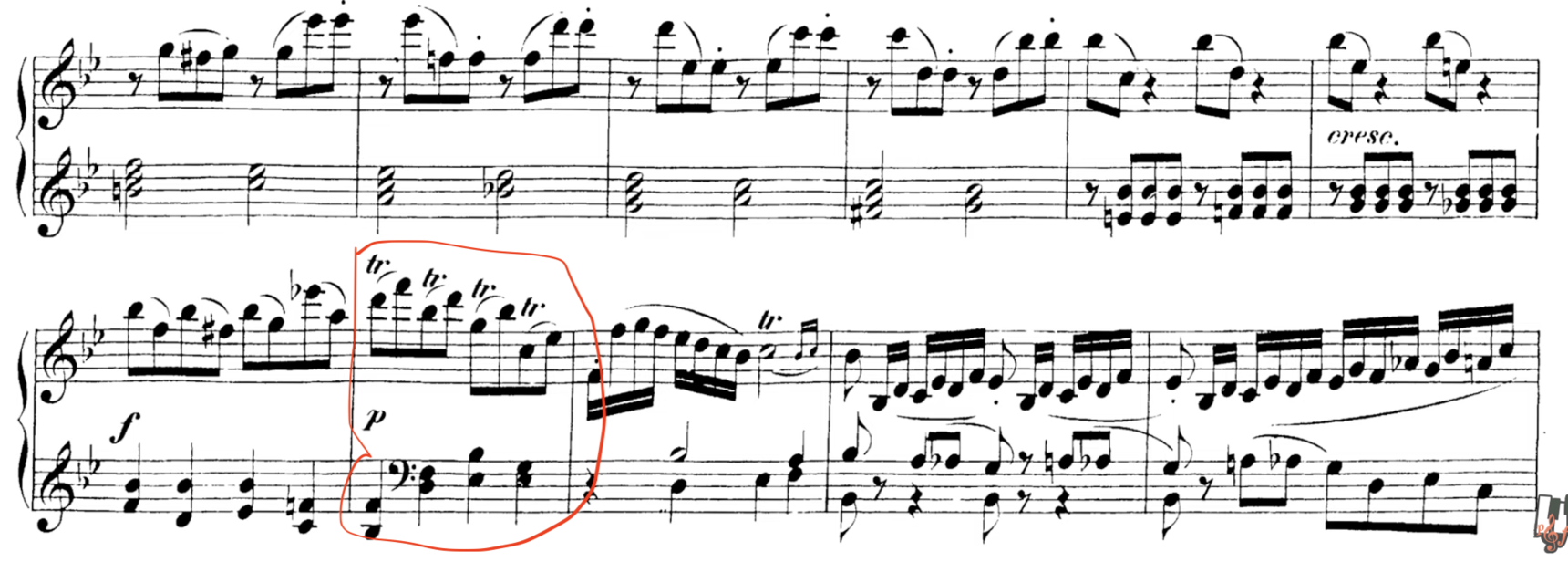
3. In Mozart's Sonata No. 6 "Dürnitz" in D major K.284 first movement, is this playable, by anyone? I've been playing a simplification. Do others who aren't Glenn Gould also play a simplification here?
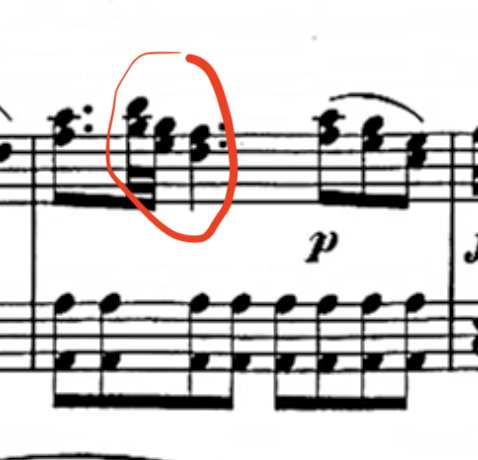
Any thoughts, comments, tips on any of these much appreciated!