Mastering Tricky Passages and answering your questions!
Welcome, everyone. As we wind down the year, I’m excited to be back with you in this helpful stream!
If you’ve been sitting with questions about your playing, fingering, tricky passages, or musical roadblocks you haven’t quite cracked yet, this is a great moment to bring them out.
Whether it’s something small that’s been nagging you or a bigger challenge you’re ready to work through, every question is worth asking. Join us live today for real-time guidance and problem-solving, and let’s close out the year by clearing up a few musical loose ends together!
Leave any and all questions below!
32 replies
-
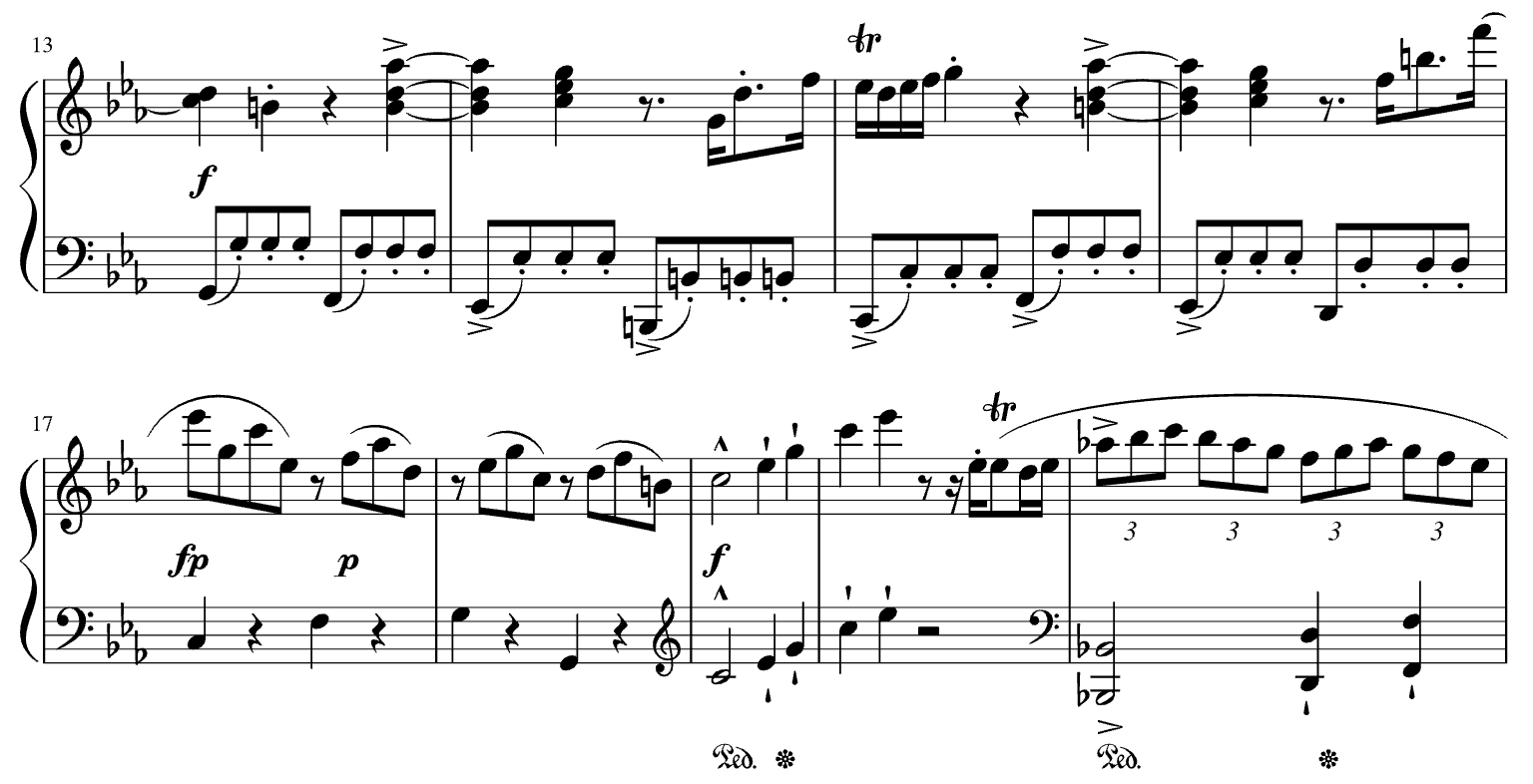
I would really welcome any advice on measures 13-18 in the first movement of Mozart's C minor sonata particularly with respect to fingering in the left hand (I have experimented with 5111, 5121, 5131, leaning towards the latter) and the dotted rhythmns in the right hand. The piece is all but within striking distance for me, other than for this passage!
-
Trolls and fast passages still challenge me. Also still fighting memory even after working on all the ideas I’ve gotten thru tonebase.
-
I hope it's OK to ask general questions not just about specific passages in pieces.
I have large hands and fat fingers, with all the problems that come with that. I often struggle with cramped positions like thirds or chromatic chords between the black keys. Do you have any tips for that.
-
I have found that my trills improve automatically with uneven practicing. I have injuries to my right hand (thumb got caught in a car door for which I'm now paying the price. It would dislocate when turning it under etc. as well as having shortened tendons in both hands. I have little hands but because of this my right hand now has an even smaller stretch. 17cm and 19.5cm in the left hand. They used to both be 19.5. Also issues in the left hand due to a carpal tunnel operation. So, what to do??? To get my brain to calibrate each finger separately and make them work cleanly individually I devised a system of playing unevenly. Using scales, arpeggios and Hanon. I start usually with my left hand pinkie, then right hand thumb etc. each finger in turn..playing staccato, then swap with right hand first also playing staccato, Then the same legato. I find doing this my fingers have become very even and also fast as it seems to encourage relaxation.
Hope this helps. I always warm up this way and my hands have slowly improved over time. Have also got myself a small handed keyboard... Hadn't realised till then what a handicap my small hands really were. But I do miss playing on my grand.
-
Hi Dominic,
I have a question about reading scores and knowing when a detail is specific to just that exact place and when it might be shown once and then it is assumed to be repeated forever (but it isn't marked in the score going forward) in such a manner until told otherwise. As of late, I have settled on the literal interpretation when learning a piece (when marked, do it, when not marked, don't do it).
I question myself on this because often when I listen to recordings of professional performers or teachers or even competition entrants, there seems to be a clear difference in what I hear compared to the score.
I will give four examples from Chopin of pieces I am currently working on and would love to have some clear direction on this. It is essentially the same question asked four times. Hopefully, what you advise can simply be applied to each case.
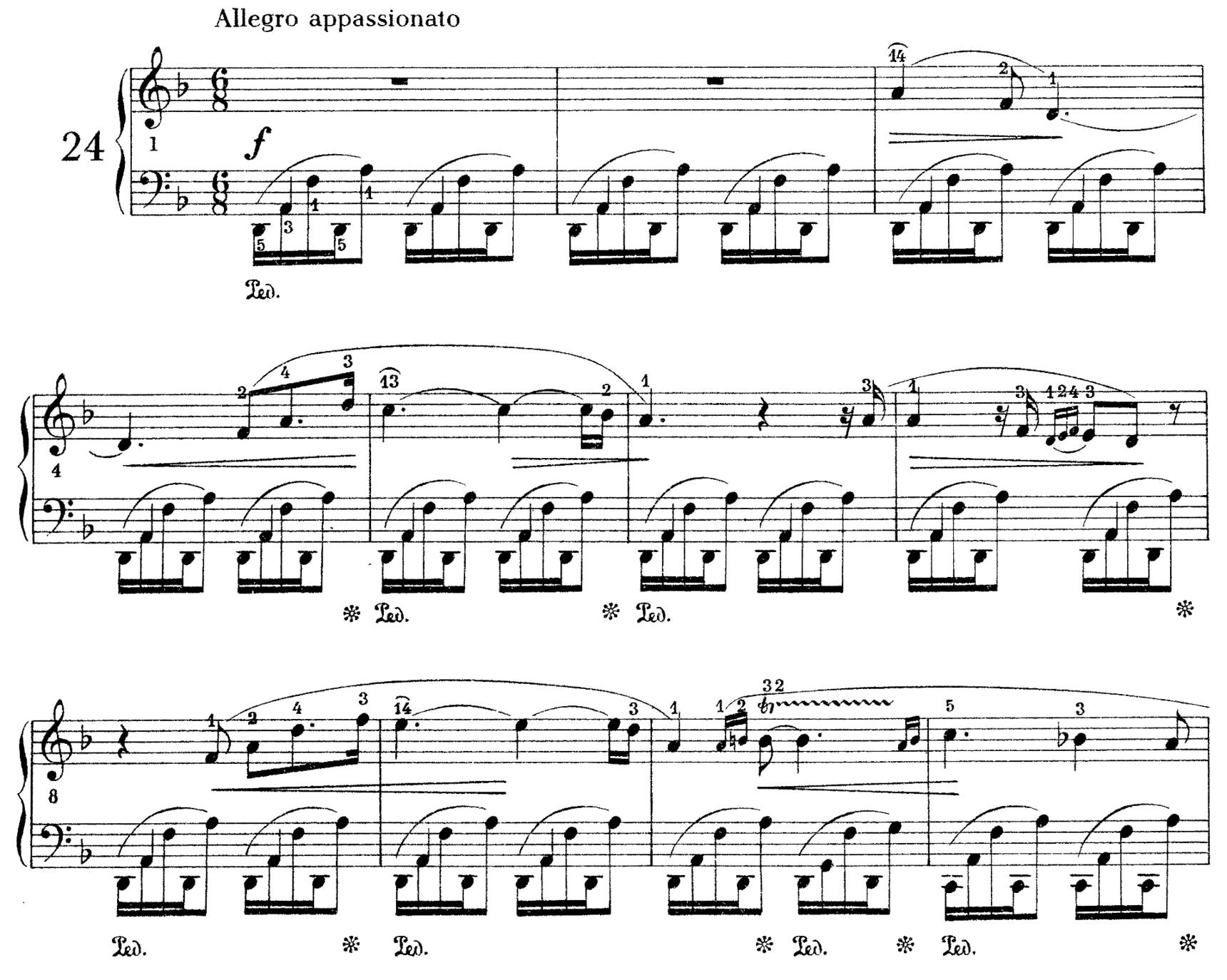
Example 1: Chopin Preludes, Op. 28 No. 24 in D minor
LH, Bars 1 - 9, quarter note, twice per bar on the A..... Then this stops and is never repeated?
This looks very specific to me but yet I don't know if I've ever heard anyone is the real world try to even make this clear? It's bloody hard to do. Am I wasting my time?
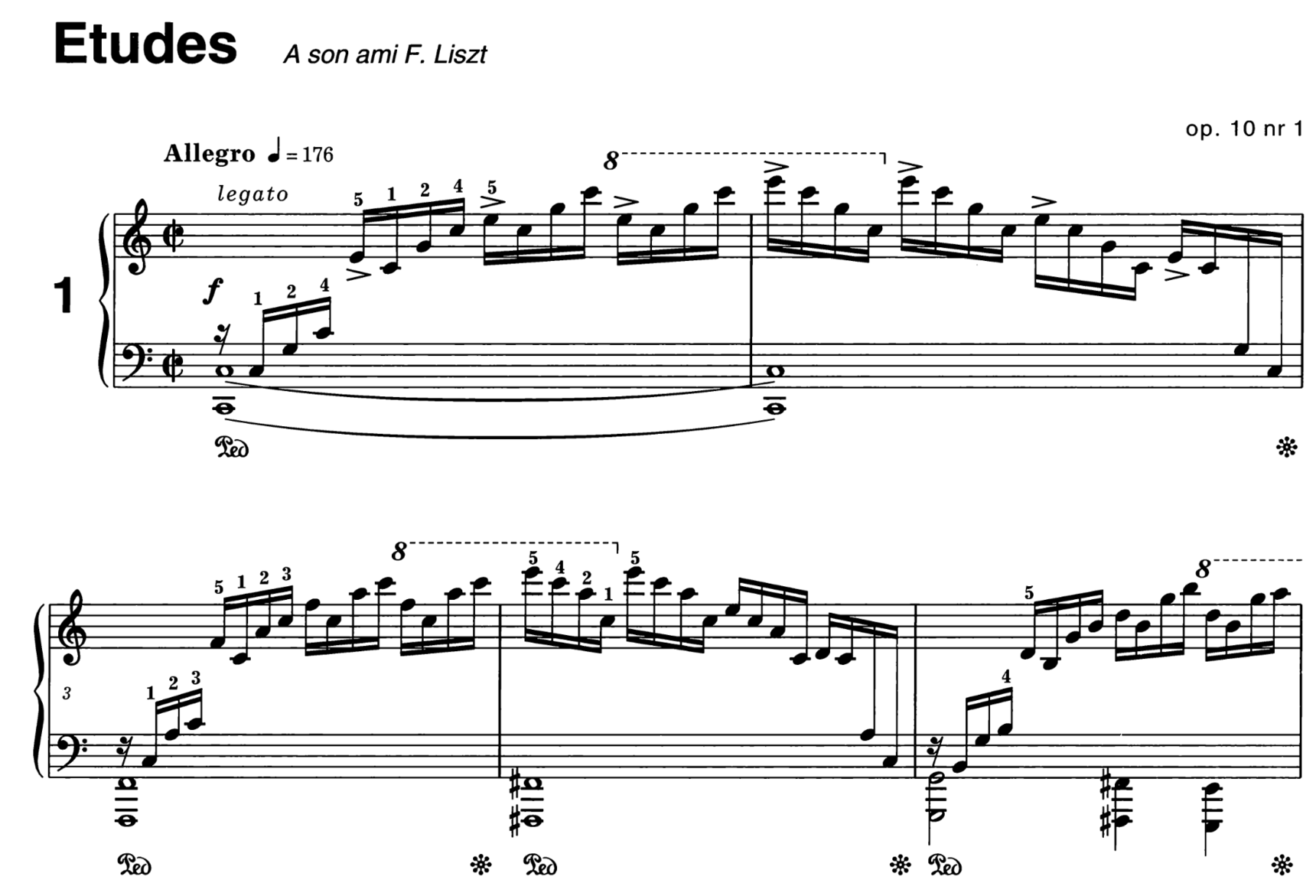
Example 2: Chopin Etudes Op. 10 No. 1 in C major
RH, Bars 1 - 2, accent on the seven E's.....Then nothing regular or consistent from here on except there is one accent only in bars, 8, 38, 40, 56, 60, 64, 74 and bars 69-70. Again, do I take this literally as my goal to only accent where indicated and to not highlight anywhere else?
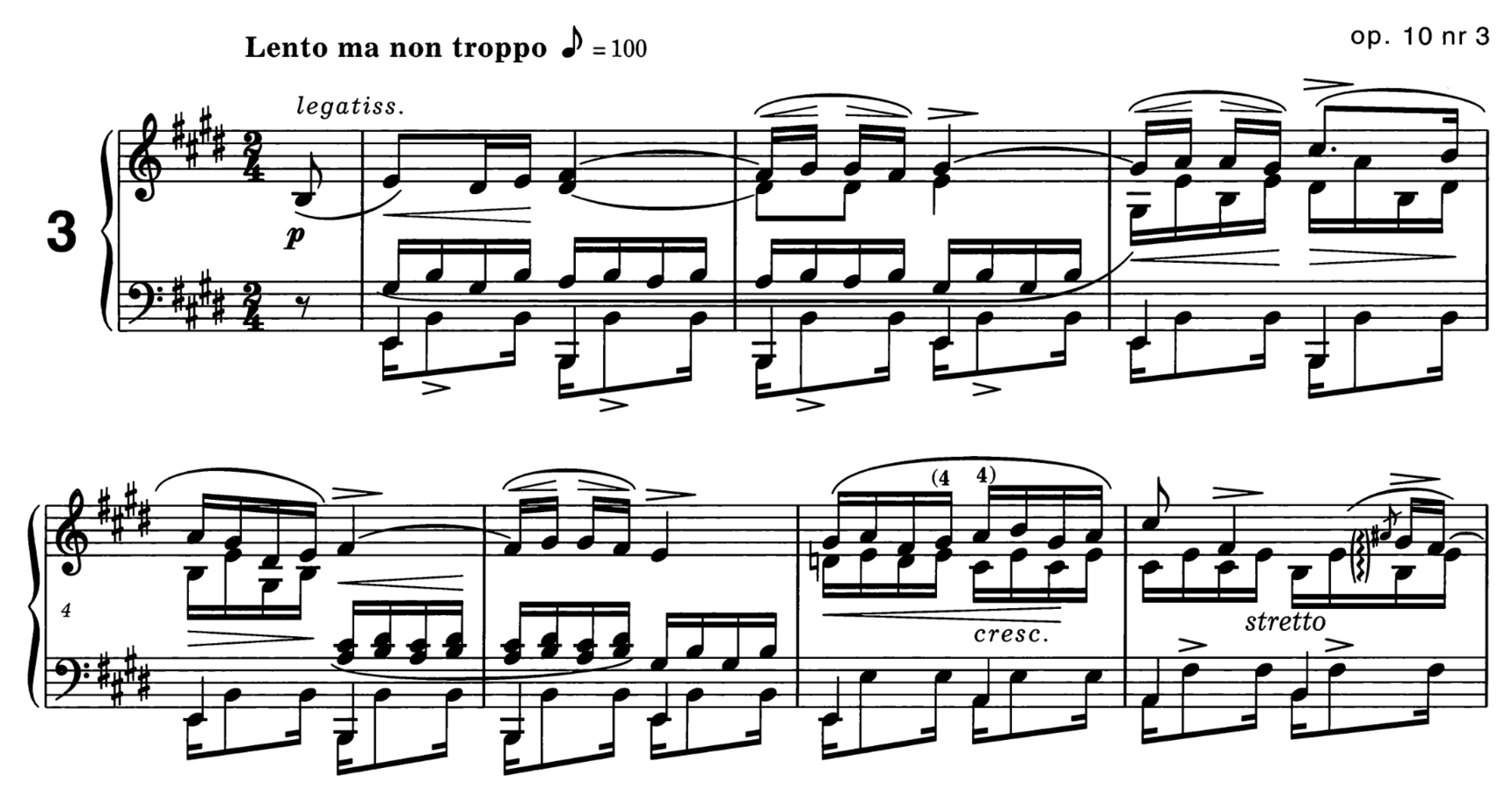
Example 3: Chopin Etudes Op. 10 No. 3 in E major
LH, Bars 1 - 2, accent on the offbeat B's.... Then it generally stops but in bars 3 - 17, which have the same rhythm there are only accents in bars 7 and 14. Again, not sure how to interpret this? If Chopin wanted this, why don't I ever hear anyone play it rhythmically as such?
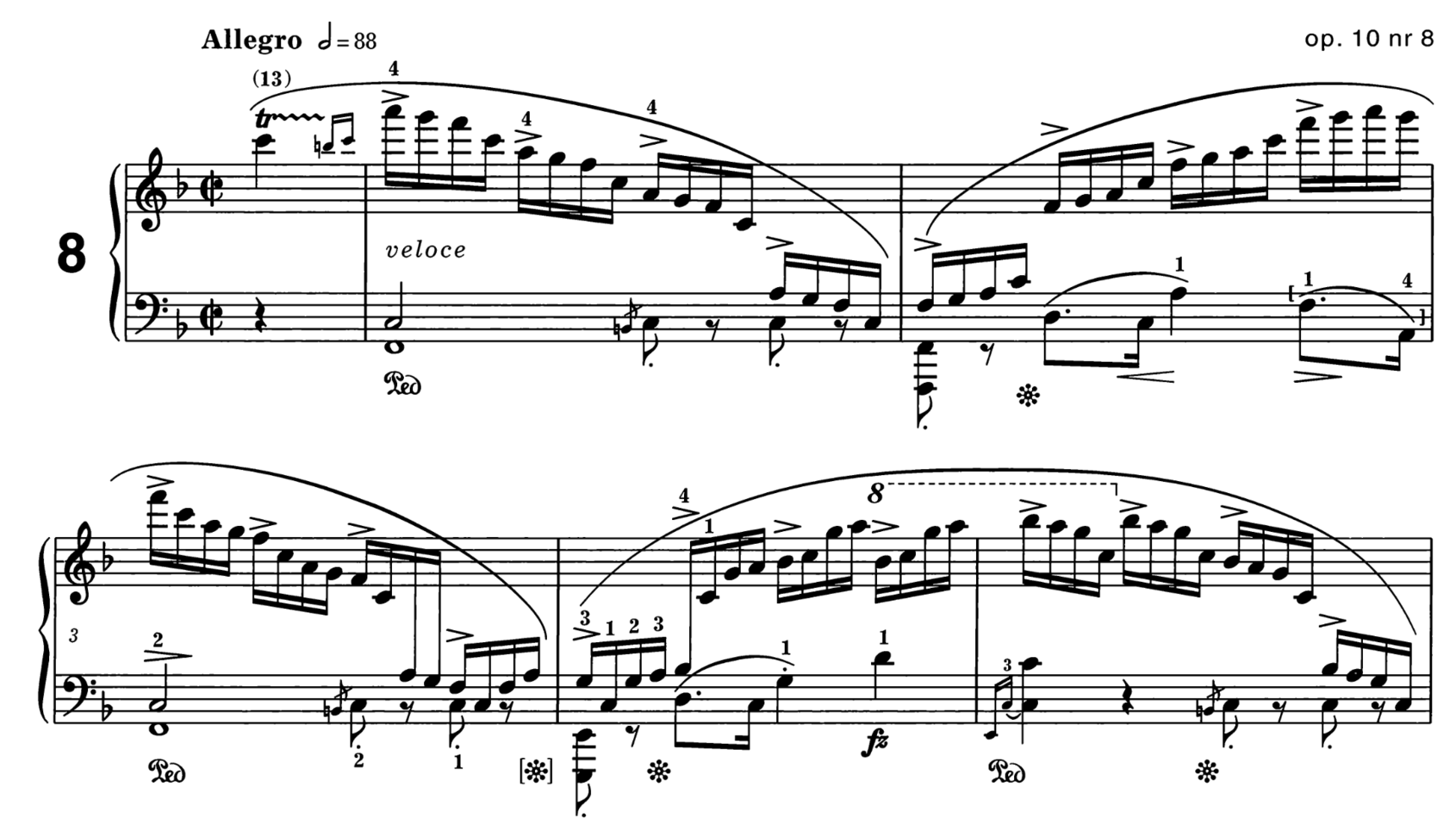
Example 4: Chopin Etudes Op. 10 No. 8 in F major
RH, Bars 1 - 14, accent on the beat with a couple of exceptions in bars 9 - 12. Then the whole section repeats in bar 15 onward without accents. Accents return in bar 29 etc and so the whole piece seems to intentionally alternate between clear accents and clear no-accents.
Again, it seems obvious but I question myself on how to play this as I don't really hear these distinctions in the real world.
-->Could you demonstrate how to play the accented lines versus the unaccented lines?
I am actually not asking for a friend ;-). I am generally interested in knowing. Thanks for your help with this important (to me) question.
Doug W.
-
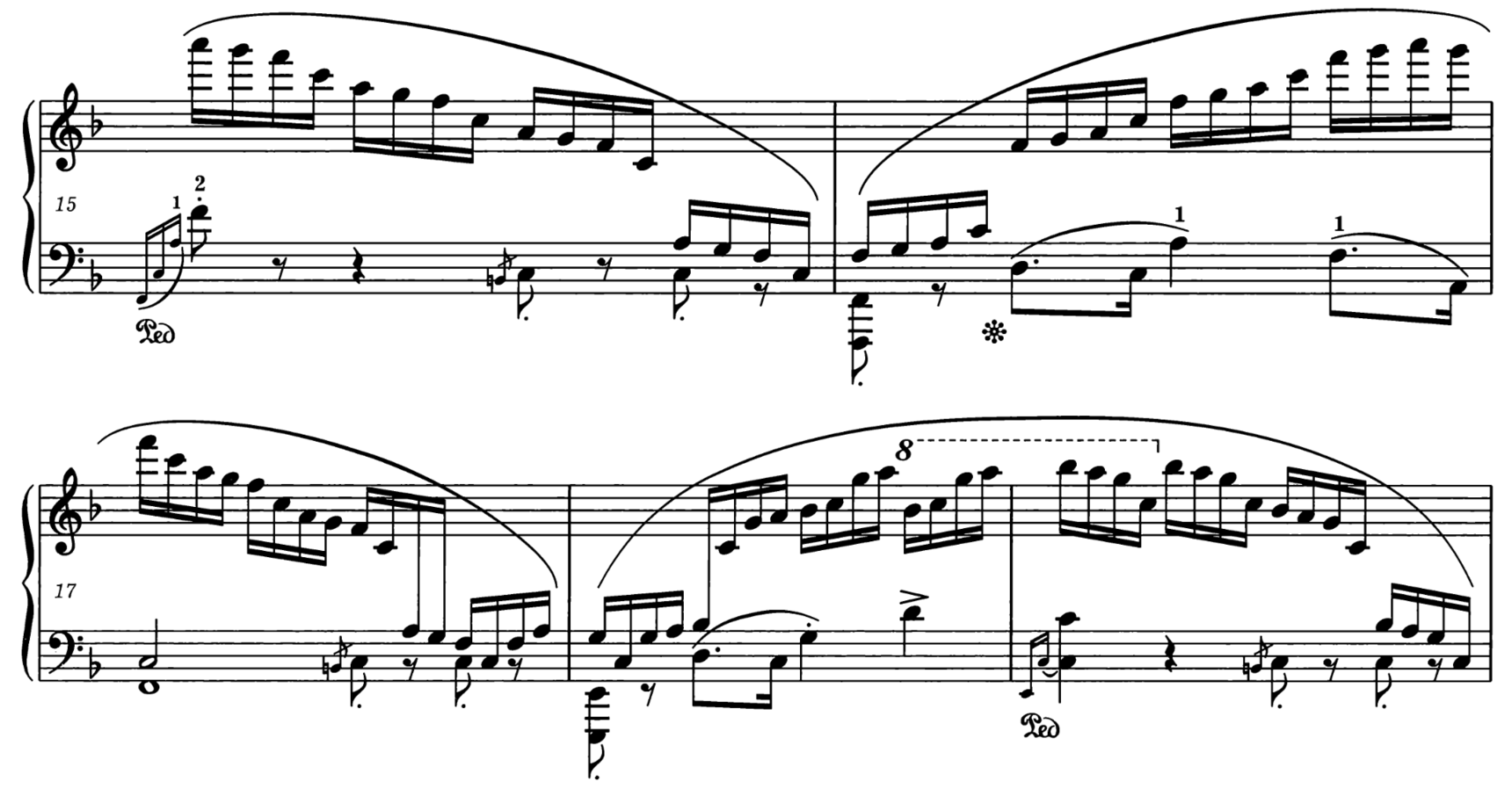
How do you suggest playing measures 57-64 in Brahms, op 118, no 2? Is it ok to separate the hands, as long as I voice the notes I want to voice, such as the tenor line?