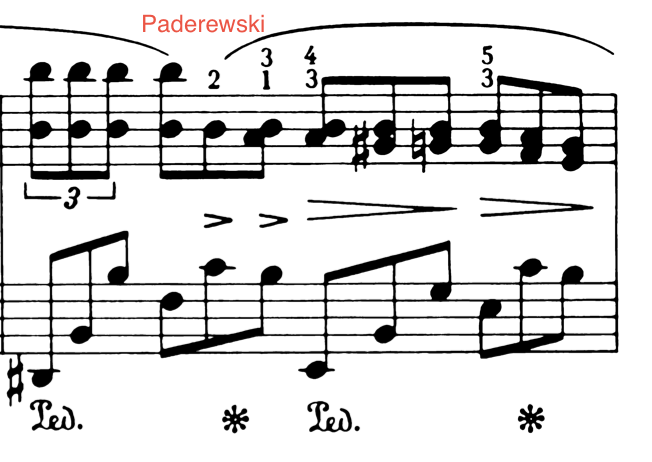
Measure 45-46 Chopin Nocturne in E minor
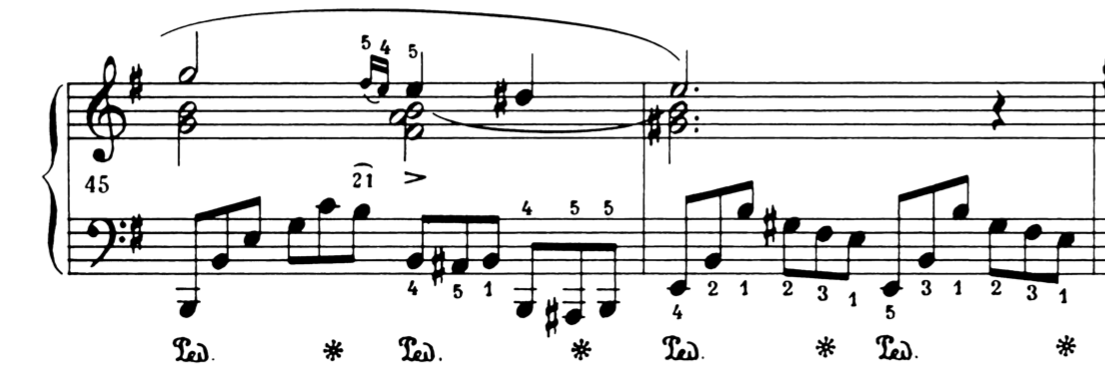
Hi all, I’ve been working on this piece for a few months and getting to the final stages. I have a question regarding this measure. I’ve encountered editions where the B is mot tied. My edition has it tied which seems more musically appropriate- sustaining the voice. Any thoughts on what is considered standard performance for this?
also curious if anyone has another suggested fingering for the grace note to chords and then holding the B. Thanks!
carlos
18 replies
-
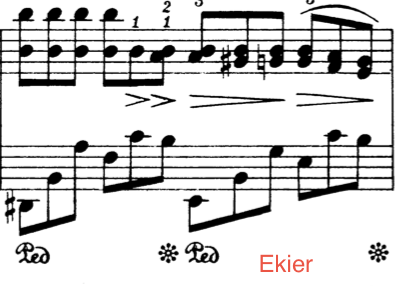
That looks like the Paderewski edition. While it a respectable edition it is edited and some of those edits do not align with urtext editions. The Ekier edition (which is considered to be excellent) does not have the tie which indicates that the tie may be editorial.
However, that does not mean you need to change anything if you like it! Paderewski was a greatly loved Polish pianist and his performances of Chopin were held in high regard. You would just be choosing to maintain a detail that a great performer felt was convincing and satisfying enough to include in their edition (though it is worth noting that by modern standards Panderewski is considered to be on the mannered side).
In regard to fingering, some editions suggest 43 for the grace notes, likely to help with the legato of the melody line. Either way, you have to make some compromises to get your fingers around the large chords so I would go with whichever works best for you. Holding the B as a tie makes this passage a fair bit trickier, particularly to legato. You would typically play the first chord 1235 and hold the B with 3, move 5-4 (or 5 again quickly depending on span) to the D#, and then resolve the chord to 1 (3) 5.
Great questions!
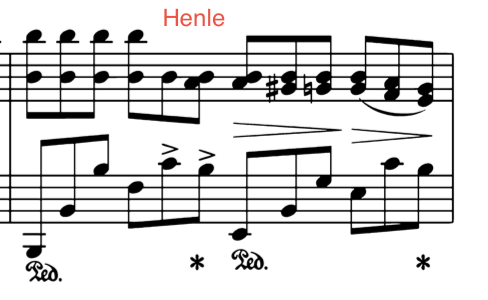
Edit: I checked some of my other editions once home and while the Ekier does not have the tie, Henle urtext does. None of the commentary from either edition discusses this specific discrepancy. This could mean that there are conflicting sources in which an authoritative version could not be determined. The Ekier commentary does state the following general acknowledgement:
In the sources from which this Nocturne is familiar, additions, and possibly also changes, were undoubtedly made to the performance markings.
You caught an interesting detail!
-
Thanks Dustin! I really appreciate the your detailed response. This is great stuff! I'm going to try both ways and see what my skills and smallish hands can execute lol and what sounds best to me. I originally was thinking the held B made sense - thinking it was like a singers voice carrying over two measures. I have not been able to distinguish what performances like Rubinstein's multiple recordings (my favorite renditions) are doing. Thanks again for the very helpful response! Cheers!
-
I was going to add that the Bärenreiter Urtext also has the tie, but I don't know if that is helpful.
-
Hi Carlos, great choice learning the piece. I just finished learning it. In my version the B does not have a tie for what it's worth. I think either way it's played sounds fine. Like you said it's hard to tell on the recordings what the artist is doing.
As for the grace notes, I play it using my 5 for the F and E. I slide my 5 down from the F to use the 5 on the E which makes the chord easier to play.
Hope that helps.
Sam
-
Thanks everyone! great info! I really love this piece- it's one of those that moves me no matter how many times I've heard it. I'm still ironing out some of the kinks in the rapid runs and especially that last one after the long trill but it's getting close. Thanks for the fingering suggestion- will give it a try.
-
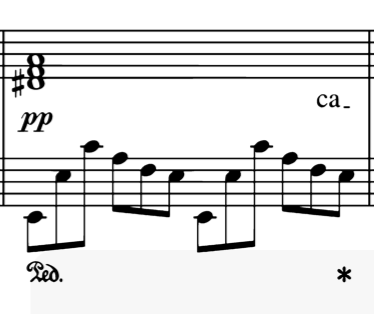
more....lol! My OCD is getting the best of me Ha Ha! I was curious so started looking at other areas of the piece and encountered these three variations for the climax! Crazy and frustrating lol. They all sound good and I'm having a tough time deciding which one I want. I had learned it with the Paderewski thus far but may decide to change. I also noticed near the end that the Henle edition does not repeat the D#/F#/A Chord as in the other editions. I've heard both depending on the performer. Oh well, I guess this is what happens when the piece is never published during the composers lifetime!
-
not sure this got posted, I've been trying to listen carefully and I think Rubinstein plays the Paderewski version and Ohlsson plays the Henle version. I've not encountered any recordings playing the upper A as noted in Ekier. I think I am going to settle on the Paderewski version.
-
Just curious did my previous post showing another area of the piece where three editions show different notes show up. On my screen it says pending review despite my posting it a week ago. Thanks!
-
Thanks!😊