Mastering Tricky Passages and answering your questions!
Wed Apr 22 at 11 AM - 12 PM PDT
Event by Team

Welcome, everyone. 

If you’ve been sitting with questions about your playing, fingering, tricky passages, or musical roadblocks you haven’t quite cracked yet, this is a great moment to bring them out.


Whether it’s something small that’s been nagging you or a bigger challenge you’re ready to work through, every question is worth asking. Join us live today for real-time guidance and problem-solving!


Leave any and all questions below!

41 replies

null
    • Gloria
    • 11 days ago
    • Reported - view

    Hello Dominic,

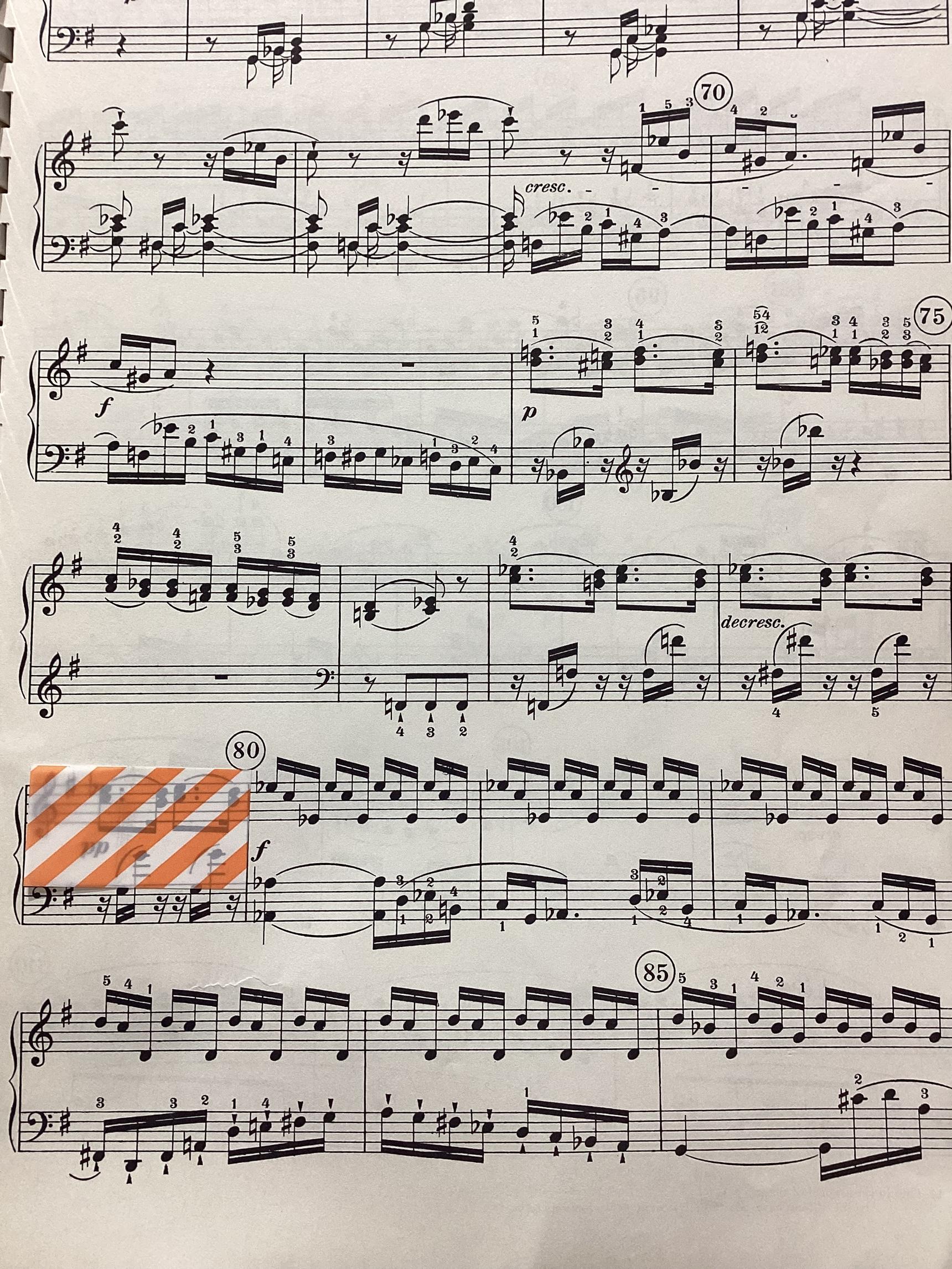
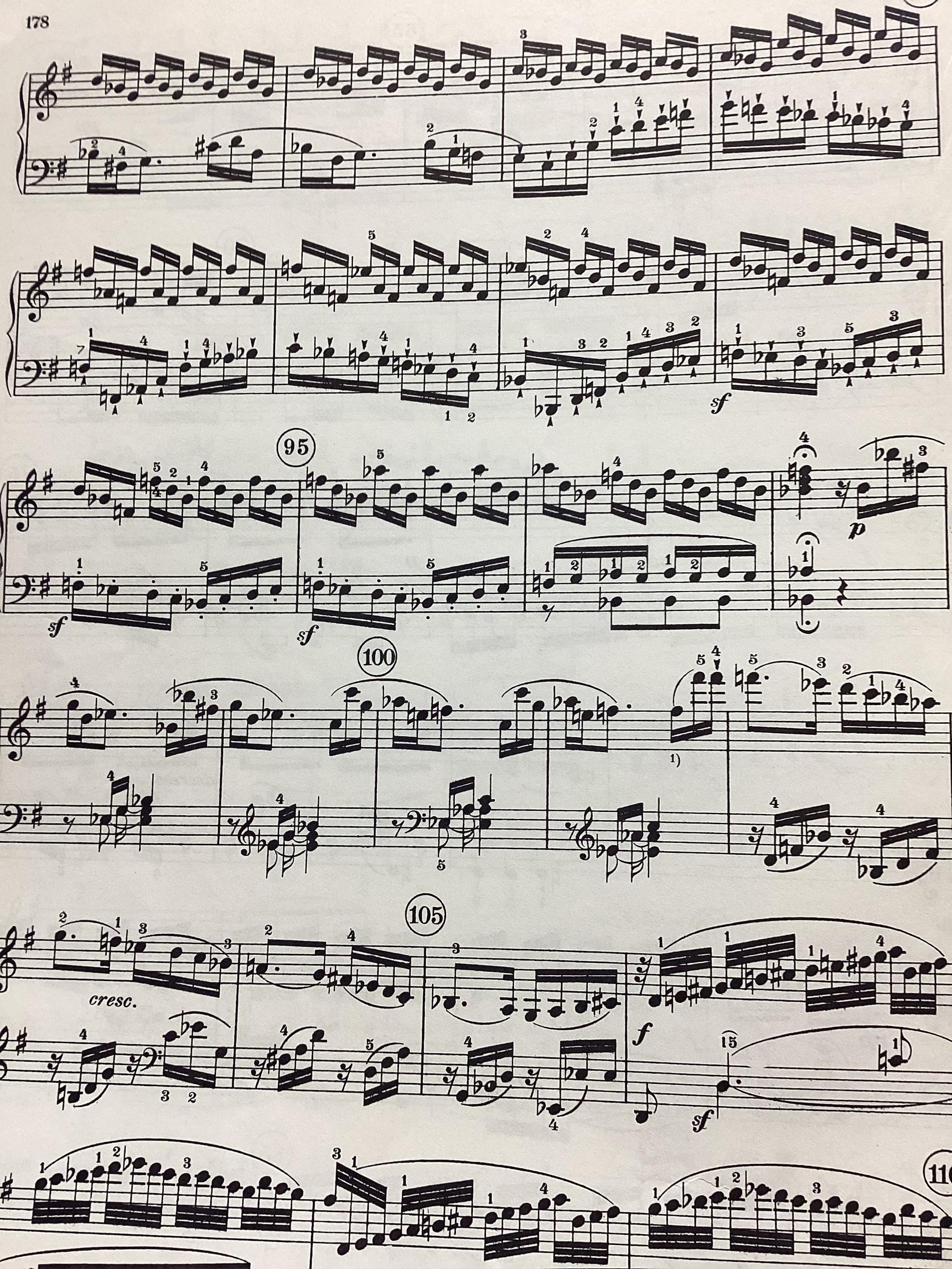
    I have some questions from sonata op 14 no 2 the first mov. Bar 80 - 97 

    What is the best learning in this poly Rhythm? And how to play wedge sign on the LH in fast tempo? I am practicing plucking the keys, any better suggestions? How to play differently the wedged sign vs staccato ( m 94-95 ) on LH ? It seems very difficult to do it in fast tempo. 
    I really appreciate your suggestions 

    thank you.

    Gloria

    • Unfrozen Barroom Piano Player
    • Peter_G
    • 11 days ago
    • Reported - view

    MIDDLE PEDAL QUESTIONS

    Hi Dominic, in some of my Rachmaninoff Preludes, I find that there are places where I believe that you must use the middle pedal in order to sustain the notes in a certain musical line. It seems like the pedal must be deployed with lightning speed and at exactly the right moment in order to avoid picking up the staccato notes surrounding the sustained note. I find it extremely difficult and distracting from focusing on the music itself.  Do you have any suggestions as to how to approach this?  

    I've attached 2 examples -  (1) from the Ab Major Prelude (Op. 23 No. 8, mm32-40) and (2) from the E Major Prelude (Op. 32 No. 3, mm56-64) , circling the notes in RED for the line I am trying to sustain/bring out. 

    [especially note the 10th required in the RH of m. 58 of the E Major--which seems to require rolling the 10th while sustaining the bottom note. -- I play the RH G# slightly before the beat2 notes in the bass, like a grace note, try to grab it with the middle pedal before hitting the bass, and then jump up to the B in the RH to hit on beat 2.] 

    Thanks for this session and for sharing your insights here and in so many others!

      • Noel_Nguyen
      • 11 days ago
      • Reported - view

       Wow, very sophisticated of you to use the middle pedal in those pieces. I feel like a philistine brute for never having even considered using it in Rach's entire Sonata no.2😅. Can't wait to hear your preludes, with mid pedal and all!

      • Unfrozen Barroom Piano Player
      • Peter_G
      • 11 days ago
      • Reported - view

       Hi Noel. Quite often I feel like I have no business playing these Preludes, but it doesn't seem to stop me from trying!  I must say that your Sonata didn't seem to suffer from the absence of the middle pedal.  Can you say how YOU, as such an accomplished player, would approach these passages, either with or without the pedal?  I'd love to know that there was an alternative to my present approach, and in fact a 'brutish' solution might be much better suited to my innate disposition!

      • Noel_Nguyen
      • 11 days ago
      • Reported - view

        I haven't played those specific preludes so please take what I say with spoonfuls of salt😅.

      Re: Op.23 no.8. One general rule of thumb with Rachmaninoff is that most of the time those soft 16th notes are considered "substrate" notes, to be played very soft and detached, with or without the sustain pedal but usually with. But very soft dynamic is the key here, because it is common practice to allow a bit of smudge, but if you play them too loud then it's a mess. Besides, you can see that those passages are usually in one harmony, with those little substrate notes shifting from one chord note to the other, often chromatically. For example bars 32-33 are really in the harmony of an Eb7 dominant chord, even if they don't resolve in Ab but rather with a nice gm surprise in bar 34. So in bar 32, I'd simply use the right pedal at the beginning of the bar then switch when the alto voice hits F then G. Meanwhile the Db in the left hand is held by your finger (whichever finger you want, could be your nose). Then on bar 33 I'd switch the right pedal at the beginning of the bar, then when the alto voice hits G for the first and third times of the bar. 

      I'll look at the other prelude later 😅.

      • Unfrozen Barroom Piano Player
      • Peter_G
      • 11 days ago
      • Reported - view

       Hey Noel that's very interesting & helpful. Don't worry, I understand it's just your impression from looking at the score-- but I'd still like to reserve the right to blame you if I mess up a performance. 

      I totally get what you're saying about the harmonies being more or less stable within the various 1 or 2-measure phrases, but there are those little ascending stepwise lines, generally appearing on the 4th 16th notes of each group that I'm trying to emphasize ever so slightly, especially mm. 36-37 & 39-40 where those notes form part of an Eb Lydian flat7 scale, a scale much beloved by jazz players. But if you look too closely at Rach's music you'll find that you want to emphasize EVERYTHING it's all so beautifully put together.

      I've also heard talk of these lighter 'substrate' notes -- though the term I've used for them was "murmuring" -- and also the concept of half- or quarter- pedaling in Rachmaninoff -- though I always thought it was because you never had time to put the pedal all the way down [just kidding].

      But I think the break-through suggestion is the one about the nose.  I'm going to try that on those half notes.  In fact Dominic mentioned in his 'Russian School" lesson that Rachmaninoff actually suggested this to Josef Hoffman while trying to persuade him to perform the 3rd Concerto, after JH protested that his hands were too small.  Unfortunately my nose is not quite as long as I'd like for this purpose, so I'm going to tell a few lies and see whether I can get it to grow overnight.  Here goes;
      "These Preludes are a piece of cake".

      "Try as you might, you can't tell whether it's me or Horowitz playing them"    

      that ought to do it!  thanks again1

      • Der Wanderer
      • FRANZ_SCHUBERT
      • 10 days ago
      • Reported - view

       Peter, this is such a great question.  I've worked on Op. 23 No. 7 in c minor where the low C must be sustained for two and a half bars.  The low C can never make it through even a bar so I'm guessing you have found the solution here.  I'm very interested in seeing how this works because as you say, it can be tricky or temperamental in getting it to work consistently?

      • Unfrozen Barroom Piano Player
      • Peter_G
      • 10 days ago
      • Reported - view

       I've experimented with the middle pedal on the C Minor and it works well on those bass notes on the first page.  But you have to practice it over and over to get the timing right and avoid blurring the sustain with all the surrounding notes.

      Then you start to see all kinds of other places where it might help, but you have to be careful about overdoing it. Otherwise the whole piece (in my case anyway) becomes all about hammering down that middle pedal at just the right spot when you should be thinking about the grander scale of sweep and gesture and emotional peaks.

      I tried it on the D Major to isolate the main melody notes, and quickly determined that it wasn't suited there -- too much flailing and swinging of limbs to achieve too little musical effect, resulting in a major and tense distraction from just letting the melody sing out through the background of overlapping harmonies.  On the other hand there are places in the F Major where I think it's indispensible-- in particular I use it in measures 7, 9, 13 and 42 to hang onto a low bass note in the context of an otherwise very clean and quiet texture.  There are couple of places in the D minor where it is also quite useful, mainly in the Coda.

      As Noel has mentioned and Dominic as well, there is a certain flexibility with Rachmaninoff's scores that you don't have with Bach or Mozart for example.  it's OK to blur some places with a little more (regular Right) pedal than we are accustomed to permitting ourselves, and pianists have developed techniques of half- and quarter- pedaling - which are still a mystery to me-- to allow you to hang onto some notes when your hands can't possibly remain there, while minimizing the blur of too many contrasting harmonies..

    • Noel_Nguyen
    • 10 days ago
    • Reported - view


    But I think the break-through suggestion is the one about the nose.

     That's something my teacher used to say. Problem is mine is rather wide😄.


     said:
    so I'm going to tell a few lies and see whether I can get it to grow overnight.

     Try "if I mess up when performing , it's Noel's fault."

      • Unfrozen Barroom Piano Player
      • Peter_G
      • 10 days ago
      • Reported - view

        excellent suggestions all the way around! thanks again!

      • Noel_Nguyen
      • 10 days ago
      • Reported - view

       In all seriousness, let's wait to hear what Dominic has to say. If he says I'm delusional with my suggestions, your nose stays minuscule.

      Good thought about half pedalling btw, it does prevent from creating the mess you'd hear from many amateurs incl. myself sometimes.

      • Unfrozen Barroom Piano Player
      • Peter_G
      • 10 days ago
      • Reported - view

       Well, "miniscule" might not be exactly the right word in my case, but point taken. 

      I have no doubt that if Dominic is able to get to this question he will have some very wise words to say about it.  I always find something extremely useful and helpful (and practical to boot) in these sessions, even when he's addressing questions of others about pieces with which I have no familiarity.

    • Hazel
    • 10 days ago
    • Reported - view

    Hi, I’m working on Tchaikovsky Romance Op5 and am struggling a bit with tension and fatigue in the fairly long chordal section bars 39-57.  I’d be grateful for any tips on how best to practice this to solve this and develop more accuracy also? Thanks. Hazel

      • Hazel
      • 9 days ago
      • Reported - view

       Thanks so much for answering my question. It’s really helpful to get your advice and much appreciated. 😊🤚

    • kwamebadoe
    • 10 days ago
    • Reported - view

    Hello Dominic

    Despite playing for decades, I have only recently discovered that I do not relax my shoulders when playing. This is particularly evident in past passages which have always been a challenge..

    Are there helpful exercises or strategies you might recommend? Decades in the making, I appreciate that this is not a problem that can be resolved “overnight”

    Thank you 

    • Graeme_Cameron_Wilkinson.1
    • 9 days ago
    • Reported - view

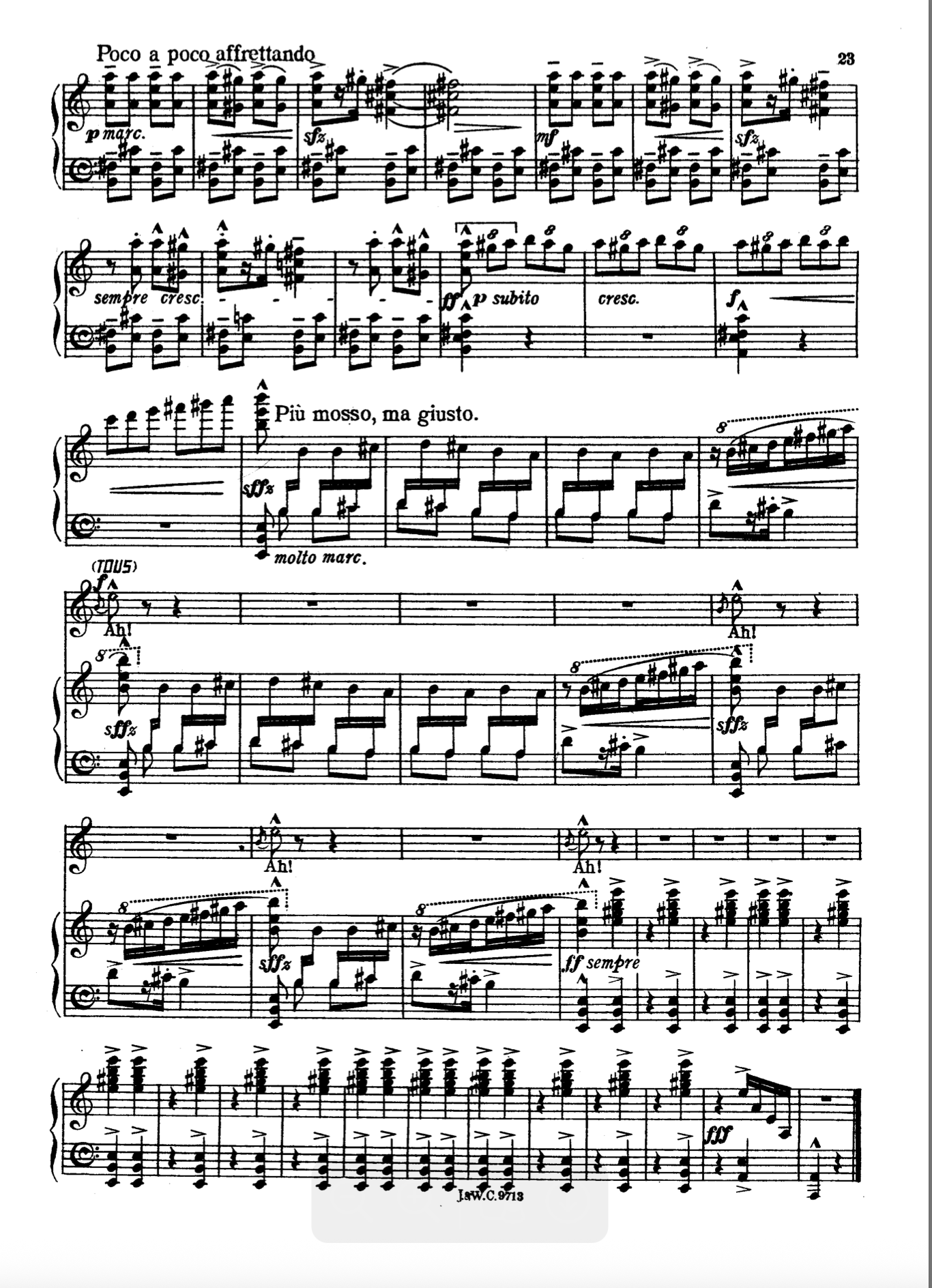
    Hi Dominic, The last page of De Falla's Ritual Fire Dance:
     

Content aside

Attendees

Stats

  • 41Replies
  • 286Views