Mastering Tricky Passages and answering your questions!
Welcome, everyone.
If you’ve been sitting with questions about your playing, fingering, tricky passages, or musical roadblocks you haven’t quite cracked yet, this is a great moment to bring them out.
Whether it’s something small that’s been nagging you or a bigger challenge you’re ready to work through, every question is worth asking. Join us live today for real-time guidance and problem-solving!
Leave any and all questions below!
41 replies
-
Hi Dominic,
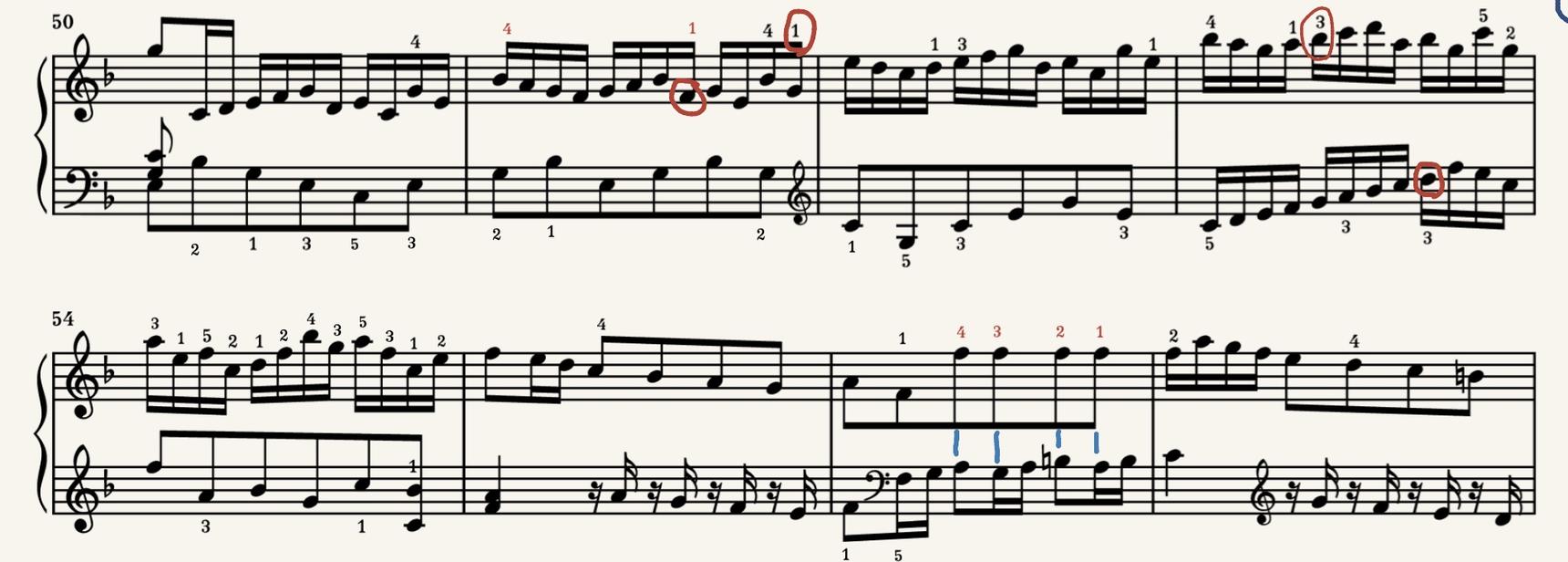
I notice I struggle greatly with these types of 16th note runs Bach writes in his pieces.
Is it my fingering? Underdeveloped neuro-independent hand/finger playing?
Also, after learning this piece I’m trying to decide on what next piece of Bach’s to learn.
Do you recommend:
1. English Suite no. 3 prelude
2. Italian Concerto
3. Chromatic Fantasy (no fugue)
Much appreciated!
-
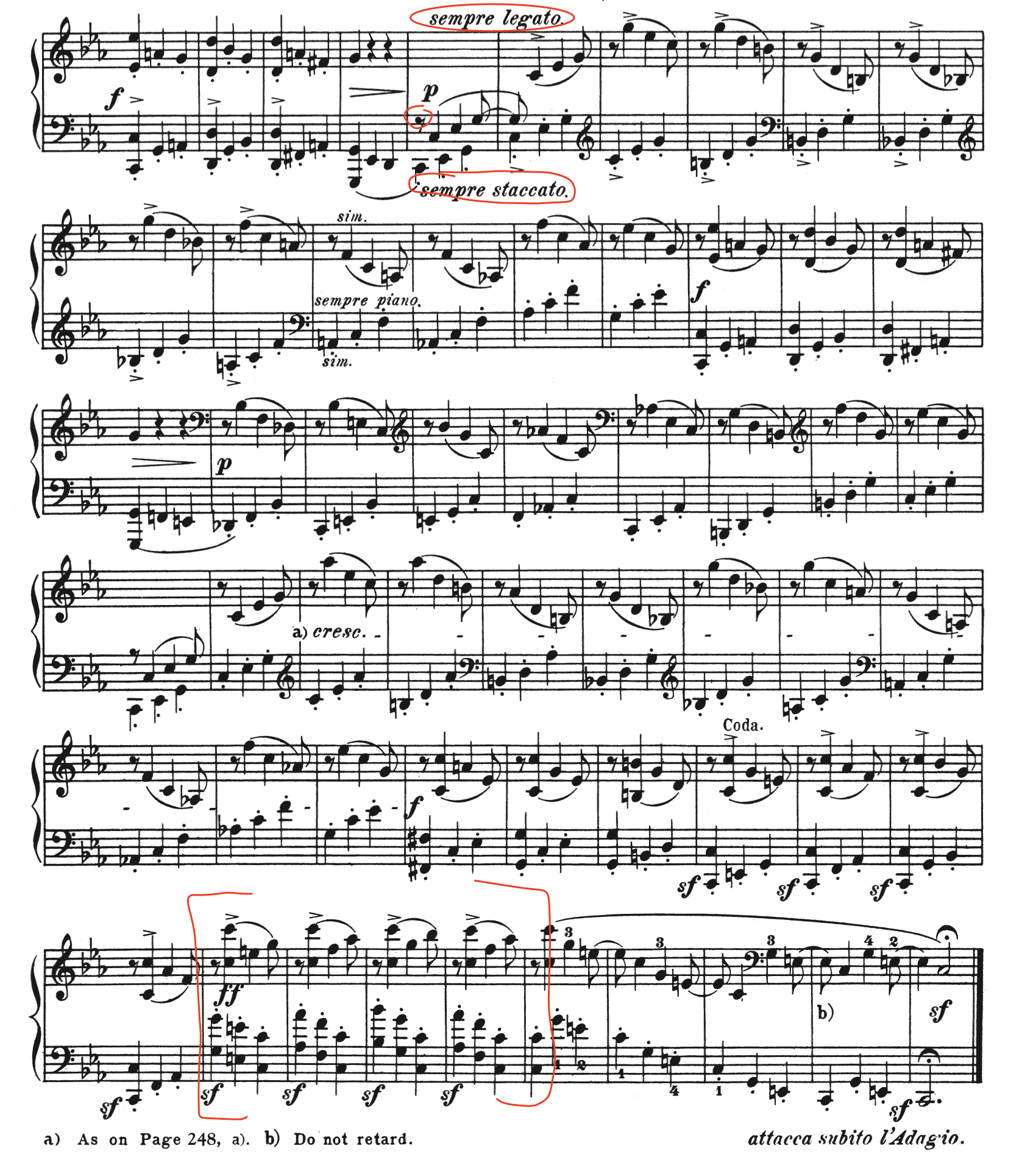
Hi Dominic, Thanks for these very informative and helpful threads. I've been working on the second movement from Beethoven's opus 27. no. 1. I have struggled with maintaining the left hand staccato and right hand legato while the main theme returns and left and right hand are now staggered by a rest. Any suggestions on how best to practice this. I find when I play this part, my left hand gets clunky or my right starts to staccato inadvertently.
Second question is how to deal with the rapid octaves in the last measures I've marked. My hands are on the smaller size and the addition of age and a touch of arthritis has my span at 9 notes, I find the left hand octave jumps difficult and I develop significant tension; despite trying to immediately release and relax the hand after playing the octave.
Any help greatly appreciated.
Thanks again!
-
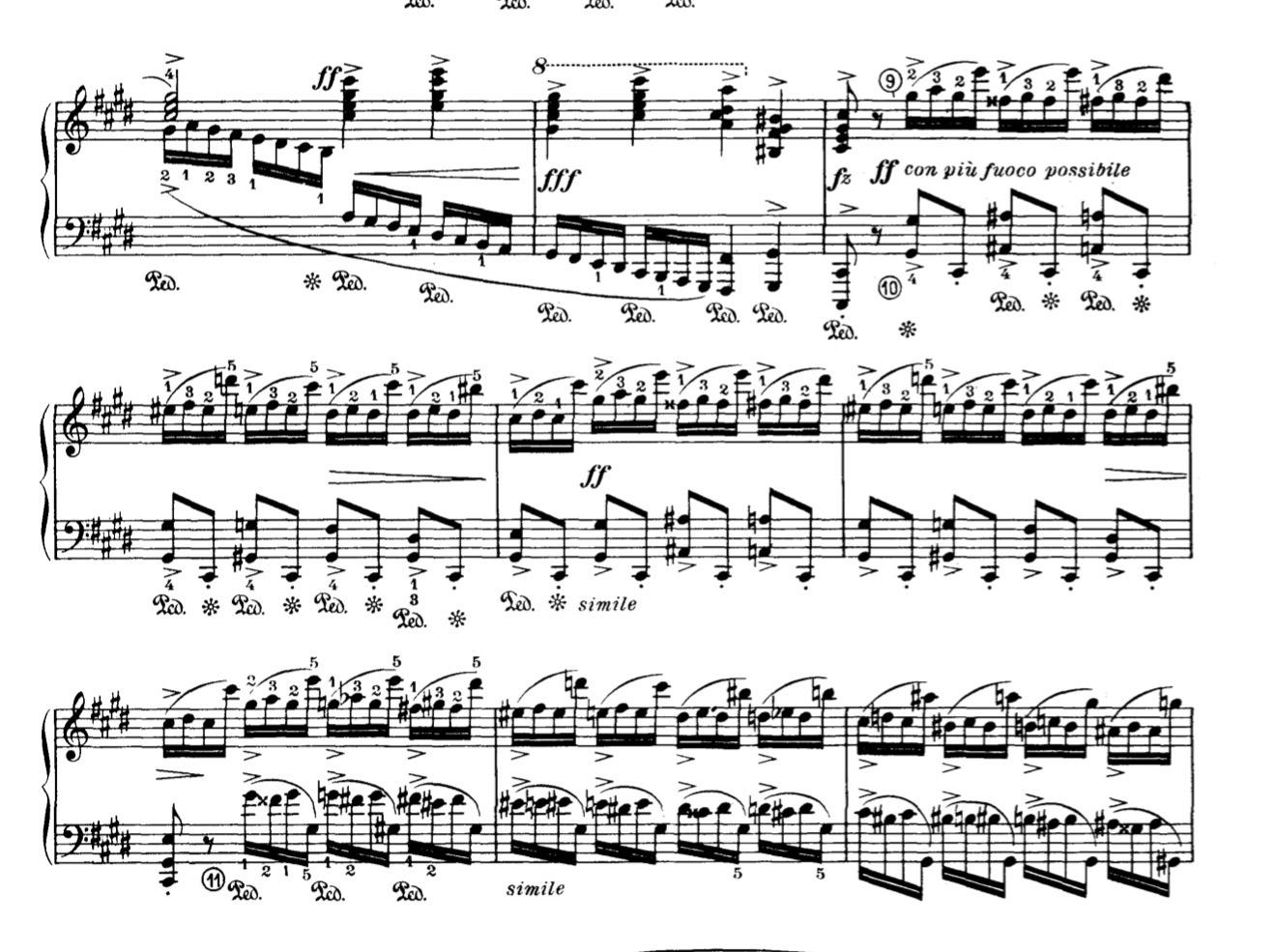
Hi dominic. How should one practice the LH part in the last page of chopin op 10 no 4. What fingering to use for that jumps in the LH and any tips for pedaling?
-
Hello Dominic,
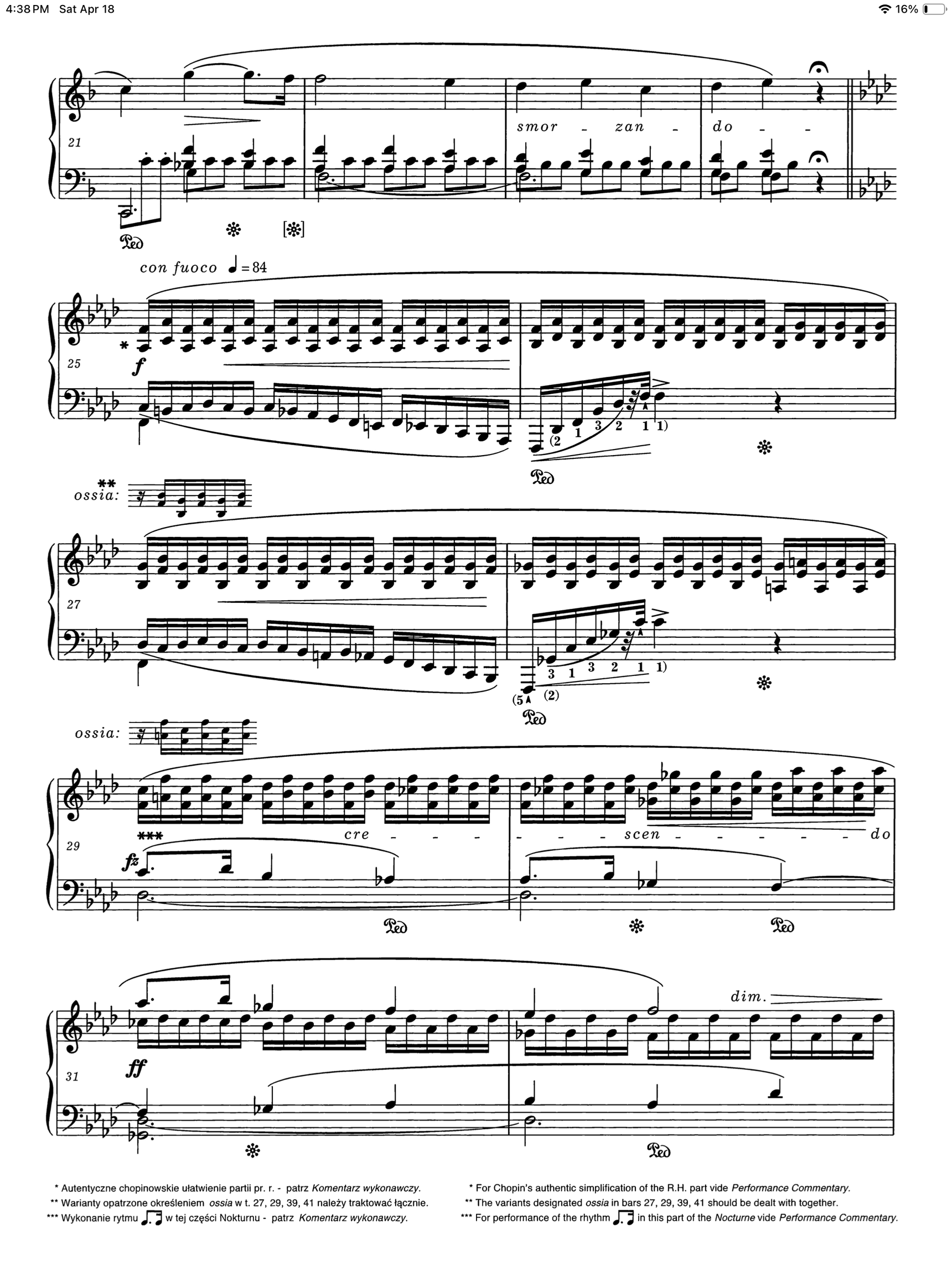
I am interested in your thoughts on the RH tremolo figures that start at mm. 25 of Chopin's Op. 15, No. 1 Nocturne. I actually don't have any significant issue playing these and I can even do so fairly rapidly without fatigue. However, I am trying to elevate it to a point that it is as light and rapid as a regular open octave tremolo. (I'm closer to a Pollini in speed whereas I'd love it to be more like a Maria Pires!). What would your advice be for taking it that extra step.
Thanks for any suggestions =)
-
Hi Dominic,
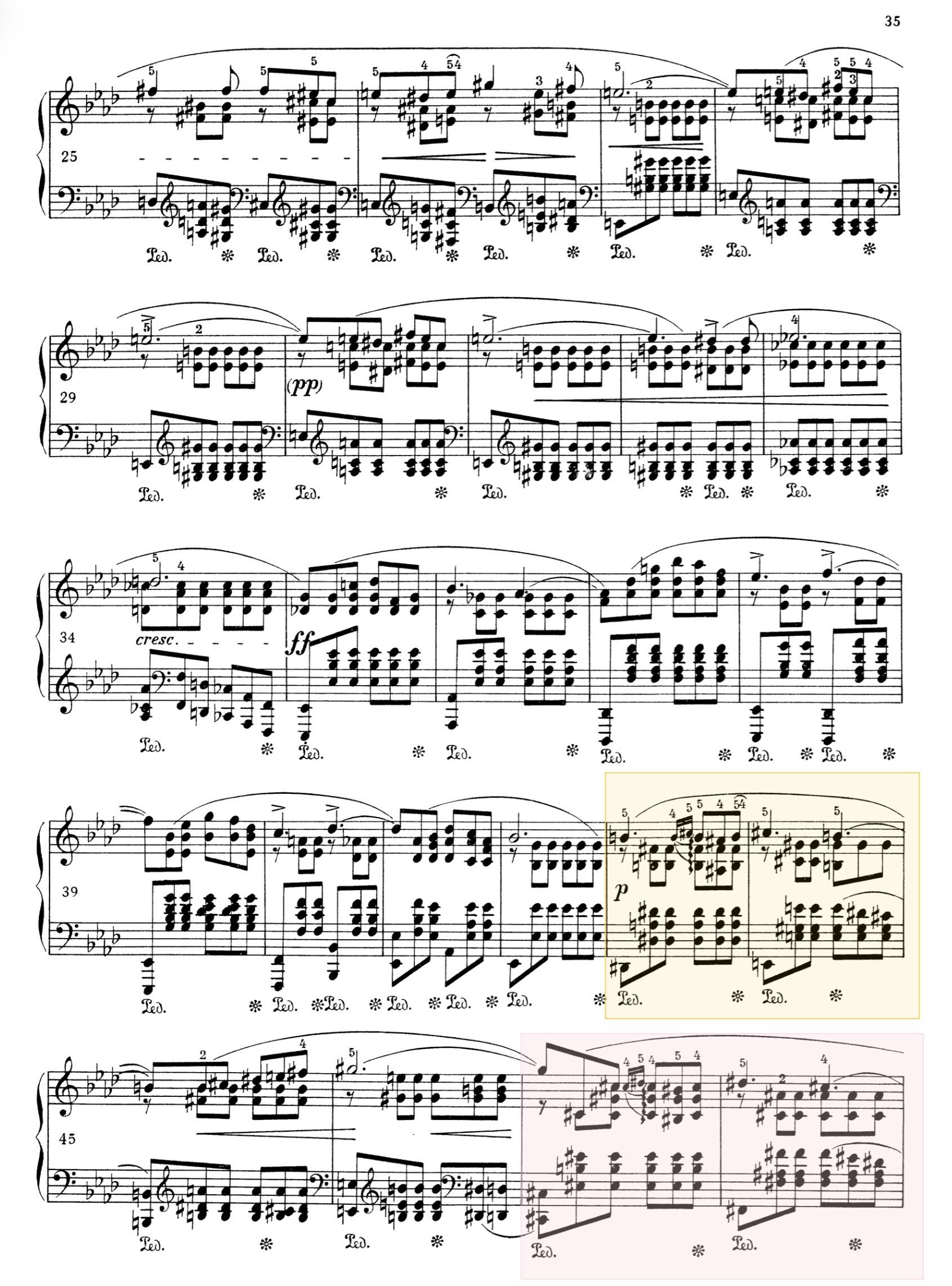
In Chopin’s Prelude #17, I find measures 43, 44, 47, and 48 a bit awkward. I have tried some rearranging that helps- ie taking the b natural in m43 with the left hand. I would love to hear any thoughts you have on making these measures smoother (hand positions, fingering, etc). Thanks!
-
And now for something completely different, a passage that is more challenging musically than technically (although massively difficult technically too😆). I am working on the last part of Chasse-Neige for the Liszt challenge, and frankly I have never been able to fully understand the musical meaning of the last bars of that masterpiece, and yet I absolutely love it. I do feel that this is supposed to be the end of a long and epic journey. And I know that the easy thing for Liszt to do as a composer would have been to write a massively loud climax of an ending. But he knew better. The ending he went for is more effective, perhaps because it is more mysterious. But what to make of that final crescendo?! He could have gone the way of his Sonata (another epic journey !) and ended it softly. But here we do have a short crescendo, after 4 bars of diminuendo. And I do like that there is a crescendo there, don't get me wrong, because I feel that a journey such as those twelve etudes just cannot end on a soft chord! The problem is, how to render that crescendo in the most musically convincing way? One thing that makes it especially challenging (musically) is that it ends with a sforzando on that last chord, and yet the crescendo is supposed to have been in the mp range, because that is the last dynamic marking that Liszt wrote. But doesn't the sforzando make that last chord sound mezzo-forte, or even forte? I have even heard someone play it fortissimo(!), but definitely didn't like it. I know that a few pianists choose the play the passage as a big crescendo but with the una corda. Would you consider playing it that way?
Sorry for the long question! In short, I am simply curious how you would play it, . Many thanks for your help, and I will totally understand if you don't have time to answer this difficult question!