Week 2: Build Your Foundation!
Welcome to Week 2 of the Beethoven Challenge. Now that everyone has chosen their piece, this week is about settling in and getting familiar with the landscape of the music. Before worrying about speed or polish, this is your chance to understand how the piece and map things out—especially the way Beethoven plays with contrast.
A few things to focus on:
1. Notice the contrasts early
Beethoven loves sharp shifts: loud to soft, smooth to edgy, light to heavy, playful to stormy. As you read through your piece, mark where these changes happen and think about how you might shape them. Getting this into your ear now will make everything easier later.
2. Sort out your score
Choose the edition you want to use and make sure it’s easy to read. Add fingerings in the places that feel awkward or ambiguous. Clear decisions now prevent headaches later.
3. Map your starting point
Pick one small section to live with this week—a phrase, a tricky transition, or a spot where the character flips. Slow work here gives you a solid base for the rest of the challenge.
4. Keep your practice short and focused
A few calm, intentional sessions go a lot further than one long grind. Aim for clarity, balance, and control!
5. Share your discoveries
Post a clip or even just a note about where you found interesting contrasts or character changes in your piece. It’s always helpful—and inspiring—to see how others are hearing their music.
27 replies
-
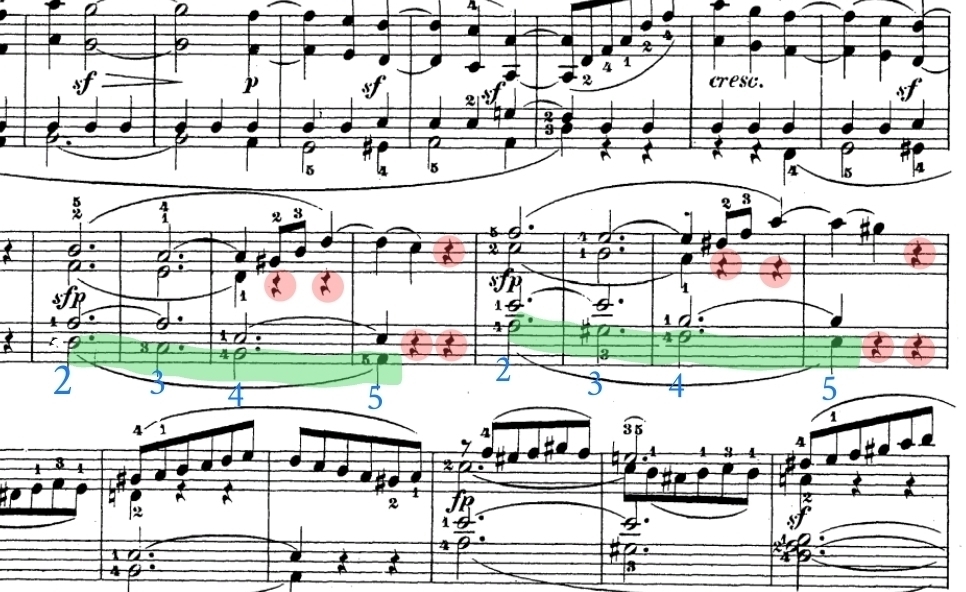
Sonata No. 28 in A major Op. 101, second movement: My section to start and “live with” this week (task 3) is a 14-bar segment that boasts lots of contrast in dynamics, texture and character (task 1 🙂) but also poses the most technical challenges of this movement concentrated in a small space: polyphony, wide leaps with hand crossing, and sharply dotted octaves followed by broken octaves in the left hand.

-
Ecossaise in g major: measures 8-14 octaves cause some tension in left hand so will work on relaxing left hand, especially in measures 13 and 14.
-
The Andante opening of #13 (Op 27, 1) is lovely. Voicing and contrasts. The Allegro will be the real test for my intermediate abilities. And as always, fingering!
-
Bagatelle opus 119 no. 9: this week will bring focus to measures 1-8, which once learned will leave me with only 4 more measures to learn (because of repeats)! Measure 7 into 8 is the challenge section here for me, with change in pedaling style, change in dynamics, and a quick movement from one chord to another. Here’s my marked up score with practice sections and some practice notes.
-
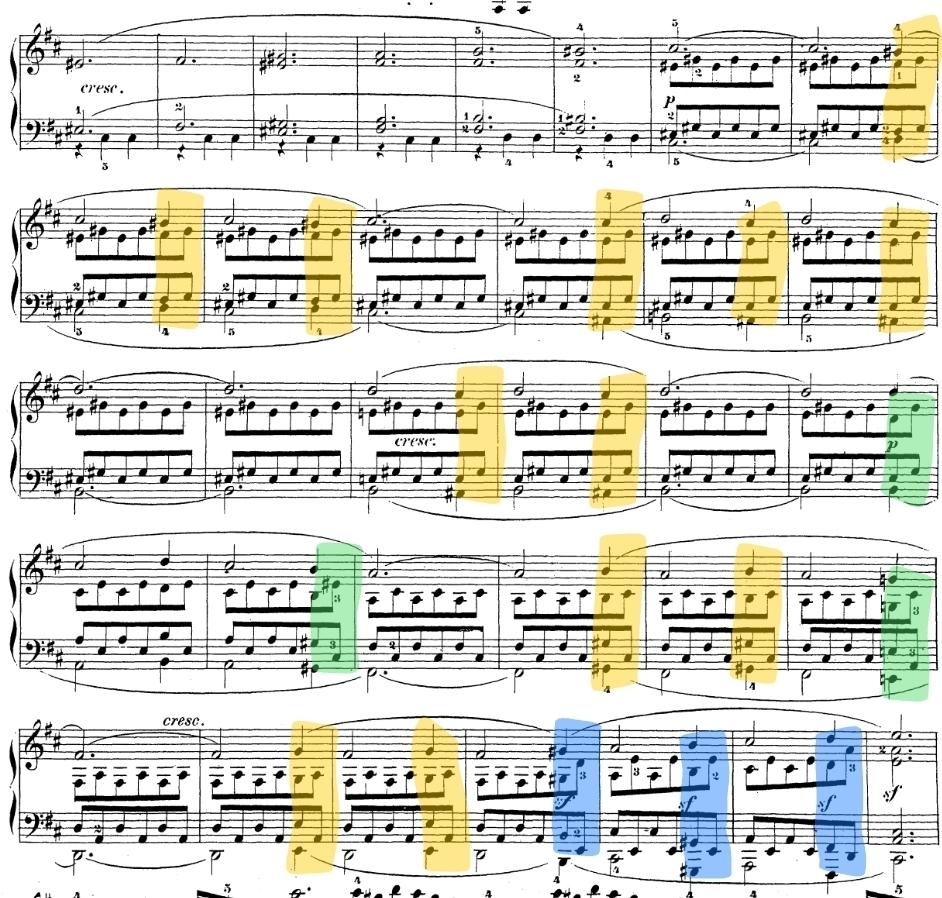
This week I want to focus on the first part of the development section. The mood here is anxious and excited, yet still controlled. The main challenge is keeping the left hand steady and quiet while the right hand shifts octaves and shapes the wide dynamic range—from piano to forte, back to piano, then forte again, and finally a sudden subito pianissimo.
-
Hi all
practice session
op78 1st movement, last page
where the long left hand section begins

Beethoven op78 1st movement
Practice session
https://youtu.be/IWZpvbBC93E?si=-BmATv3HW62tSDGC
-
Hi everyone. Bagatelle op.119-11. I’m practicing middle section, discovering lots of staccato and pauses.
https://youtu.be/7sOytqdLqvY?si=zdDZ_H_mUFpF6IJW -
The first page of the Prestissimo from Op. 2 No. 1 full of snap changes from piano to forte and with several sforzandi as well. Such drama!
-
In the development section of Beethoven's Tempest Sonata (Allegretto, 3rd movement), there is one of the most dramatic moments of the piece, especially in measures 110-150. I'm focusing on this stormy, almost orchestral passage, an explosion of Beethovenian tension between two moments of calm.
The challenge is how to maintain this tension, with subtle dynamic changes, without losing the piano's powerful sonority and while creating an inner crescendo at the same time.
-
Here's some of the Third Movement of the Pathetique. Finally learning this sonata, I've found that this might be my favorite movement. There's so much variety, it's fun to play, and it offers ways to experiment with both lyrical and more aggressive passages. Czerny said in his notes on the Beethoven Sonatas that Beethoven played this movement with a great deal of humor; I don't think I'd really understood how that would apply here until I started working on it; I hope it comes through! https://youtu.be/y6XX4bZCYdI
-
Op. 27.2, third movement. My awareness training is in those spots where the second theme melody enters. It is always preceded by a louder section or a relatively stronger chord. Not easy at all.
-
Hello, I have had to change course. Instead of Opus 90, I will be learning Op.10 No.2. I'm not sure whether I will be ready to submit a recording, but I will try and I am looking forward to hearing everyone else's performances!
-
Hey everyone,
I'm late to posting for this week but actually keeping up with the challenge! (Pastorale sonata 1st mvt)
Here is a series of 3 observations. I set them up as replies to myself because each has an image.