The Metronome: Good or Bad? (with David Chang and Dominic)
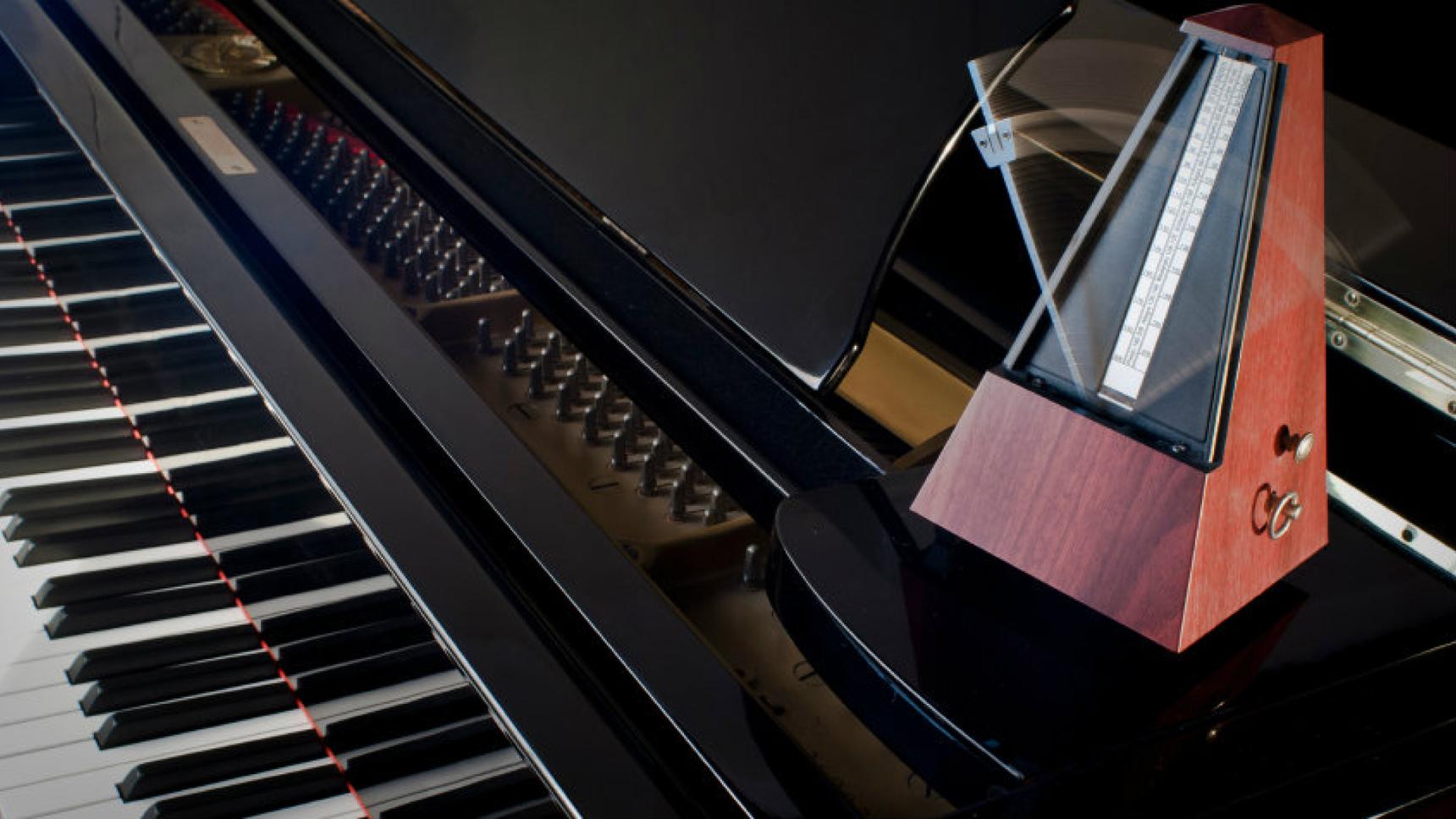
What is the metronome actually doing for us—and when might it start working against us?
In this livestream, David Chang and Dominic Cheli take a closer look at one of the most common (and most misunderstood) tools in music practice. Together, they’ll explore how the metronome can build clarity, stability, and control—and how it can also limit flexibility if used without intention.
We’ll dive into practical techniques like metronome cycling, and tempo ladders, along with other creative ways to develop rhythmic independence and confidence.
Beyond the mechanics, we’ll also talk about the psychological side of practicing with a metronome: how it can reduce pressure, sharpen focus, or sometimes create tension and rigidity.
Whether you rely on it constantly or avoid it altogether, this session is about understanding how to use the metronome in a way that actually supports your playing.
Bring your questions, experiments, and even frustrations—we’ll work through them together in real time.
9 replies
-
Hi dominic. Thanks for answering my question for the debussy’s image (reflet dans leau) last week. It helps alot.
also, relating to that same piece. I would like to ask how does people use the metronome in a piece like debussy’s image where there is a constant change in tempo in every few bars
It does not make sense for me to keep changing/adjusting the metronome speed everytime i reach a new section.
I find it difficult to find a speed that i can play through to hold the piece together. Any tips on how i can go about this?
Also, any general tips on how one can use the metronome in polyrhythmic passages and cadenza-like passages ( for example, cadenza passages in liszt liebestraume no 3 )
-
Instructors seem loath to admit that modern editions have metronome marks notated at TWICE the intended beat from the original composer. Will you admit that a whole canon of pieces, including Chopin, should be performed at HALF of the currently understood "BPM" marking? The original composers did not have "broken" metronomes.
-
Popular workout gym methodologies have members who enthusiastically share their weight-lifting progression ladders, number of reps, sets, movement protocols, etc (for example, Crossfit or Hydrox). Tens of thousands of members post their daily progress and historic progress journals, thus learn from themselves and each other. Musicians, including instructors/professors, however, never do this: explain why; is it a culture of shame, or what? It is not productive to keep tools such as progress logs, ladder spreadsheets, personal data of success OR FAILURE, hidden from others. Will you pledge to be more public with practice data and logging styles, so that the entire piano community can benefit and move forward?
-
I have always been unhappy with the electronic sound of iPhone metronomes so I tend to use a metronome with a mechanical click, like one from Wittner.
Just a few weeks ago, a company launched a Kickstarter campaign for a mechanical metronome/drum machine that can be configured to use a wooden block, a cowbell, whatever. This metronome can be programmed with a MIDI keyboard, so, you can use it to create any kind of click track.
Here is the campaign,
https://www.kickstarter.com/projects/lupine/ap-1?ref=user_menu
Yes, I have backed it. I think it will be a lot of fun to use, and will give me a different sound than an electronic or traditional metronome.
There is one more slot at the launch day special price. I am not affiliated with this project in any way.