Schubert!

Whether you are currently playing Schubert, listening to Schubert, or just discovering Schubert's vast catalog, this is the thread for sharing any thoughts, observations, questions, favorite recordings, or anything else. 

I also hope to discuss:

  • Theory
  • Specific pieces
  • Technique and interpretation
  • Liszt transcriptions
  • Anything else!

Performances are welcome as well!

To start, which of his Sonatas is your favorite?

Do you prefer the Impromptus or Moments Musicaux? Which set of Impromptus do you prefer?


28 replies

null
    • Michael_Lodico
    • 3 days ago
    • Reported - view

    How timely for me! I have been spending the last six weeks or more learning the Rondo from the Sonata in D Major ("Gasteiner"). I love what Jeremy Denk says about this movement in "Every Good Boy Does Fine." I may share my attempt to learn it in a couple of weeks! Thank you, Maria.

      • Akzent oder Diminuendo?
      • Maria_F
      • 3 days ago
      • Reported - view

       That is one of my favorite Schubert Sonatas! My favorite movement is the Scherzo, but I have not learned it yet!

    • Kerstin
    • 3 days ago
    • Reported - view

    Nice topic! For me it’s the first time I play a Schubert sonata (D784 a-minor). This was my first playing for an audience in a class recital. 
    https://youtu.be/rB5b_6eRdGs?is=Snkmaphw6TA-wNGM

    I like the contrasts and the darkness in it. Schubert was just before he composed it in a sanatorium. It could be a reflection. 🙋‍♀️

    • teal_car
    • 3 days ago
    • Reported - view

    I enjoy much of his music, and wish Schubertiades were more of a thing.

    That being said, he can be longwinded. Great for enjoyment and introspection, but not as great for connecting with audiences used to short-form media and phone screens. How do others navigate this?

    • Winterreise
    • Thierrynk
    • 3 days ago
    • Reported - view

    He is my best friend.
    I could write hundreds of pages about him and his music. 
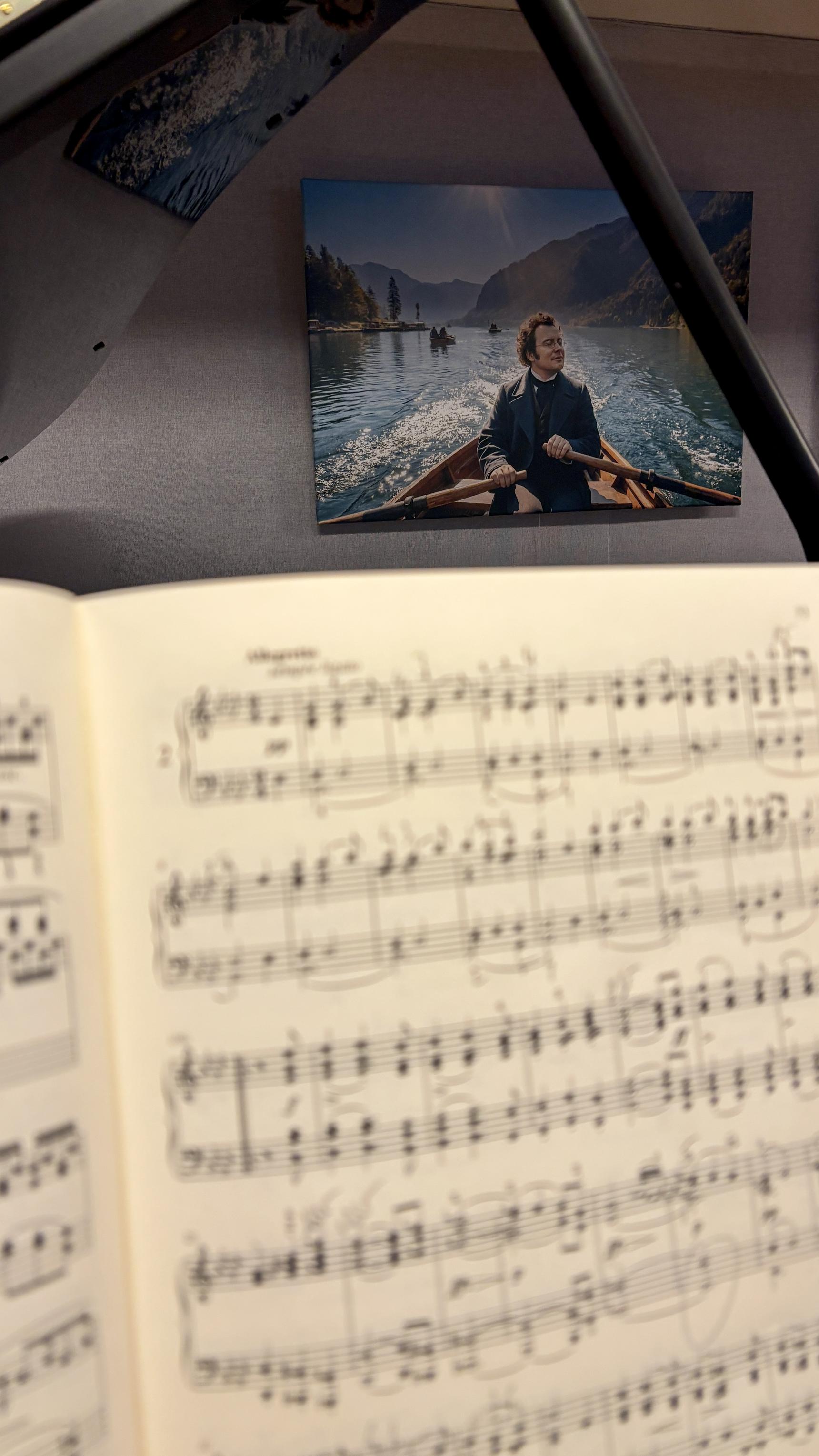
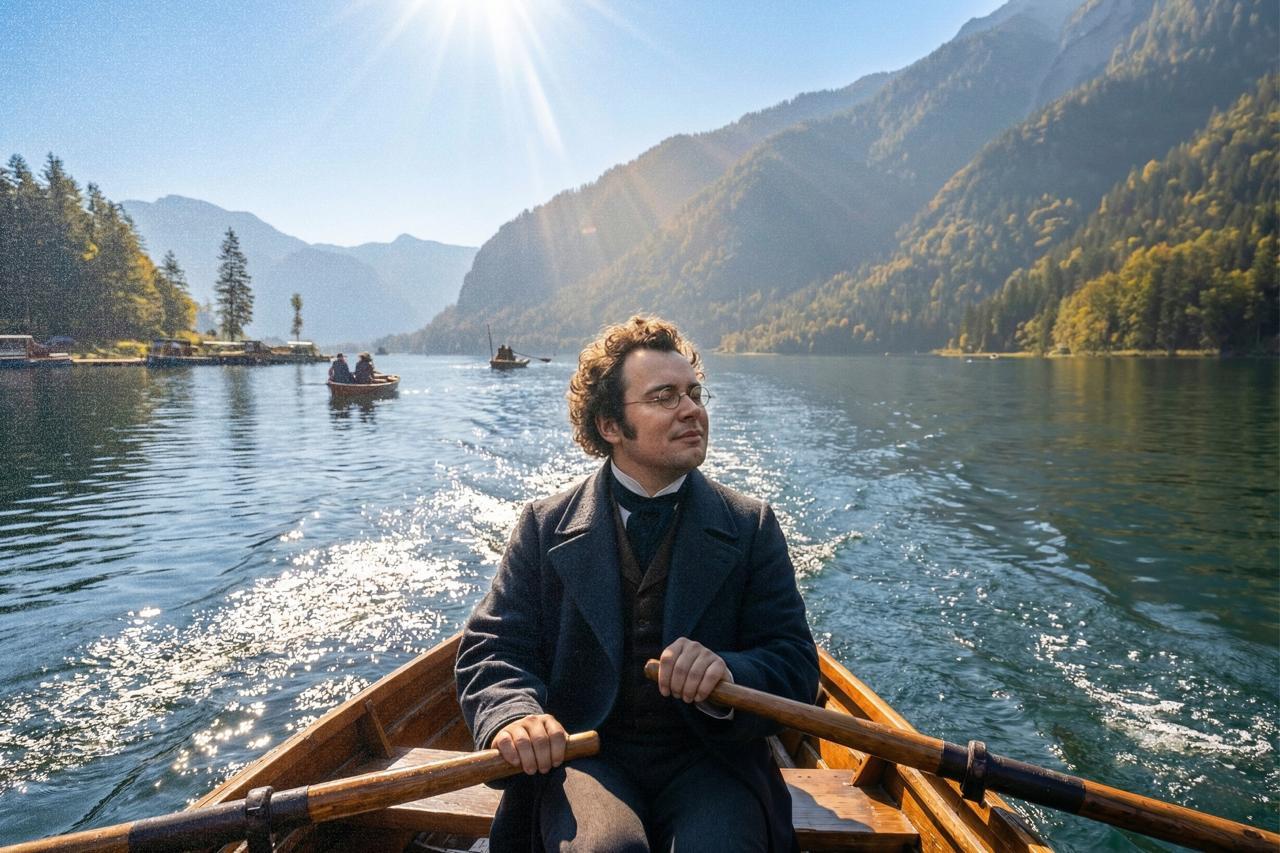
    But I prefer to show the picture I ask a painter to design for me with the help of some AI. 
    Schubert’s lovers may recognize some elements. 

      • Akzent oder Diminuendo?
      • Maria_F
      • 3 days ago
      • Reported - view

       said:

      Schubert’s lovers may recognize some elements. 

      The first thing I notice is that it may be a depiction of the Traunsee, where he composed his Great C Major Symphony and the D. 845 Sonata, unless it is a river, in which case it would reference Auf dem Strom. I assume the photo is also referencing his various water-related Lieder, like Auf dem Wasser zu Singen, Die Forelle, Am Meer, and Fischerweise? 


      I also recognize the Henle Urtext of his Impromptu op. 142 no. 2 in the second photo!

      What kind of piano do you have?

      • Winterreise
      • Thierrynk
      • 3 days ago
      • Reported - view


      YES for everything you mentioned, including the score!
      There are more, maybe more symbolic. 

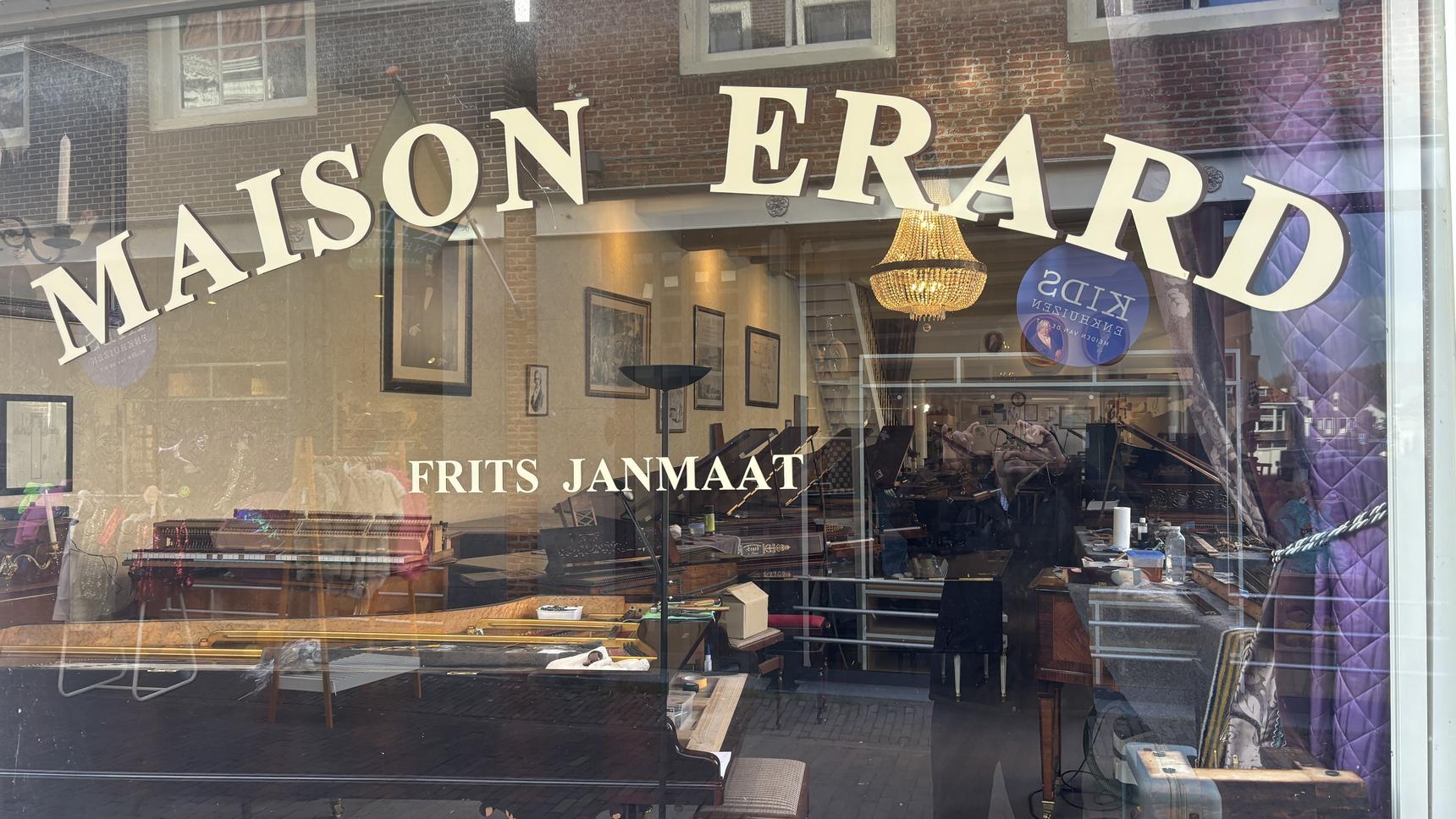
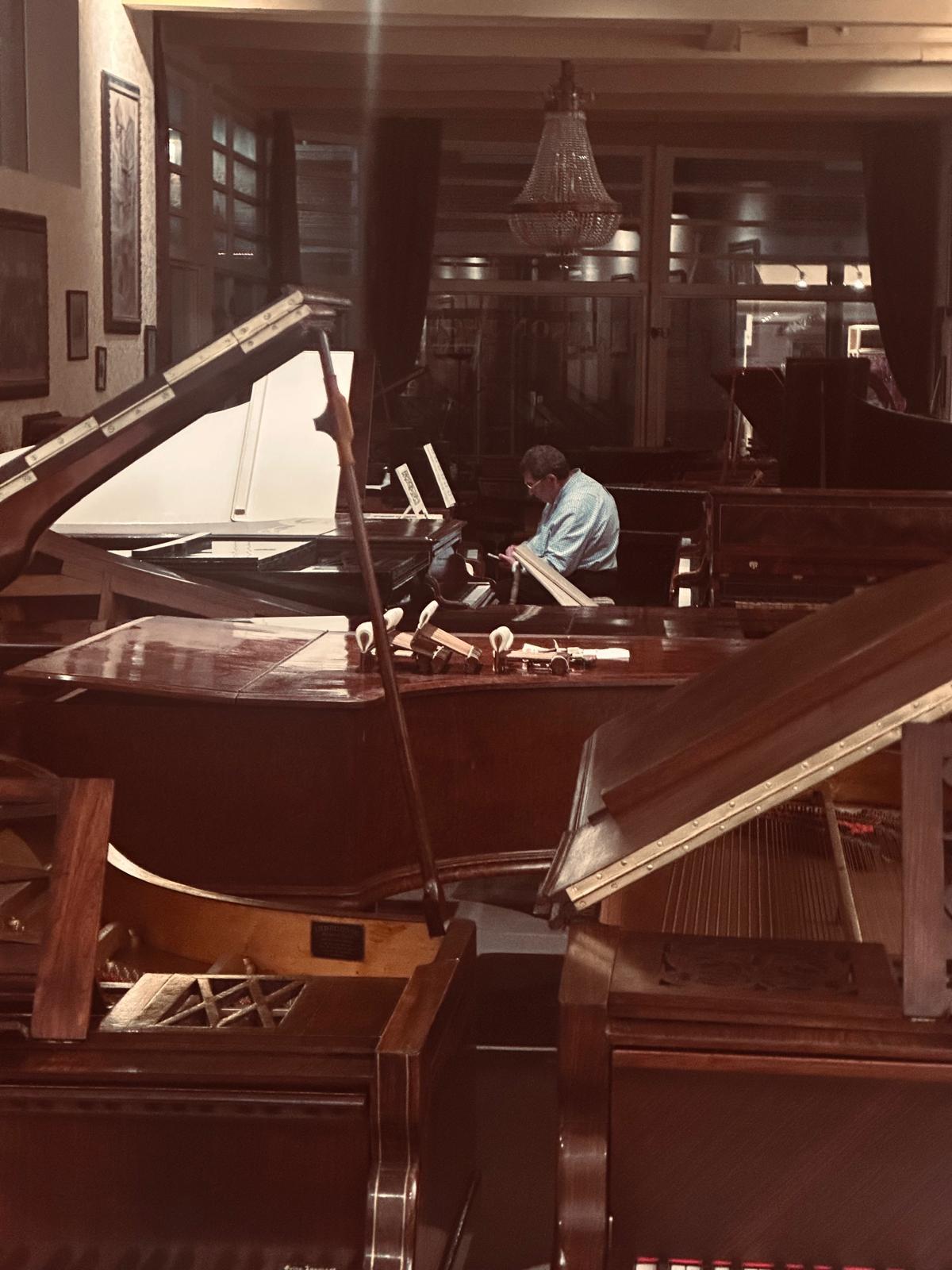
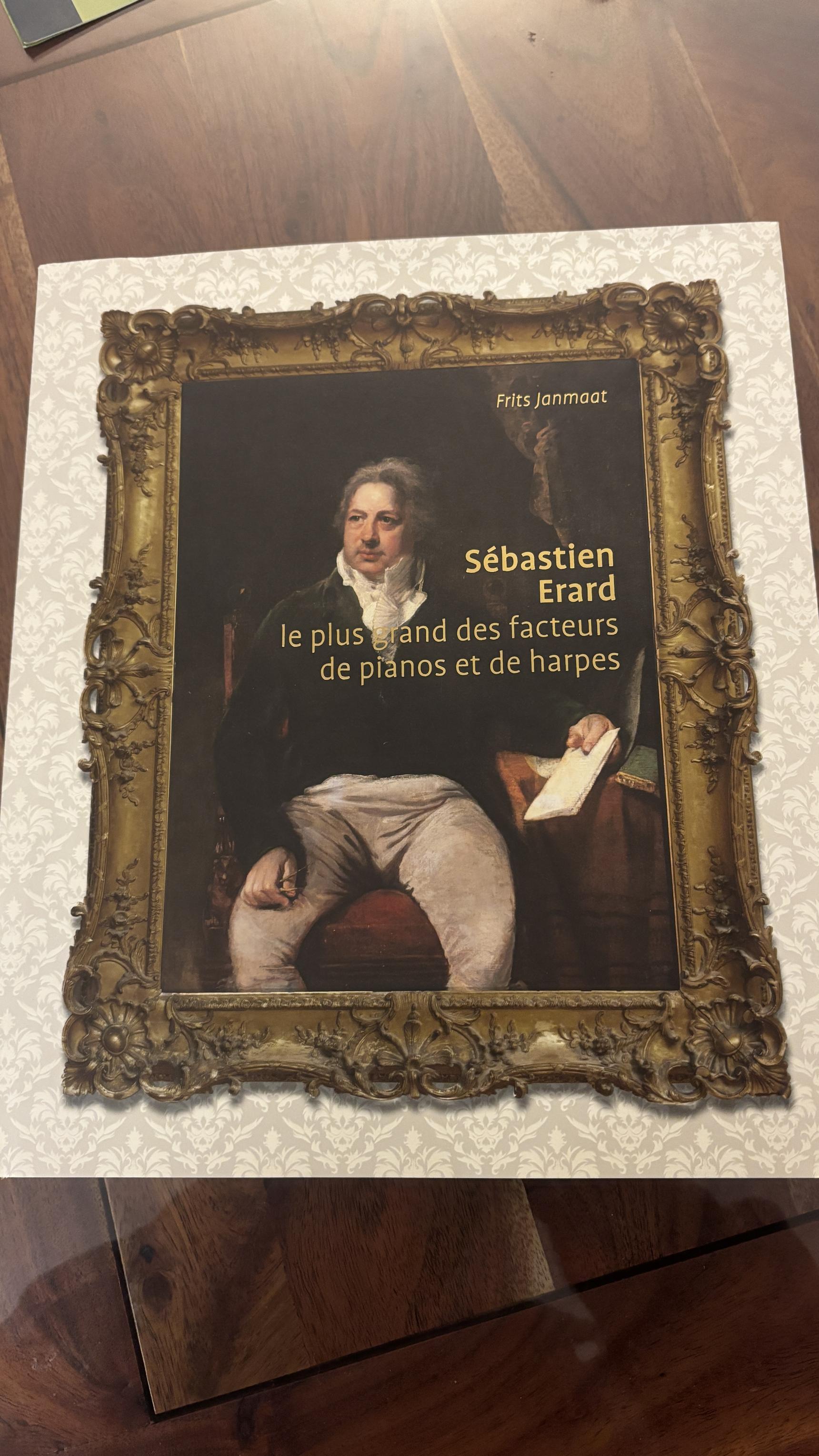
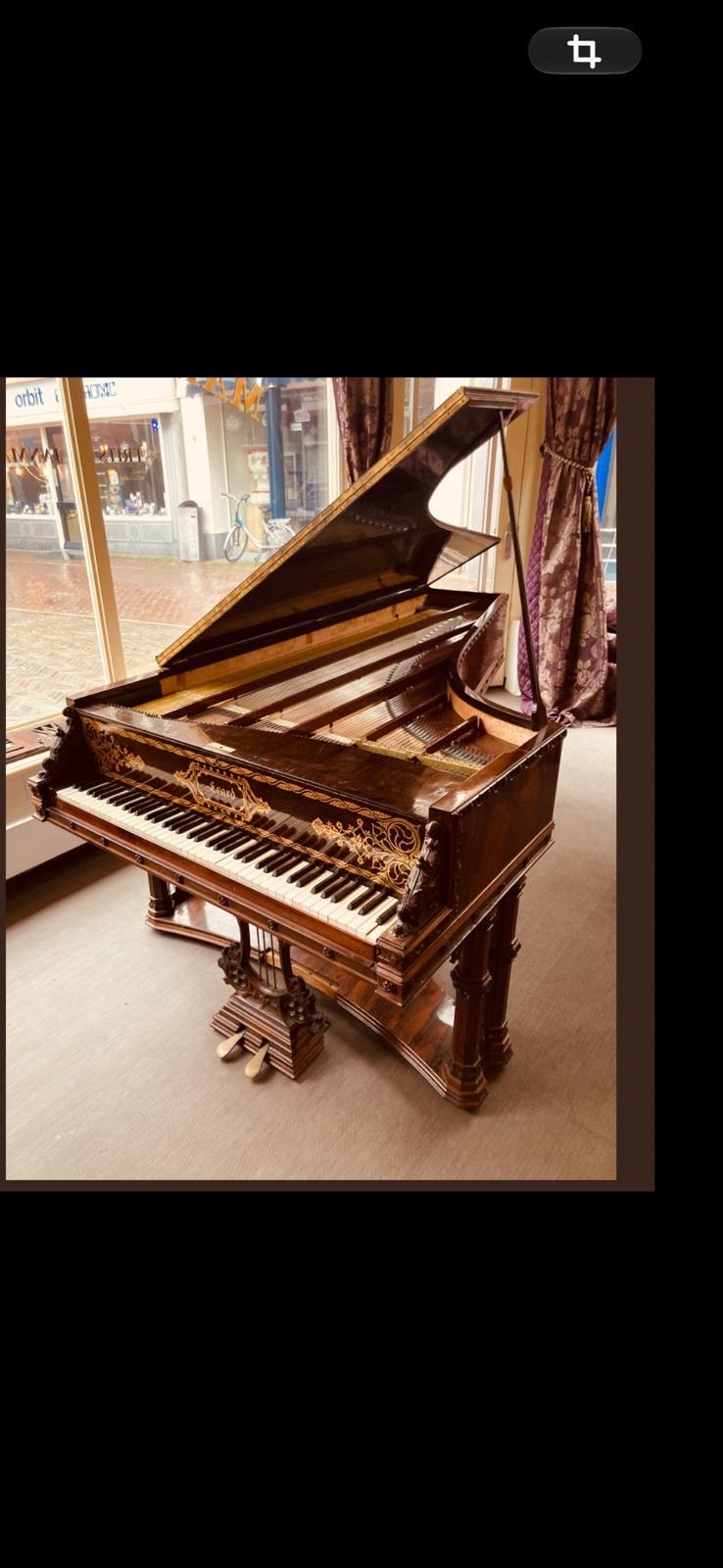
      I have a Steinway B211 and I will soon have a 2.12m Erard of 1905. Last Monday I was at Maison Erard in Enkhuizen where I could play a lot of Erard pianos. The owner is Frits Janmaat. He is the one who restored the famous 1837 Erard of Liszt-Thalberg duel among many other Erard (last picture below). You can listen this piano on maisonerard YouTube Channel. 

      • Akzent oder Diminuendo?
      • Maria_F
      • 3 days ago
      • Reported - view

       What are the others? 

      • Winterreise
      • Thierrynk
      • 3 days ago
      • Reported - view


      Closed eyes: composes like a sleep walker (from one of his friends, Brendel added “while Beethoven composes as an architect”)  

      His boat goes in the opposite direction that he rows. I let you interpret this as you wish. 

      • Akzent oder Diminuendo?
      • Maria_F
      • 3 days ago
      • Reported - view

       It wasn't clear to me which direction the boat was going. I don't know what to make of that or of the Brendel quote. 

      • Larry_K
      • 3 days ago
      • Reported - view

        In a row boat, one does not face in the direction of travel. One has to look over one’s shoulder to identify points on the shore to row towards.

      I have no idea what that has to do with Schubert. I don’t think he had any trouble plotting a course in his music.

      Schubert did not write any barcarolles, boat songs, unlike Chopin, Fauré, and Mendelssohn.

      • hot4euterpe
      • 3 days ago
      • Reported - view

       But is there trout in those waters is the question!

      • Larry_K
      • 3 days ago
      • Reported - view

       Ha, perhaps, but you can’t tell by looking over your shoulder. 

      I look a week long sculling class on a beautiful lake in northern Vermont. I found that I would rather row next to the loons, a bird with a wild cry, than race anybody else.

      • Akzent oder Diminuendo?
      • Maria_F
      • 2 days ago
      • Reported - view


      But how would one tell which way the rowboat was going? I figured he was just going the opposite direction of the other boats. 

       said: 

      I have no idea what that has to do with Schubert. I don’t think he had any trouble plotting a course in his music.

       I agree; I find his music predictable (in a good way). I was also confused by it. 

      I suppose he could have meant "his boat goes in the opposite direction that he rows" literally, meaning that his oars move the opposite direction of the boat, but that wouldn't really make sense. 


      • Larry_K
      • 2 days ago
      • Reported - view

        Schubert’s direction of travel doesn’t depend on the direction of travel of other boats, of course..

      It seems pretty clear from the picture that he is seated backwards, facing the rear of the boat, the stern, with his back to the front, the bow. This is the traditional rower’s position..

      The oats are levers. When you pull them towards your body, they push water towards the rear of the boat, causing the boat to move forward.

      One can attempt “push rowing” by facing the other direction, but the results are rather comical and it is far more inefficient.

      As for predictability in music, the human brain tries to predict what will happen next in a piece of music and feels a sense of reward when it is correct. 

      Predictability and repetition are things that we listen for in music. Of course, music can feel too simplistic in terms of these things but I don’t feel that applies to Schubert’s music.

      • Akzent oder Diminuendo?
      • Maria_F
      • 2 days ago
      • Reported - view

       I know his direction of travel does not depend on the other boats. I don't know anything about rowboats so I wasn't sure how one would know that his boat was going the opposite direction that he rowed. 

    • Piano Educator
    • Lisa_Thomas
    • 3 days ago
    • Reported - view

    I know next to nothing about Schubert, except for his most famous Impromptus, and find his music, like Brahms', to be meandering and long-winded.  But then I play one of his pieces and I really like it.  So, how do you take someone like me, an advanced pianist, and convince them to like Schubert?  Some of you are pretty crazy about him!

      • Akzent oder Diminuendo?
      • Maria_F
      • 3 days ago
      • Reported - view

       His most famous Impromptus are not my favorite of them. My favorite Impromptus are Op. 90 no. 1 and Op. 142 no. 4. I also recommend the Wandererfantasie and the D. 850 "Gasteiner" Sonata.

      His dances are also certainly not long-winded and are fun to sight-read! 

      I also used to find Schubert boring, but last year I decided it was necessary for me to stop ignoring Schubert and to learn about and listen to his music, which definitely grew on me! 

      • hot4euterpe
      • 3 days ago
      • Reported - view


      I love Schubert but I don’t connect with the symphonies all that much. I actually don’t really like the Wandererfantasie either - it is obviously a significant work but I don’t really get excited to hear it. It’s alot.

      I would agree with listening to the lieder though! The song cycles are a must. If all he wrote was Winterreise he would still have made his mark.

      His F Minor Fantasy for Four Hands is fantastic. I do love all the Impromptus and Moment Musicaux because they have the lyricism of his lieder.

      His Op. 100 Piano Trio is amazing.

      His late piano sonatas are often played because they are stunningly beautiful but they do have the ‘heavenly length’ quality.

      The G major sonata (D 894) has a great combination of serenity and drama!

      • Kerstin
      • 2 days ago
      • Reported - view

       I have a similar story. I have only played op.90/3 and was not interested at all in playing Schubert. And then I have started sonata D784 and fell in love. I think it won’t be the last one. 😊 I like the contrasts and harmony changes. 

    • Winterreise
    • Thierrynk
    • 3 days ago
    • Reported - view

    Brahms never said what you mentioned. Just Google. You will find this from Brahms about Schubert.

    “My love for Schubert is a very serious one... To me he is like a child of the gods, who plays with Jupiter's thunder, albeit also occasionally handling it oddly. But he plays in such a region, at such a height, to which the others are far short of raising themselves." 
     

    "The true successor to Beethoven is not Mendelssohn... also not Schumann, but Schubert."

    To convince someone to love something or someone is not part of my “philosophy”. Listen to Erlkonig, Gretchen am Spinnrade, not the Liszt transcriptions, to read the texts is mandatory. Listen to symphony 8 and 9. 
    Then, it is between you and Schubert. 
      • Akzent oder Diminuendo?
      • Maria_F
      • 3 days ago
      • Reported - view


       said:
      Brahms never said what you mentioned

       I think she was saying that she also considers Brahms to be long-winded and meandering. 

      • hot4euterpe
      • 3 days ago
      • Reported - view

        I also read it as she finds both Brahms and Schubert meandering, which is how a number of students also feel!

      Google is maybe not the best musicological source (!), but it is true that Brahms had a deep admiration for Schubert.

      • Kerstin
      • 2 days ago
      • Reported - view

      Forellen Quintett is also a wonderful piece. 👍

      • Akzent oder Diminuendo?
      • Maria_F
      • 2 days ago
      • Reported - view

       Genau!

Content aside

  • 6 Likes
  • 22 hrs agoLast active
  • 28Replies
  • 152Views
  • 12 Following