Week 2: Horizontal and Vertical Voicing

Welcome to Week 2!

This week, you’ll choose a new piece and focus on horizontal voicing, line, and texture. Use the daily practice activities to work systematically through the chords in your chosen piece.

Listen along with a strong reference recording. Track your progress daily, and feel free to upload short videos of your work. Questions about voicing, technique, or texture are always welcome.

Jarred is here to help you!


https://www.youtube.com/watch?v=I8KGTUHuOHo


Week 2 Repertoire

Well-Tempered Clavier, Book I

  • Fugue in E-flat minor

  • Fugue in B-flat minor

Well-Tempered Clavier, Book II

  • Fugue in F minor

  • Fugue in A-flat Major

English Suites

  • English Suite No. 2 — Prelude

  • English Suite No. 3 — Allemande

Partitas

  • Partita No. 1 — Prelude, Allemande

  • Partita No. 2 — Sinfonia (especially mm. 1–29)

  • Partita No. 4 — Overture (from m. 18), Allemande

  • Partita No. 5 — Praeambulum

Italian Concerto

  • Second or Third Movement


Practice Habits

Five basic horizontal voicing habits

(to be mastered first, without ornaments)

  1. Long tones
    Identify 1-beat chords or longer and create a line using the numbers game
    (connect high-percentage notes; see video example).
    Play all notes solo.

  2. Harmonic outline
    Add remaining chord tones and play the harmonic framework.
    Sing the bass line in summary.
    Ignore decorative notes. Listen.

  3. Line awareness
    Study melodic patterns and voices.
    Identify structural vs. decorative notes. Listen.

  4. Chords first, lines second
    Build thick texture first, then set the lighter part atop, beneath, or within it.
    Build walls before painting and decorating them. Listen.

  5. Oblique motion
    Horizontal timing challenges arise when one voice sustains.
    Ensure all voices remain related.
    Listen to the longer tone before moving a nearby voice.


Five horizontal voicing habits

(after the above are mastered, ornaments included)

  1. Sing bass or tenor while playing soprano and alto.

  2. Play in character (e.g., French Overture rhythm, pulse, notes inégales).

  3. Notice when an unexpected voice or note of an arpeggiated chord initiates the next line.
    Listen to all notes for harmonic color, leading voices, and overlaps to plan timing.

  4. Study imitations across registers.
    Identify imitated figures (inversions, transpositions).
    Label them (x, y, etc.) to track changes.

  5. Create a focal point where notes accumulate (Baroque crescendo).
    Don’t force it.

45 replies

null
    • Andrew.13
    • 7 days ago
    • Reported - view
      • jarred
      • 5 days ago
      • Reported - view

       Good work - and beautiful choice, I really like this transcription. I hear the alto line is often too loud when it moves closer to soprano (eg., listen closely to your first few notes: the soprano C is immediately interrupted by the C an octave below). This is oblique motion: soprano melody is still, alto line moves beneath (softer). 

      • Andrew.13
      • 5 days ago
      • Reported - view

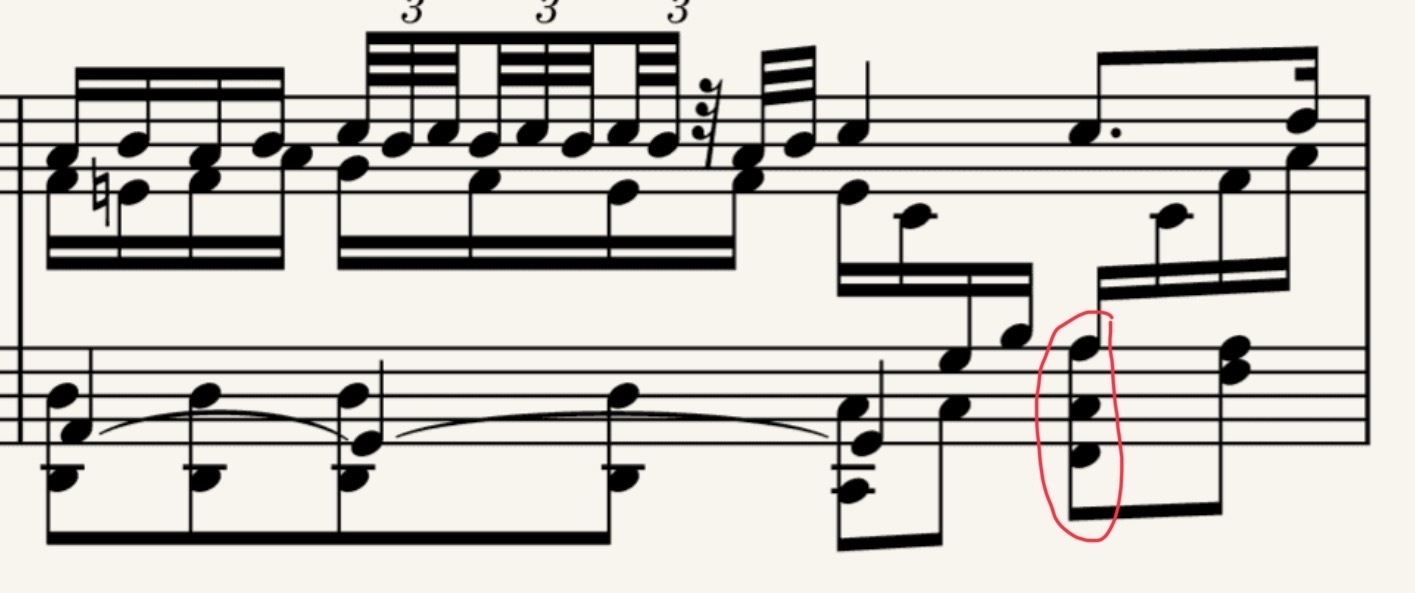
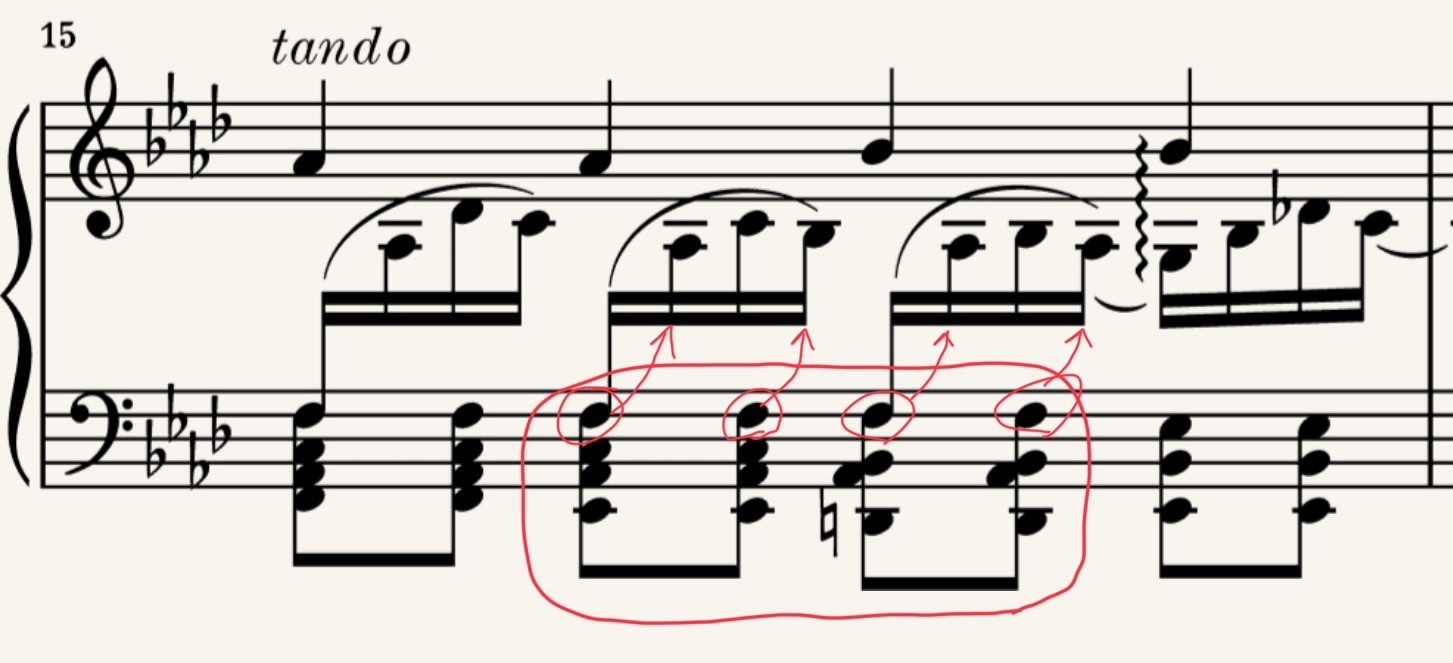
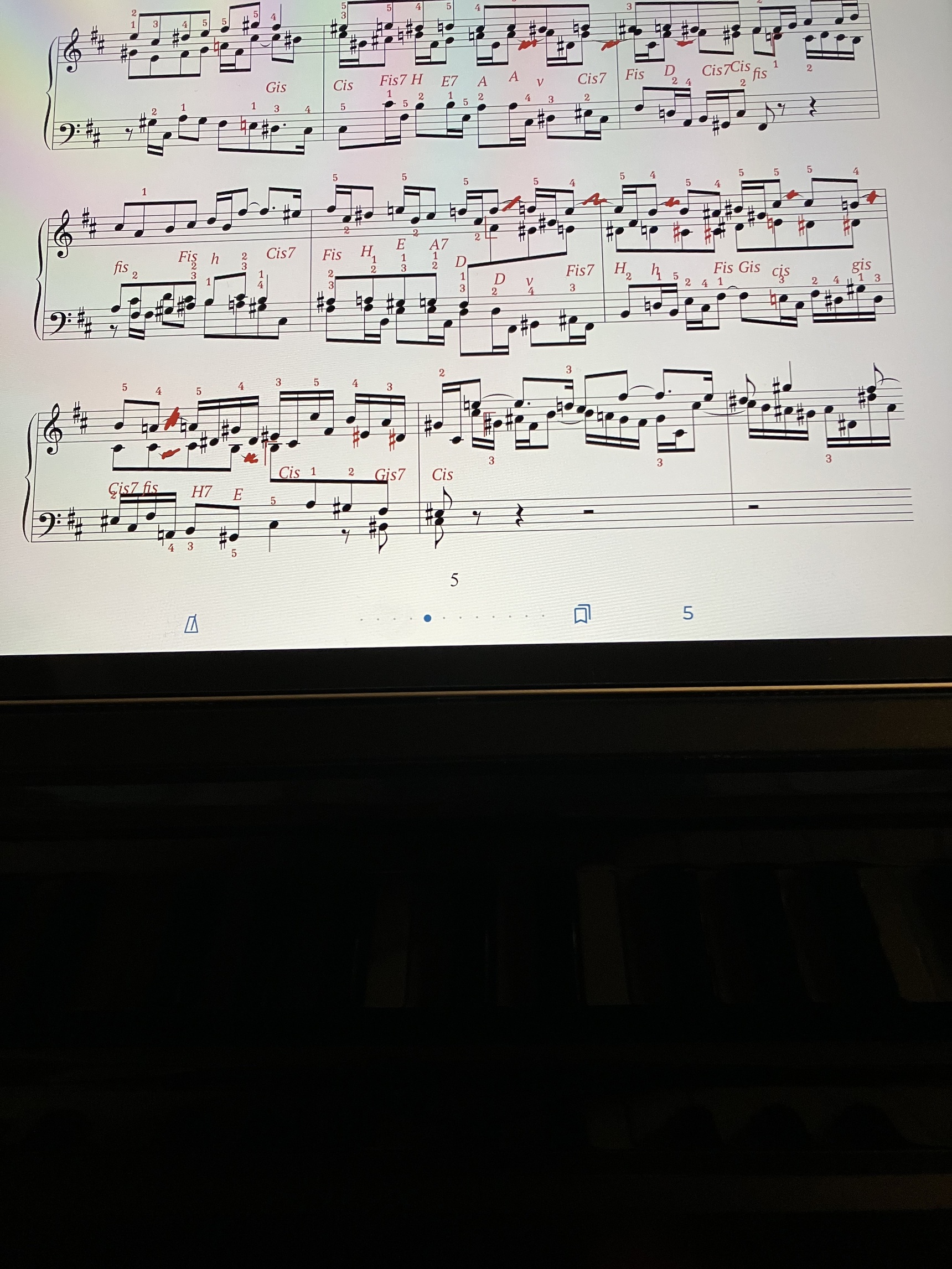
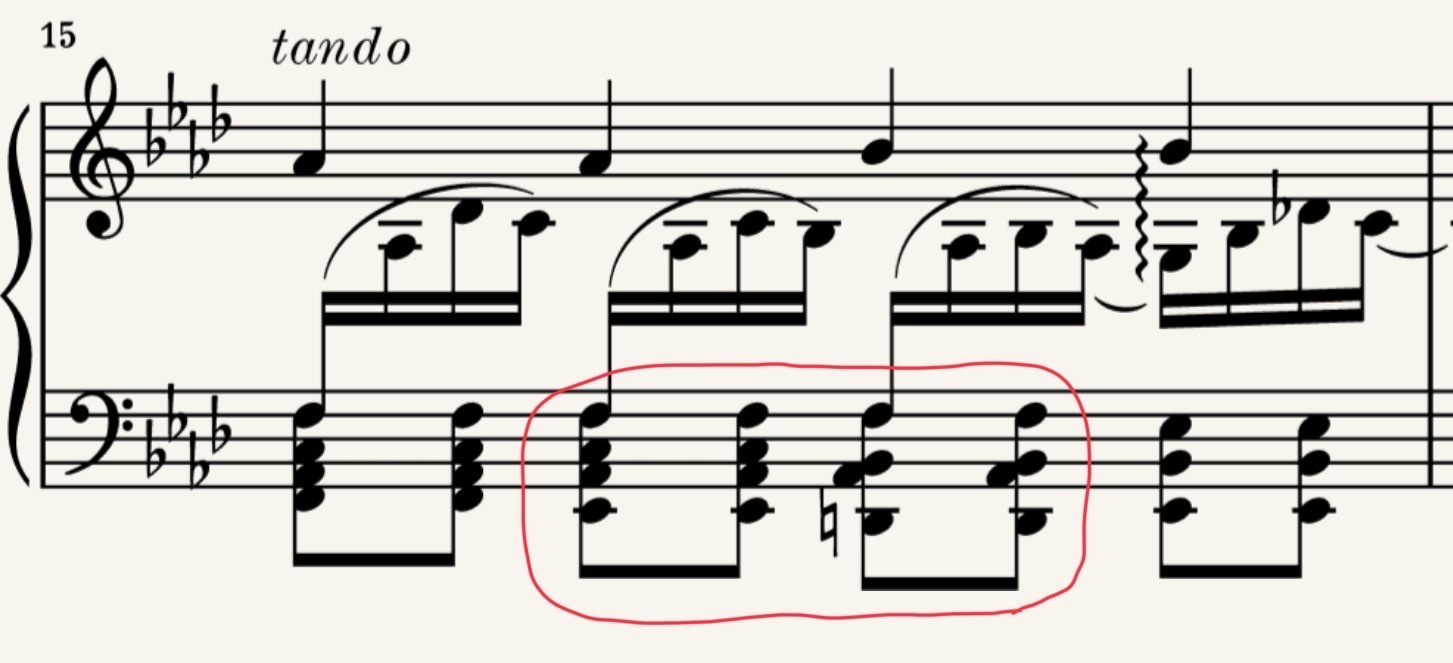
      @Jarred Dunn Thank you Jarred! I do absolutely hear that lower C sounding the same volume as the upper C (may be my thumb being too strong?) Will work on that. Do you have any advice on how to manage/alter left hand chords that are too huge for my fingers to span? (Circled in red in photos below) Appreciate it!

      • jarred
      • 5 days ago
      • Reported - view

       great question! Please, if you could, make a video on vertical view of your LH playing these chords arpeggiated and I can answer that. I need to see how you’re playing them and what your span is to make any recommendations.

      • Andrew.13
      • 5 days ago
      • Reported - view

      https://youtu.be/e6H29UG68N4?si=Dq0kX3M3Ddi55kyV


      appreciate it! I’m assuming the top note of these chords are part of the middle voice so they are important? 

      • jarred
      • 5 days ago
      • Reported - view

       thanks for this video, it appears you seem to have an octave span, perhaps a ninth, before it’s too stretchy and your hand will lock. Play the lowest three notes of the chord and then add the highest note discretely afterward. Let’s try that first and see what happens. 

      • Andrew.13
      • 5 days ago
      • Reported - view

       thank you for your feedback! By “discretely”, are you suggesting playing the highest note with the RH’s 2nd/4th 16th note in a relatively low percentage? Or something else? 

      Thank you!

      • jarred
      • 5 days ago
      • Reported - view

       play it discretely with LH thumb 5 (low percentage of sound)

      • Andrew.13
      • 4 days ago
      • Reported - view

      https://youtube.com/shorts/Bpi0Eyeiitg?si=tLt-hR-bKHz-e2Ea


      something like this? 

    • Gloria
    • 7 days ago
    • Reported - view

    Just A section for today. 😊

      • jarred
      • 5 days ago
      • Reported - view

       good work with sophisticated voicing proportions. I would suggest voicing the last chords (fa-mi-re-do soprano) with more sound on the soprano: the alto is in character but the soprano needs a bit more substance to convincingly sing its way to the last chord. Bass line descending into phrase 2 (0:19) starts clearly but ends without a taper: consider using a diminuendo at the end of that line to start the next phrase. 

      • Gloria
      • 5 days ago
      • Reported - view


      thank you very much . I will practice that . 
      would you suggest using the pedal ? Can I use una corda to change the tone colour? 

      • jarred
      • 5 days ago
      • Reported - view

       pedal can be used if it is not heard to be used. I wouldn’t use UC unless it’s a really special moment and the sound retains its intensity. Too often UC means the sound loses resonance and colour.

      • Gloria
      • 5 days ago
      • Reported - view


      thank you for your help.😊

    • Kerstin
    • 5 days ago
    • Reported - view

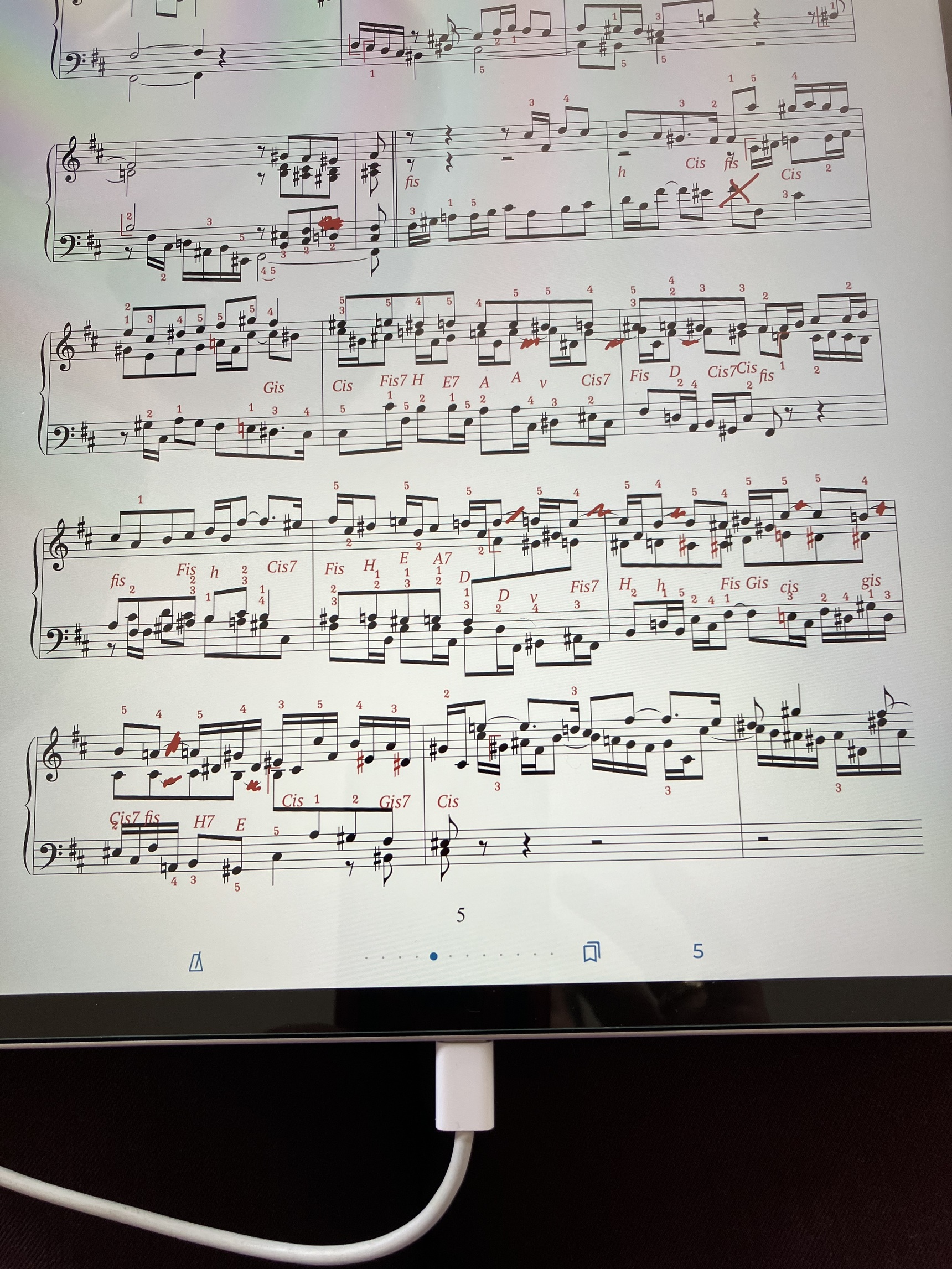
    Hi Jarred! Couldn’t really find a bass line in this fugue. But I found out in with key I am 😂 and first it’s a simple cadenca and then we have this wonderful chromatic line. Theme comes first in the bass, then middle voice and then soprano. I think I will bring out the chromatic line, while the other two voices give the harmonies and the rhythm. https://youtube.com/shorts/mtJm7bwVqps?si=X-U-ZLx1qCzsPMvE
    https://youtube.com/shorts/X0UkKuWC_Vg?si=lkQxkmNxZypsfKF-

    https://youtube.com/shorts/kfg-BqVjyG0?si=3atrVxcXYTO9u7VC
    Thank you. 🙋‍♀️

      • jarred
      • 5 days ago
      • Reported - view

       this is the precisely the kind of practice that leads to solid horizontal voicing. Good work! Soprano (as you probably hear already) is a bit heavy at 0:21-25, where the alto chromaticism is at its zenith. A textural idea: sixteenths could be lighter than eighths to clarify the voicing during fast harmonic rhythm. 

      • Andrew.13
      • 5 days ago
      • Reported - view

       beautiful! Can hear all the voices moving!

      • Kerstin
      • 5 days ago
      • Reported - view

       Yes, thanks. To bring out the chromatic line, I have decided a little bit later. 😊

      • Kerstin
      • 5 days ago
      • Reported - view

      Thank you!

    • Andrea_Buckland
    • 4 days ago
    • Reported - view

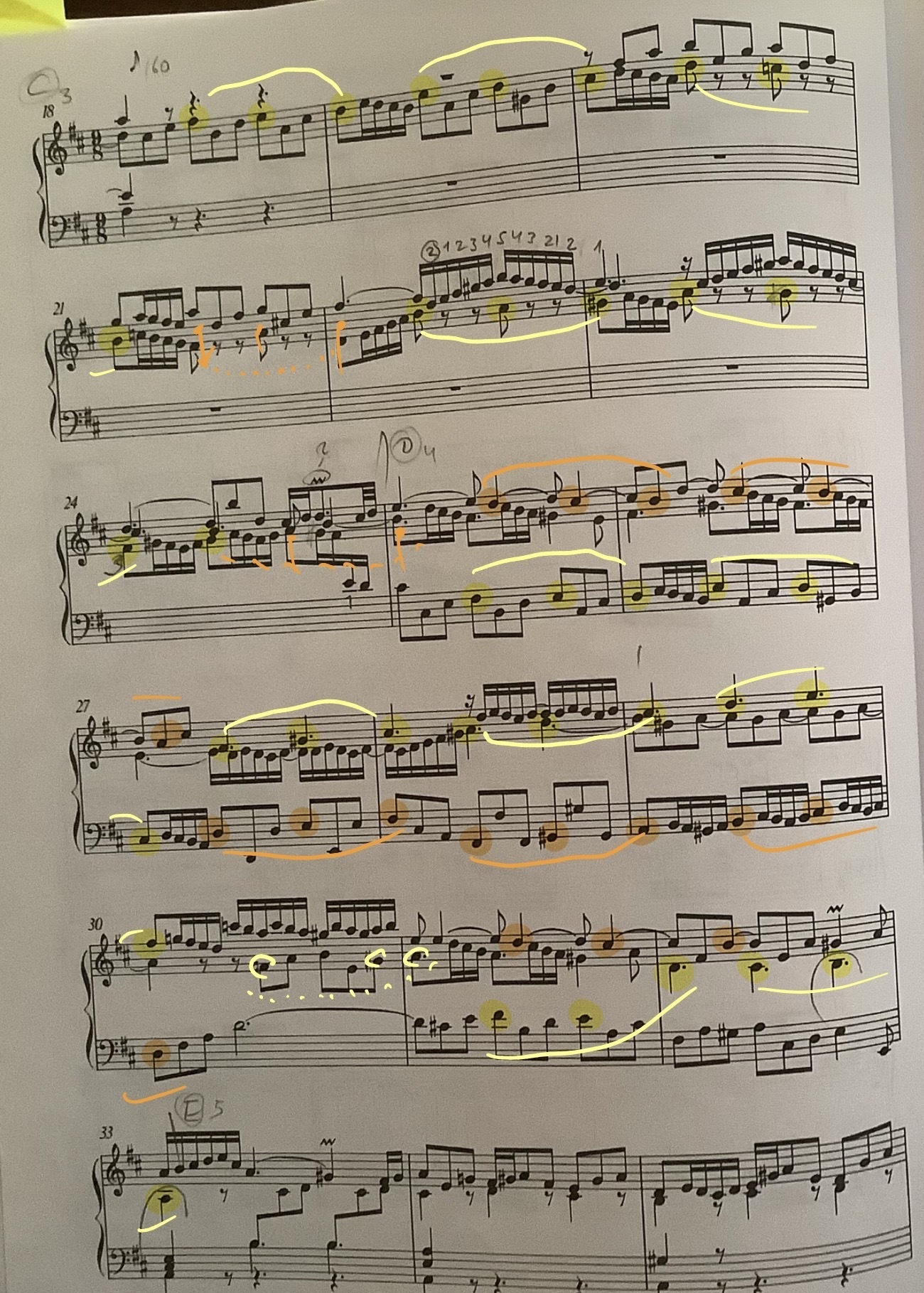
    Two practice videos: Bach Partita 4, Allemande (1-13) and Overture (18-33). Not easy to follow the bass in the Allemande with all the notes in the soprano and singing line in tenor. In the overture I was looking for the skeleton which was enlightening to do. Just not sure if I can make this audible in the end. (Is this even correct? I added a few notes - for studying - for the line to continue) Thank you for feedback.

      • jarred
      • 4 days ago
      • Reported - view

       it’s always good to study the outline this way. Progressively adding chords helps us hear the texture and make choices about what to voice prominently and what to do with supporting lines. Yes, in the final product you still want to hear the structural notes (often these are the most riveting).

    • Kerstin
    • 4 days ago
    • Reported - view

    First time I came through this part (sorry for some wrong keys). Could be a little faster or more flowing and going toward some points. But for the moment I am happy with the result. https://youtube.com/shorts/qulTKH2jqc8?si=V6JAJMFClbe3xq5L

      • Philosophy teacher and piano lover
      • Juan_Carlos
      • 20 hrs ago
      • Reported - view

       Beautifully sung!

      • Kerstin
      • 17 hrs ago
      • Reported - view

      Thank you!

    • Kerstin
    • 4 days ago
    • Reported - view

    Hi Jarred! Question: should I follow the chromatic middle voice until the break?
Content aside

  • 8 Likes
  • 6 hrs agoLast active
  • 45Replies
  • 200Views
  • 13 Following