How Do You Record Your Acoustic Piano?

Hi all. I'm curious to know how you record your acoustic piano. I know it can be everything from very basic (e.g. straight-up iPhone) to multiple mics connected to special recording software and hardware.


What do you use? What mics, software, editing (if any) do you use? And if you have an example of a recording, please feel free to post it so we can all hear what it sounds like. I'll do the same. I'm new to piano and music - just under a year playing - this is my first attempt to learn a sonatina, though still working it.


For this video I used an iPhone 15 Pro with a several year old Blue Yeti and a USB-C cable connecting them. I only use the Blue Yeti because I have it, but I'm considering upgrading to a better mic for music recording. For me, I'd like to get the simplest setup that doesn't require too many hoops to jump or technical knowledge to record and have it sound good without post-production sound editing as I'm only recording for myself and learning purposes.

89 replies

null
    • Noel_Nguyen
    • Yesterday
    • Reported - view

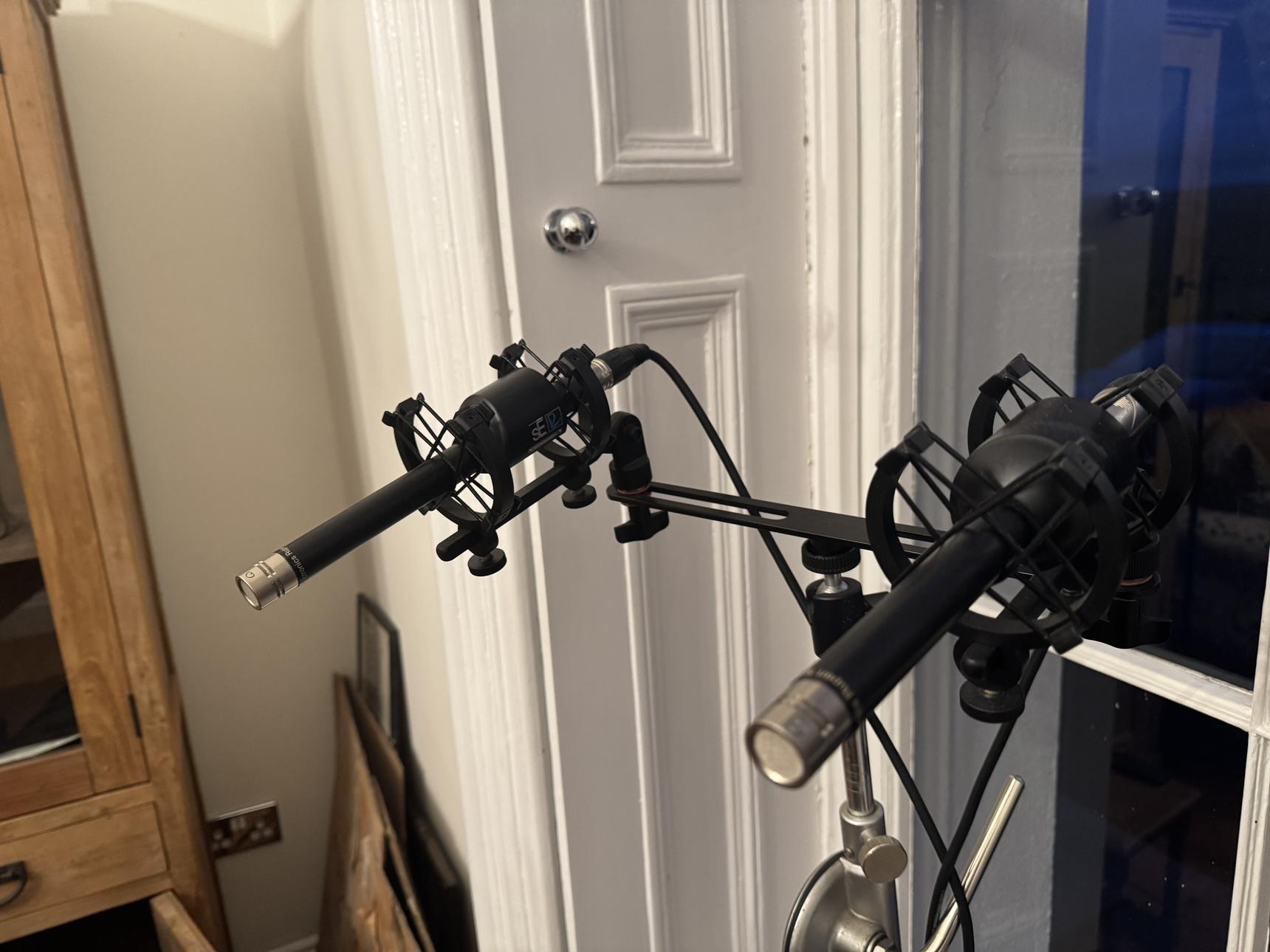
    I use a stereo pair of omni microphones with a Presonus Studio 24c interface unit plugged to my laptop, and use the Studio One software. Quite happy with the results, which you can hear on my YT channel, notably the Rachmaninoff videos featuring my Baldwin.

      • Akzent oder Diminuendo? • Hanon/Herz student
      • Maria_F
      • Yesterday
      • Reported - view

       So I assume I could just get another of what I have? 

       My microphone is cardioid, I think. 

      • Larry_K
      • Yesterday
      • Reported - view

       Yes, it is a cardioid microphone, it accepts sound from the front and rejects noise from behind,

      https://www.marantzpro.com/products/mpm-1000

      I am no expert. 

      Usually microphones are matched in a stereo pair. This is to insure they record similarly. 
       

      There is also the problem of getting a mic stand and a bar that holds two microphones. The SE8 comes with a bar.

      Then there is the camera tripod, and the microphone preamp to supply power to the microphones.

      Then, one needs a computer and software to put it all together.

      It is quite complicated and expensive. Perhaps I should have picked up an all in one unit, lol.

      I am going to try use the absolute horror I feel at the idea of recording myself to encourage myself to practice 50 hours for every hour I try to record.

      • hot4euterpe
      • Yesterday
      • Reported - view

       Technically yes, but I believe your mic is a USB microphone and my understanding is using two USB microphones to record stereo can be problematic. I don't really know much about audio technology either but something to do with internal timings on USB microphones and the fact that software typically recognizes USB mics as a 'one on at a time' device. You have to bypass this in the recording software you use.

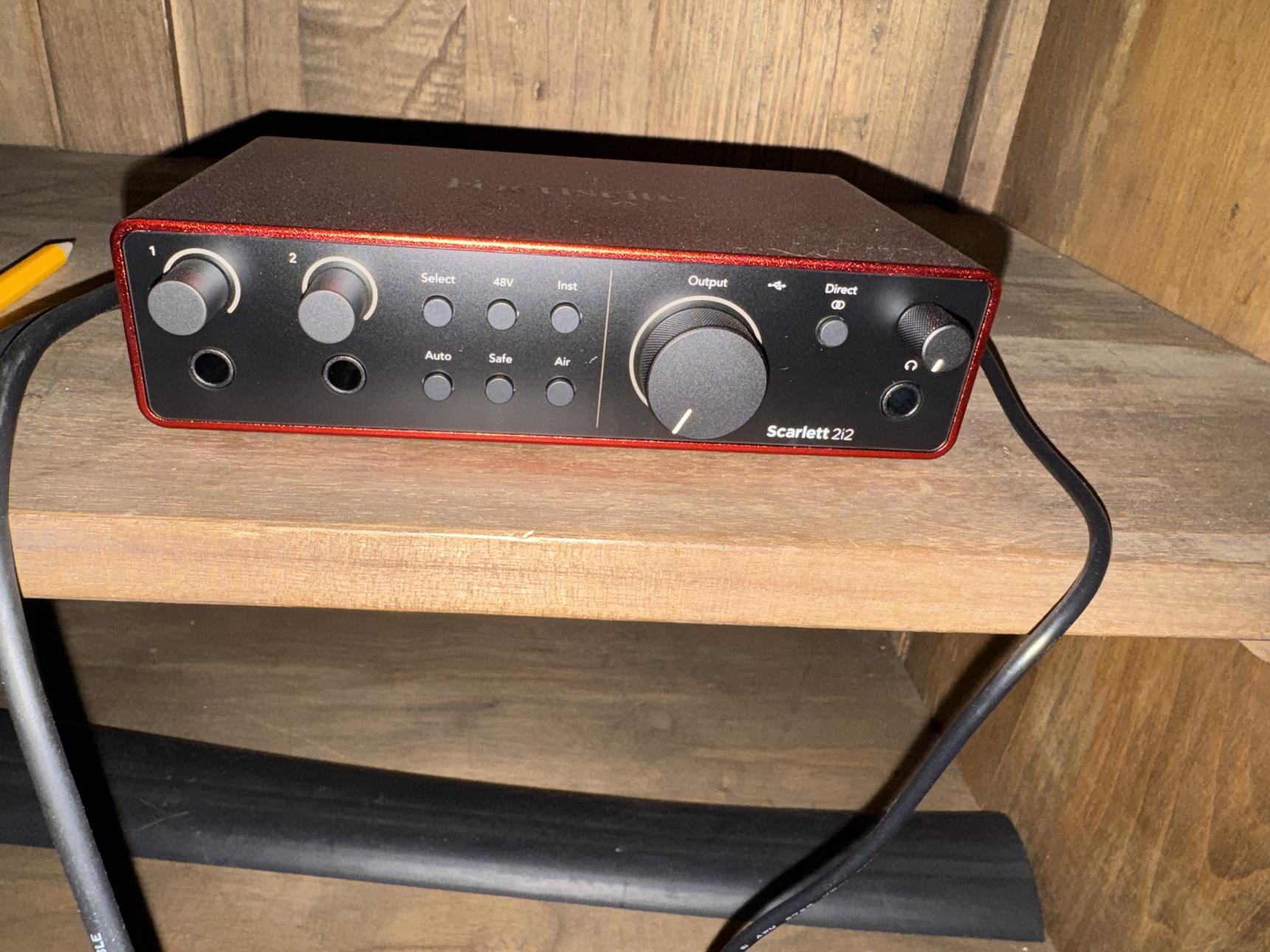
      The route that always seems to be suggested by audio people I know is to get two XLR microphones and run them into an audio interface; basically a box that can have 1, 2,4, etc. XLR cables plugged into it and then that box connects to your computer. It is essentially converting the sound of various sources from sound waves into digital information that your computer can process and recording on the appropriate tracks.

      So a 'simple' stereo setup for recording piano typically includes: two identical XLR mics, at least a 2 channel audio interface, mic stands and / or some sort of mic rail to suspend the mics where you want them, 2 decent quality XLR cables. The mics do not technically have to be identical but it is usually the route people go because it's easier to work with two mics that have the same internal specifications and are intended to work together as a pair. 

      • Akzent oder Diminuendo? • Hanon/Herz student
      • Maria_F
      • Yesterday
      • Reported - view

       Mine does have XLR cables. I do have an audio interface, but I just checked and it only has one channel. I guess I will have to get a different one, if I switch to stereo recording. I do have a decent 1-microphone setup.

      • Larry_K
      • Yesterday
      • Reported - view

       The one thing I like about my RME Babyface Pro FS is that it is designed to run off of bus power from a USB port on a laptop. They don’t even ship it with a power adaptor.

      RME is a German company. I bought mine used from Reverb.

      What audio interface do you have?

      • hot4euterpe
      • Yesterday
      • Reported - view

       My mistake. When I look up your mic model it shows it as a USB mic. I will leave all that info though  for anyone else though that might find it useful.

      I should maybe add that while a 2-channel interface and another of your same microphone would work for stereo, many prefer to use pencil mics for recording piano in stereo. Besides being very compact and lightweight, they typically have a different recording profile that responds to sudden changes of volume better and give a 'flatter', more honest recording of your sound than larger diaphragm microphones. This is often what classical pianists like because we are usually recording to hear ourselves as honestly / neutrally as possible. However, there is point where the investment cost has significant diminishing returns, at least as far as most people are going to be concerned. 

      • Noel_Nguyen
      • Yesterday
      • Reported - view

        For what it's worth, what I have is exactly the basic setup that Dustin suggested.

      • Akzent oder Diminuendo? • Hanon/Herz student
      • Maria_F
      • Yesterday
      • Reported - view

       I have a Vocaster One. I will probably get a better one at some point.

      • Larry_K
      • 14 hrs ago
      • Reported - view

       I think the USB model has a “U” at the end of the model name.

      I’m struggling with how much honesty I want in my recordings. 

      Perhaps an Edison wax cylinder system would be a better choice, something so full of flaws that it masks all of my flaws, lol, something almost inaudible.

      Have you seen students improve when they work tirelessly to create a good recording?

      • Larry_K
      • 13 hrs ago
      • Reported - view

       I almost think that the microphone stand is more important than the preamp for playing with the sound.

      I think you need to get the microphones above the open lid, and that requires a mic stand with a boom and counterweight.

      You could open up your piano, removing the top and bottom panels and put the microphones lower, I think.

      If I do that, I lose my beloved music desk and would have to have all the music memorized. You have a hinged music desk under the lid, I believe, and so, you would still have a music desk.

      I am tall and don’t like the music so low, like on almost all uprights with the fold down music desk.

      I just realized that there is a cut out behind my music desk and so I actually listen to the piano sound through that opening. I’m not sure that helps for recording.

      There is a story about Glenn Gould, perhaps apocryphal, complaining that the recordings didn’t sound like what he heard. Exasperated, the techs finally hung the mics by his ears. He said, that’s what I hear.

      • Larry_K
      • 6 hrs ago
      • Reported - view

           Today, I received all the gear from B&H. The K&M microphone stand is well built. You can’t go wrong with German products. 
       

      The aluminum Manfrotto video tripod with fluid head for just $298 is quite a deal, and built like a tank. I couldn’t trust my expensive camera to a cheap ball head. 
       

      And, I got the microphones. 
       

      Fun, fun.

      The open question is whether I can produce a recording of decent quality without the oversight of a teacher. I fear not.

      • Akzent oder Diminuendo? • Hanon/Herz student
      • Maria_F
      • 4 hrs ago
      • Reported - view

       I have a boom and a counterweight. I really don't want to remove my panels. 

    • hot4euterpe
    • 4 hrs ago
    • Reported - view
     said:
    Have you seen students improve when they work tirelessly to create a good recording?

    Absolutely - it is common for serious teachers to recommend that learners record themselves and listen with the intention of adjusting until the desired quality of sound and execution are achieved. It is no different than athletes reviewing footage of their routines / performance and objectively making adjustments to the way they practice and train. 

    It is ideal to work toward the goal of a good recording by first recording in sections. Set a limit for how many takes you are going to do, (say 5-10). Take the best 1 or 2 from that set and use that as your new baseline. Objectively acknowledge what elements are not being executed to a level you would be happy to present it to others at (important inaccuracies (pitch or rhythm), tempo adjustments, mis-articulations, etc etc.). Work on these (prioritize what will make the most noticeable difference) without recording. Take at least a short rest before you record the same section again (you will often find though that after a full night of sleep your adjustments are more reliable).  

    You can just play the piece dozens / hundreds of times over until you get a 'good' take but the problem with this is you are practicing how to perform it below your desired execution level many times, which can cement issues, and you will mentally approach it with the attitude of trying to 'survive' rather than trying to create. Build confidence and control in smaller "chunks" because it will improve your playing, your reliability and, also, your ability to perform it publicly!

      • Larry_K
      • 3 hrs ago
      • Reported - view

       Thanks for that advice! I will work on getting good recording of sections. 

      I am already working on different sections when I practice. I do not always start at beginning, and I don’t play the whole piece.

Content aside

  • 1 Likes
  • 3 hrs agoLast active
  • 89Replies
  • 3116Views
  • 30 Following