Week 1: Pick your piece!
Welcome to Week 1 - This week is simple and important: choose the piece you’ll live with for the next few weeks!
Short excerpts are completely welcome if the full work feels like too much.
Suggested Repertoire (Beginner → Intermediate)
Beginner
Friedrich Burgmüller – Arabesque, Ballade
Robert Schumann – Melody (Album for the Young)
Pyotr Ilyich Tchaikovsky – Morning Prayer
Edvard Grieg – Arietta (Lyric Pieces)
Late Beginner / Early Intermediate
Frédéric Chopin – Prelude in E minor, Op. 28 No. 4
Felix Mendelssohn – Songs Without Words (easier selections)
Robert Schumann – Träumerei
Edvard Grieg – Lyric Pieces (various)
Intermediate
Frédéric Chopin – Nocturne in E minor (posth.)
Frédéric Chopin – Waltz in A minor (posth.)
Felix Mendelssohn – Songs Without Words (Op. 19, 30)
Gabriel Fauré – Romance sans paroles
Johannes Brahms – Intermezzo Op. 118 No. 2
If none of these speak to you, that’s fine. Choose something else that feels Romantic in spirit and invites you to listen deeply.
Your Week 1 action
Pick your piece (or excerpt).
Post the title and composer below.
If you want, share why you chose it or what you’re curious about musically.
That’s it - and get practicing!
If you haven’t signed up for challenge notifications yet, you can do that here:
37 replies
-
Just saw that the kickoff is tomorrow, but I can't make it. Will it be recorded?
-
Carl Reinecke, Canzonetta from Five Serenades for the Young, Op. 183 #4
-
Hi! I'm choosing John Field's Nocturne No. 5 in Bb Major. This is my first challenge, and I get very nervous recording anything, so I wanted to go with something on the simple side that I think I can get ready in four weeks. A month goes by really quickly when you have limited practice time!
-
Hello! This will be my first challenge and I have chosen Robert Schumann's Traumerei
-
I've chosen Chopin's Prelude in E Minor and Mendelssohn's "Consolation".
I've even gotten a bit ahead of myself and written a short story about these two pieces. -
Listened to the recording. I understand there's no time limit to the piece we choose, but I got the impression there is a time limit to the video we submit. I didn't here an answer to this in the kickoff video. If my piece takes five minutes to play, do I submit the entire video or just a 1-2 minute except?
-
I'll be learning the A major Chopin Prelude (opus 28 no. 7). I chose it because I've been looking forward to learning my first Chopin, and this one is not quite as left-hand intensive as the e minor prelude (since my left hand is still not 100%). It has been interesting to listen to different interpretations of it, and I've discovered that I am drawn to the artists who keep it super simple and singing.
-
I choose a part of Chopin op. 61 - Polonaise Fantasie. 🌟
-
For the challenge, I’ve chosen Chopin’s Étude Op. 10 No. 9. It was one of my dream pieces when I first discovered the Études now many years ago. Its stormy, unsettling undulation feels very Byronian to me —- not romantic in a Valentine’ sense, but in some darker, more turbulent way.
-
My original idea was to play the Florence Price sonata 2.mov. That still stands, and I want to learn the whole sonata before summer.
After chatting with Tammy, I'm also adding in the Rach 2 first movement, second theme. This Concerto is one of my goals for the year, so nice to get started with this epic and highly romantic theme! -
I am doing Rachmaninoff Elegie op 3 no 1.
I actually have started working on it for about a month now and the big 'hotspots' for me is the large span of LH positions which I'm still fumbling over to find the right notes to land on ... and in general playing the forte (which never seem to be forte enough for my teacher 😅) so never mind the fortitissimo!
-
Hi everyone, this is my first challenge, and I’m happy to be part of it. I’ve chosen Chopin’s Waltz in A minor, Op. 69 No. 2 and I’m looking forward to exploring it during the challenge.
-
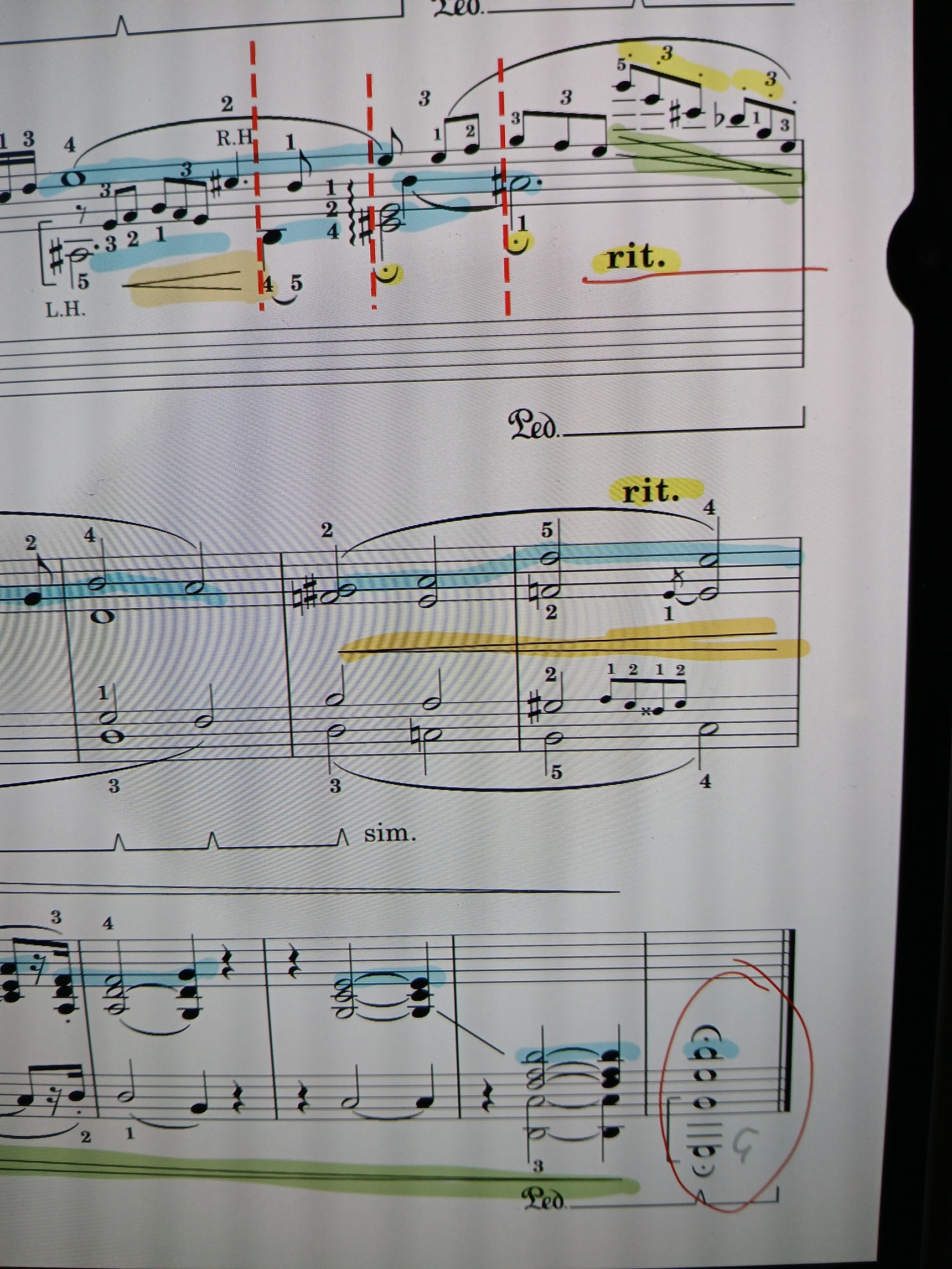
Hi, I've chosen a piece new to me - Schumann's Der Dichter Spricht, no 13 from Kinderszenen Op 15. I've gone through the score to familiarise myself with the notes, and identified 'hot spots' etc. I have a question already - notice in the last bar the final chord has a huge stretch (G - B). If it was a passing part I'd skip a note, but the final chord seems important! Should I move the B up an 8ve to the right hand, or move that low G up an 8ve? I can just about get the stretch, but because it's a struggle the notes aren't landing at the same time, so just curious what fellow pianists would do in this instance.
-
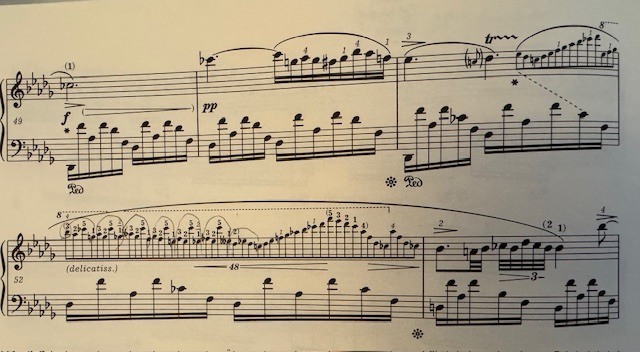
Chopin Nocturne, Op. 27, No. 2. Full disclosure: this isn’t a new piece for me—I’ve been learning and practicing it since last November. I chose it for this challenge specifically to focus on playing from memory. I love this nocturne for its dreamy character and its mix of sweetness and bittersweet emotion.
Hotspot: Bar 51-52
I’ve heard some pianists play this measure with a steady pulse, while others take a bit more time. I’m not sure whether I should begin the right hand slightly slower and then move forward into the next measure. I know Chopin’s style often allows some freedom, but this measure is also technically tricky for my fingers.