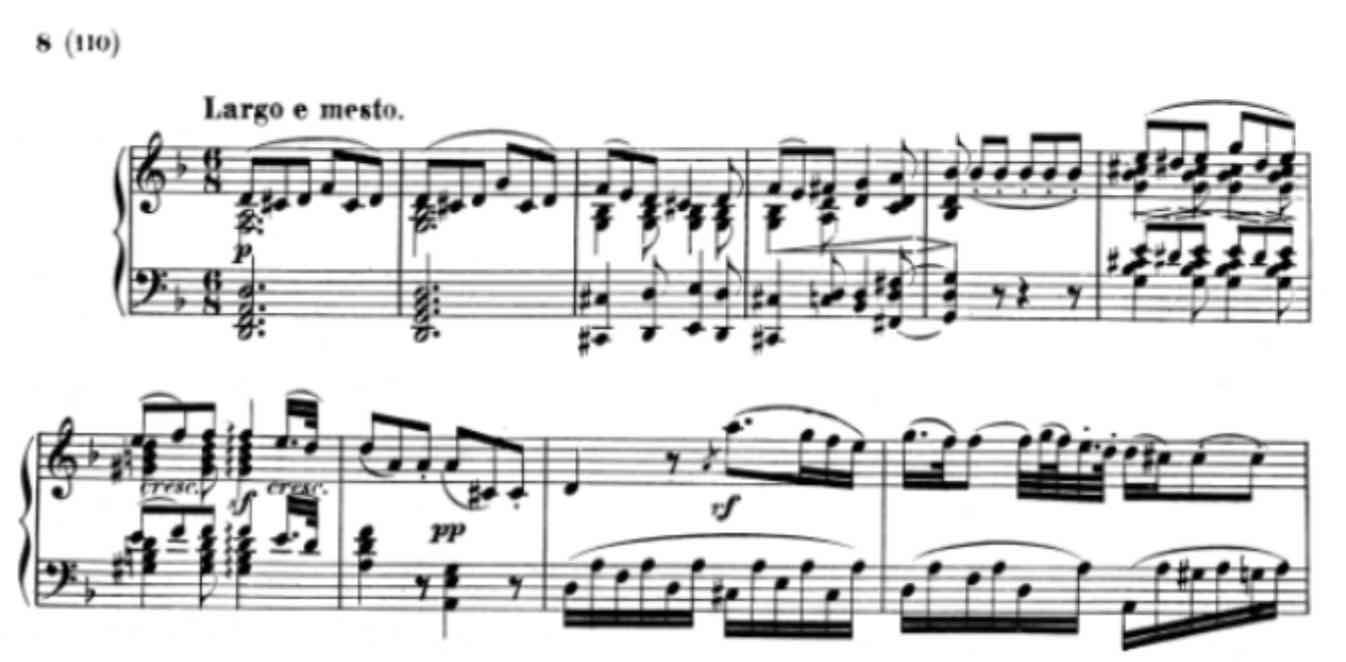
Anyone like to improvise?

Hi. I have always had a desire to be able to sit at the piano and just play - without knowing what I will play. It seems to be a daunting task, but since I found a great teacher who was classically trained before becoming a professional jazz pianist, I have made some progress. When I don’t feel like practicing I sit at the piano and play a simple chord sequence - for example Fm7, Bbm7, Cm7, Fm7 - and find notes and phrases that sound good to me.


Does anyone else improvise or plan to learn how to? It would be good to share ideas.

105 replies

null
    • Ken_Radford
    • 12 days ago
    • Reported - view

    Here is my take on a major II-V-I-VI in F Major. I talk through how I choose notes for the chord voicings, and how I select some of the 88 notes on the keyboard for my improv motifs.

      • Peter_William
      • 7 days ago
      • Reported - view

       Oh I was completely mistaken ! in the analysis lol!. But I just played and recorded it on the ipad  - no edits .. just like a practice page.. the first 2 pages - a very rudimentary attempt and am posting the link. 

      https://www.youtube.com/watch?v=CCf8PBLoDyA

      • Ken_Radford
      • 7 days ago
      • Reported - view

       Peter, keep doing what you’re doing. It sounds good! 

      • Peter_William
      • 7 days ago
      • Reported - view

       Thank you Ken! I will post on my practice page.. and followup with some improvements.. 

      • Ken_Radford
      • 6 days ago
      • Reported - view

       Is this the one? Dustin may correct me but the C# leading tone tells me that it is in D minor not F Major.

      • hot4euterpe
      • 6 days ago
      • Reported - view

       D minor is correct 😄

      • Peter_William
      • 6 days ago
      • Reported - view

       yes totally right!. Dustin corrected me. I hastily looked at the key sig. and called it F major ( 1 flat ) but it is in the minor ( same sig.) which would be D minor as you have pointed out. I have always had this q in my mind. How to tell if a score is written in Major or the associated Minor since the signature is the same?. e.g. C maj and A minor have the same sig.. etc. ( Circle of fifths chart).. but I guess on hearing it as you have done and by looking at the start and end of the piece .. is one way.. Also if a piece sounds sad ( minor ) otherwise major . :-)    Thank you !

      BTW Ken this piece is quite a challenge for me, but I enjoy playing it in very small sections now. This morning was just bar 3 and bar 4 for about 10 mins.. memorizing will help with flow a lot better is my experience now.

      With what you know you can read the chords easily and it will be so much simpler for you.. :-)

      I assume you will probably read the set of chords in D minor.. which may be ( D min, Gmin, Amin and Amin 7th) and their Aug, Dim related ones and then see how Beethoven transitioned between these chords rather seamlessly with the melodic line on top.  ( This last para is totally iffy ??  :-) )  Then on page 2 the pace picks up with a series of broken chords unti it reaches a crescendo in page 3 with a similar set of 32 notes broken chords .. All making it a super fun listening and learning piece.  I am hearing the wonderful version of Alfred Brendel  :-)  linked here. Heard it from a public library CD 2 months ago and downloaded the score.. Enjoy !

      https://www.youtube.com/watch?v=5TE2fzVIbhA&list=RD5TE2fzVIbhA&start_radio=1

      I have the score with Arthur Schnabel fingering -if needed let me know - I will post the link.

      • hot4euterpe
      • 6 days ago
      • Reported - view

       The opening of this movement is actually an excellent example of applied dominants and modulation. Since I teach this to my harmony students in a few weeks, this will be quite useful, so thank you for the indirect help =)

      I have sketched the functional chords for most of the first page for this future lesson. As a thanks, here is a copy for you to look over since you are wondering about chords and analysis. I have added a second page with the root / quality symbols.

      • Peter_William
      • 6 days ago
      • Reported - view

       Fantastic !! and Thanks a lot.! This is exactly what I was thinking of trying to do over the next two weeks - slowly by identifying each chord from a chart and writing it below the line. I will study these and try to understand better - I think for you this piece will be absolutely easy since you are comprehending the whole piece as a progression of complex chords as a composer would have thought about.. Thank You !!

      • hot4euterpe
      • 6 days ago
      • Reported - view

       I'm glad you find it useful. Just be aware that Beethoven was not specifically thinking this way. Composers like Beethoven did not think of music as blocks of chords progressing to one another. Functional chord analysis is a way of describing what was done but not what was thought by the creator. This is why we call it theory. Beethoven would have perceived harmony more through thoroughbass and voice leading practices, interval behaviour, key relationships and tension / resolution. 

      • Peter_William
      • 5 days ago
      • Reported - view

       ok I think I am understanding what you explained. The framework came much later whils’t the great composers arrived at it in a totally different way.

      This morning for an hour I was practicing Mozart’s C Major Sonata and could see the left hand chord progression there much easier Tonic to Dominant then resolve back down to Tonic .. so the playing was much simpler ..(1st page only ..)

      • Ken_Radford
      • 4 days ago
      • Reported - view

       I posted a partial answer to your Beethoven question yesterday and it is “pending review”. Hope it makes it through the review process. While not really related to improvisation, I found it an interesting exercise to perform away from the piano.

      • Der Wanderer
      • FRANZ_SCHUBERT
      • 2 days ago
      • Reported - view


      Ken: Thank you for your nice explanation below on identifying the chords.

      Dustin:  Thank you as well for all your explanations and information provided.  If it isn't too much trouble, could you briefly just explain something from the score you marked up here?  

      What I don't generally quite understand is the numbers after the Roman Numerals. 

      So in bar 2:  you have iv 6 over 4, 

      bar 3: vii o7 (is the 'o' diminished 7th ?),

      bar 4:  V 4 over 2 / iv

      bar 14:  V 8 over 6 over 4 to 7 over 5 over 3

      etc.

      Maybe from a few hints here I can figure this out better with just a basic explanation.

      Thanks,

      • hot4euterpe
      • 2 days ago
      • Reported - view

       Those are figured bass symbols. 6 indicates first inversion.  6/4 indicates 2nd inversion. 7th chord inversions are indicated with 6/5 , 4/3, 4/2.  This is the quick explanation. They are actually a shorthand version of the actual figures that indicate the intervals above the bass. It is conventional to use them with roman numerals when doing functional analysis.

      the ° in the vii° indicates diminished, that is correct.

      V / iv or V7 / iv etc. is an applied dominant / secondary dominant (both of these refer to same concept). It indicates a temporary tonicization (made to sound like a tonic) of a harmony. It is only momentary (as opposed to modulating to a new key). It is read as  “V of iv”.

      V 8/6/4 to 7/5/3 indicates a cadential 6/4. This is the standard notation rather than I6/4 - V7 etc. because the 2nd inversion of I going V is not heard as a I. It is heard as a V that is suspended and resolved into place.  

      These are all good questions but they do merit more explanation than the above summaries. They are fundamental parts of learning harmony (and functional notation) which is a large subject.

      • Akzent oder Diminuendo?
      • Maria_F
      • 2 days ago
      • Reported - view

       That is figured bass notation. 

      • Akzent oder Diminuendo?
      • Maria_F
      • 2 days ago
      • Reported - view

       I somehow did not see that  already answered.

      • Der Wanderer
      • FRANZ_SCHUBERT
      • 2 days ago
      • Reported - view

         Thanks Dustin!  Would you perhaps be able to recommend a book (children's level) for me to start at the beginning with Harmony.  Perhaps there is a Harmony for Dummies book that would be perfect for me....

      • hot4euterpe
      • 2 days ago
      • Reported - view

       If you can get Mark Sarnecki's "Essential Music Theory Level 9: Harmony" you would likely find it very helpful and easy to approach. He presents things very cleanly and clearly.

      Don't be put off by the level 9 part, it refers to it being a level 9 requirement in the RCM curriculum. It is the introductory level of harmony. 

      • Der Wanderer
      • FRANZ_SCHUBERT
      • 2 days ago
      • Reported - view

        Thanks Dustin.  I will check this out.  It probably wouldn't hurt me to also brush up on Level 1 - 8.  I'm sure there has been many new discoveries and findings in modern theory since I first took pre-historic theory before the dark ages.

      • Akzent oder Diminuendo?
      • Maria_F
      • 2 days ago
      • Reported - view

       I don't think there is RCM 1-8 harmony.

      • hot4euterpe
      • 2 days ago
      • Reported - view


      Maria is correct - levels 1-8 are rudiments. Specifically levels 5-8 are rudiments (keys, scales, meter, intervals, basic chords etc.). Levels 1-4 are just the same material as level 5 but presented in a way for young students to gradually work through in their early learning. 

      So if you want to review rudiments through the same series, I suggest starting at 5 and going through to 8. Just ignore 1-4. 

    • Ken_Radford
    • 3 days ago
    • Reported - view

    OK, there is a lot to talk about here, and it will take several days to cover what LVB does brilliantly in this piece, and in every other piece he composed.

    When I look at a piece of music I identify the primary key in which it is written. As we have agreed, this piece begins in D minor, and I refer to the circle of fifths (CoF) to give me an insight into the likely structure of the piece, Limiting our view to just triads, the CoF for D minor has:

    D minor - I - Tonic

    E diminished - II - Supertonic

    F Major - III - Mediant

    G minor - iv - Subdominant

    A Major - V - Dominant

    Bb Major - VI - Submediant

    C# diminished - vii - Leading note

    So in:

    Bar 1 we have D minor - I - Tonic

    Bar 2 we have G minor - iv - Subdominant

    Bar 3 we have C# diminished - vii - leading note, followed by G minor - iv - Subdominant, then E diminished - ii - Supertonic, concluding the bar with G minor over D - iv - Subdominant. 

    Bar 4 we have C# diminished - vii - leading note, transition (modulation) to D7 (secondary dominant) - i of G minor, G minor - i - tonic, D7 - I - Dominant, G minor - i - tonic.

    I welcome comments, observations, corrections, and questions.

    A final thought… this exercise is challenging enough when sitting at the piano. I encourage you to do it away from the keyboard.

    • Ken_Radford
    • 2 days ago
    • Reported - view

    Anyone like to improvise?

      • hot4euterpe
      • 2 days ago
      • Reported - view

       Yes, sorry. This thread really got off the original topic with the harmony questions. If anyone else has harmony questions it would likely be best to start a separate thread. I will be happy to answer there.

    • Mark_Cooper
    • Yesterday
    • Reported - view

    Hi all

    apologies for the slightly long winded video…

    my take on the D minor 2-5-1 

    note correction: when I mention the 6 chord B Flat , it should be major 7th ( not dominant)

    another correction , when I mention the locrian mode , it should be E locrian (not F, but the notes could be understood as being taken from the F major scale )

    I noodle a little on the progression as well as on two lovely tunes , beautiful love and summertime 

    For those interested I’ll recommend two recordings of these tunes 

    beautiful love - from power of three ( this is one of my all time favourite jazz albums) featuring michel petrucciani and Jim Hall live at the montreaux Jazz festival 

    summertime - check out Oscar Peterson from the porgy and Bess album 


    D minor 

    2-5-1


    https://youtu.be/uh6kkCZdCvk?si=YpjJXqJVUVie4ckf

      • Ken_Radford
      • Yesterday
      • Reported - view

       Another great example of how to improvise over the minor ii-v-i progression Mark.

      I have been thinking about why so few pianists get excited about improvising and I have a theory based on my own experience (and alluded to in my last post). And it goes like this… OK, so I know my scales and I also know which scales to use over which chords, but which notes of those scales shall I use? Is this a skill that some folk are born with, or can anyone learn how to do it? 
      With these questions in mind I decided that my D minor ii-v-i effort will be entitled “improvising by numbers” and will attempt to show that anyone and everyone can learn to improvise if they so desire. What is it that my teacher keeps telling me - “make it as complicated as you can” or “keep it simple?”

      In the spirit of walking before running, I shall choose the latter.

      Video to follow shortly.

Content aside

  • 1 Likes
  • 3 hrs agoLast active
  • 105Replies
  • 568Views
  • 12 Following