🎹 The Romantic Music Challenge
This challenge is about sharing the music you love!
Over five weeks, you’ll learn a short Romantic-era (or Romantic-style) piano piece, focusing on expression, color, and musical intention rather than speed or volume. The goal isn’t perfection. It’s connection — to the music, and to your own sound.
You can play along quietly on your own, or share your progress through words or video with the community. At the end, we’ll celebrate together with a February 13 Romantic Watch Party.
How It Works
Choose one short piece (or a short excerpt)
Romantic or lyric in spirit
Work on the same piece throughout the challenge
Suggested Repertoire (Beginner → Intermediate)
Beginner
Burgmüller – Arabesque, Ballade
Schumann – Melody (Album for the Young)
Tchaikovsky – Morning Prayer
Grieg – Arietta (Lyric Pieces)
Gurlitt – Romantic-style character pieces
Late Beginner / Early Intermediate
Chopin – Prelude in E minor, Op. 28 No. 4
Mendelssohn – Songs Without Words (easier selections)
Schumann – Träumerei
Grieg – Lyric Pieces (various)
Clara Schumann – selected short works
Intermediate
Chopin – Nocturne in E minor (posth.)
Chopin – Waltz in A minor (posth.)
Mendelssohn – Songs Without Words (Op. 19, 30)
Fauré – Romance sans paroles
Brahms – Intermezzo Op. 118 No. 2 (excerpt)
Short excerpts are always welcome.
To sign up for notifications, please follow this link!
81 replies
-
I will be working on Brahms Intermezzo Op. 117 No. 1. I'm not sure if I will be submitting a recording but I will try.
-
I think it's very useful to trade notes on memorization. (and yes, Dominic does offer a ToneBase lesson on this.)
In my efforts to memorize, analyze & learn a piece, I try to start with establishing its structure . This doesn't come naturally to me, as I am much more conversant with chords and harmony than I am with musical form and structure. But I make myself map it out, usually starting with the cadences as structrural signposts. This allows me to learn it in meaningful chunks and also to make sense of its peaks and valleys and where it hits a climax.
With certain pieces, I'll try to map the structure out by reducing the piece to a "song" with a lead sheet. i.e. I try to see whether I can play it through as a melody with chords without worrying about the details of the notes. This gives me a global overview of the piece and how its sections fit together. A piece needs to be fairly homophonic for this to work (e.g. it won't work on a Bach Fugue, where every note is a melody note!).
The piece I am working on for this challenge (Schumann's Intermezzo, 4th Mvt. of Faschingsschwank aus Wien) lends itself very well to this approach. Here is a rendition of it as a song, playing the main tune from beginning to end, accompanied by the basic harmonies -- and in most places the actual bass notes of the chord voicings, since these are particularly important in this piece. (The hesitations and goofs indicate places where my memory of the structure and harmony is not yet as good as it needs to be).
I'll post an actual performance -as a week one progress report, of course, not finished by any means --- later today.
Happy practicing everyone!
-
I would like to learn Liszt Consolation No.2.
-
Hi Everyone, I chose Chopin's newly discovered A minor waltz. In two places I am not sure which fingering to use. I am an early intermediate level player and hesitant in left hand jumps unless I watch my hand all the time.
In the one below, I am looking for ways to secure the move from the 'A octave' to the A-D chord. Any sufggestions?
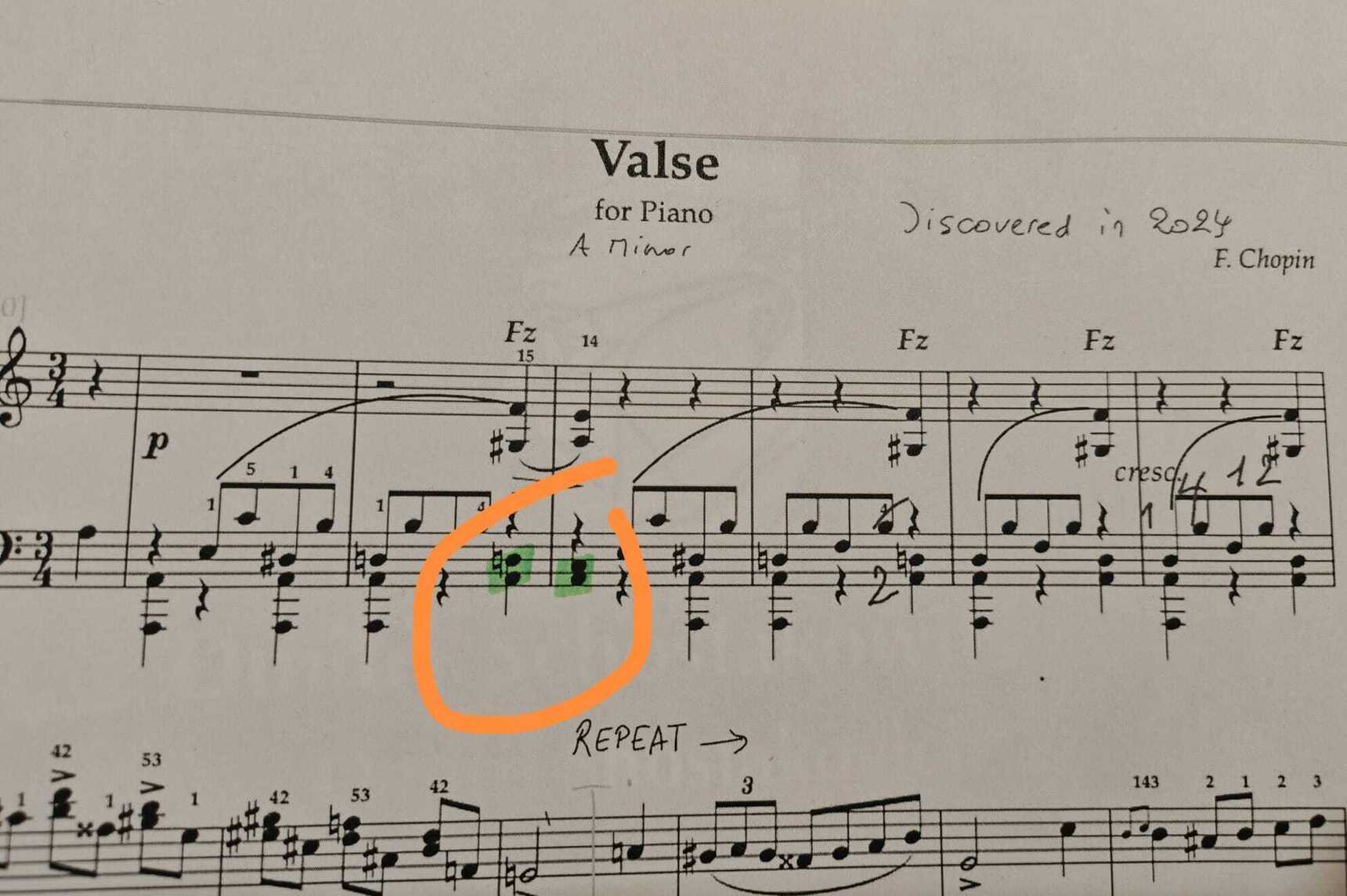
And in the second one below, I find the move from BD to EGCE awkward as it is quite fast. Should I just take more time between the two or is there a good way of sliding from one to the other?
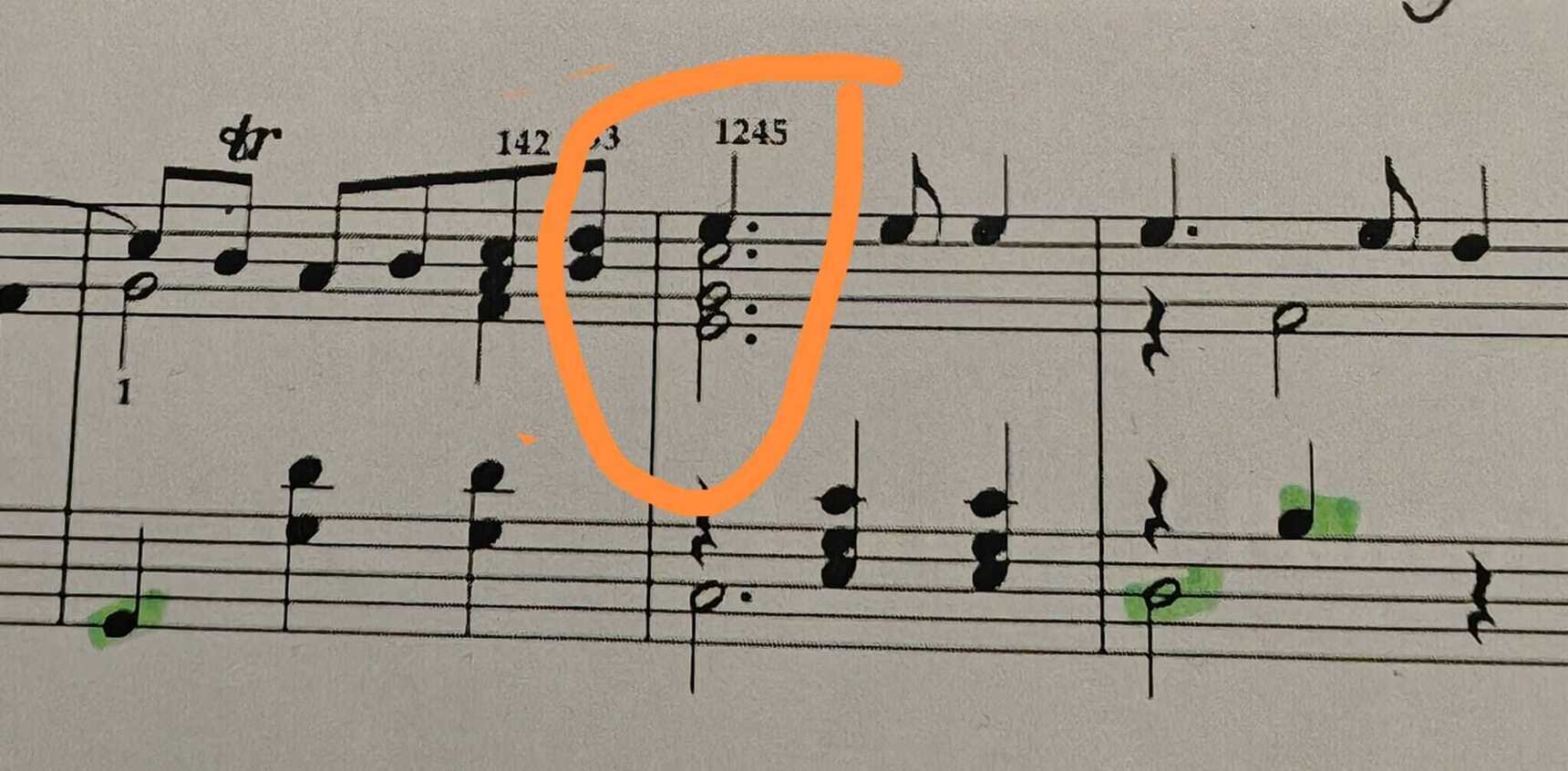
I would be grateful for any comments.
Sedef
-
Regarding leaps as you mentioned - on YouTube there are some excellent videos on executing leaps or jumps. Search 'piano leaps '. Here is one. Hooe it helps! . https://youtu.be/AU-KXCfj_9Q?si=_BJ5xWTXyowLH2sa